Trends in Pediatric Blood Pressure–Lowering Prescription Fills During 2017–2023
Ashutosh Kumar, Nicole L. Therrien, John Ogwuegbu, Siran He, Jun Soo Lee, Omoye Imoisili, Elizabeth A. Lundeen, Katrice Lampley, Sandra L. Jackson

TL;DR
Blood pressure-lowering prescriptions for U.S. children increased slightly from 2017 to 2023, with the biggest rise among teenage girls, and the increase was driven by medications not recommended in a major guideline.
Contribution
The study provides the first national estimates of pediatric blood pressure-lowering prescription trends and highlights the use of non-guideline medications.
Findings
Prescription fills for blood pressure-lowering medications increased from 1.9% to 2.1% among U.S. children aged 3–17 years from 2017 to 2023.
Females aged 13–17 years had the sharpest increase in prescription fills (40.3%) during the study period.
The rise in prescriptions was driven by medications not included in the 2017 American Academy of Pediatrics guideline.
Abstract
•Data on blood pressure–lowering prescription fills among U.S. children are scarce.•From 2017 to 2023, fills among those aged 3–17 years increased from 1.9% to 2.1%.•Fills remained stable among males and increased among females.•Females aged 13–17 years experienced the sharpest increase (40.3%).•Increases were driven by medications not included in the 2017 American Academy of Pediatrics guideline. Data on blood pressure–lowering prescription fills among U.S. children are scarce. From 2017 to 2023, fills among those aged 3–17 years increased from 1.9% to 2.1%. Fills remained stable among males and increased among females. Females aged 13–17 years experienced the sharpest increase (40.3%). Increases were driven by medications not included in the 2017 American Academy of Pediatrics guideline. There are no national estimates for blood pressure–lowering prescription trends among the…
Genes, proteins, chemicals, diseases, species, mutations and cell lines named across the full text — each resolved to its canonical identifier and authoritative record.
Click any figure to enlarge with its caption.
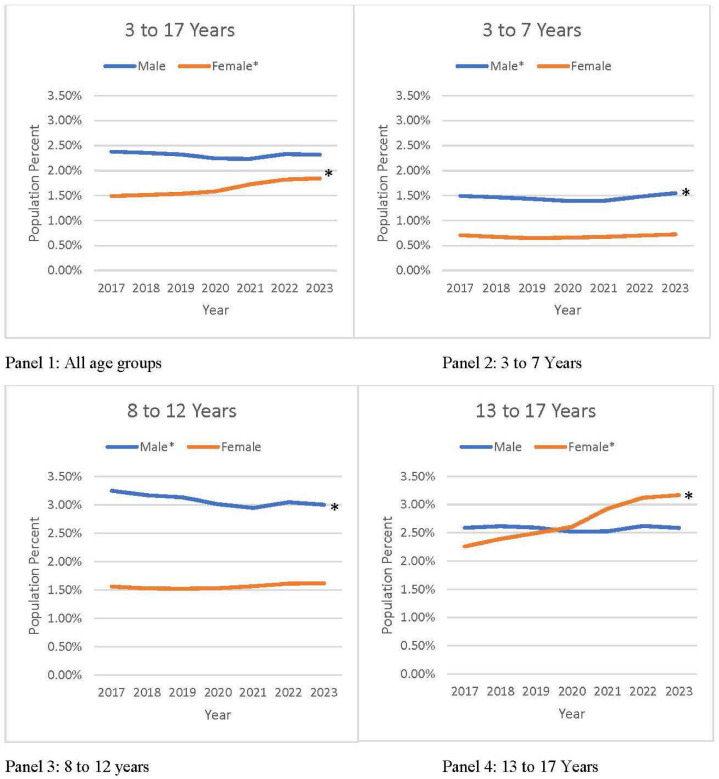 Figure 1
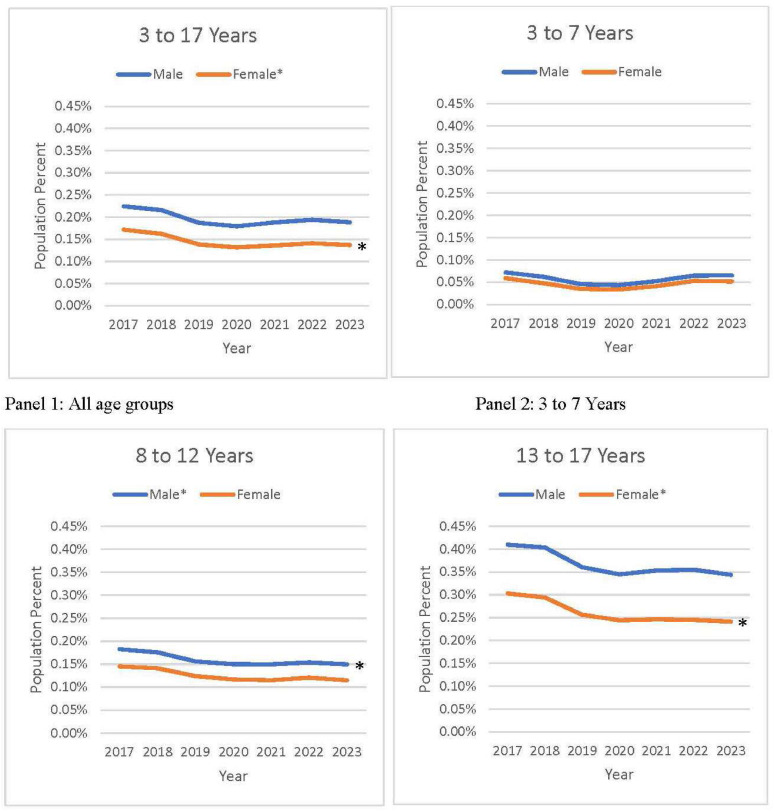 Figure 2
Peer Reviews
No public reviews on file for this paper yet. If you reviewed it on a platform where reviews are public (OpenReview, ICLR, NeurIPS, ICML), you can paste yours below so the community can read it here.
Videos
No videos yet. Explain this paper in a talk, walkthrough, or lecture? Add one.
Taxonomy
TopicsCardiac, Anesthesia and Surgical Outcomes · Blood Pressure and Hypertension Studies · Hemodynamic Monitoring and Therapy