Epidemiology, Risk Factors and Clinical Outcome of Candidaemia: A decade-long experience at a university hospital in Oman
Tasneem Al Salmani, Asmaa S. Mahdi, Abdullah Balkhair, Turkiya Al Siyabi, Hashim Ba Wazir

TL;DR
A decade-long study in Oman found that non-albicans Candida species are increasingly causing candidaemia, with diabetes as a major risk factor and high mortality rates.
Contribution
The study provides updated epidemiological data on candidaemia in Oman, highlighting rising non-albicans species and risk factors like diabetes.
Findings
Candida albicans was the most common species, but non-albicans species like Nakaseomyces glabrata were increasingly prevalent.
Diabetes mellitus was the most frequently identified risk factor for candidaemia.
Mortality rates were unacceptably high at 53.3%, with a need for improved antifungal therapy initiation.
Abstract
This study aimed to examine a decade-long epidemiology of candidaemia to explore the risk factors associated with it, and describe its clinical outcomes in hospitalised adult patients. This retrospective observational study was conducted at Sultan Qaboos University Hospital, Muscat, Oman. Adult patients with candidaemia hospitalised between January 2007 and December 2016 were included. The hospital infection control department surveillance registry on bloodstream infections (BSIs) was used to identify Candida BSIs. Patients' electronic medical records were searched for demographic characteristics, clinical risk factors and outcomes. Candida albicans was the most common Candida species among 152 patients with candidaemia comprising 25.0% of all Candida blood culture isolates. Nakaseomyces glabrata, C. tropicalis and C. parapsilosis were the most frequently isolated non-albicans…
Genes, proteins, chemicals, diseases, species, mutations and cell lines named across the full text — each resolved to its canonical identifier and authoritative record.
Click any figure to enlarge with its caption.
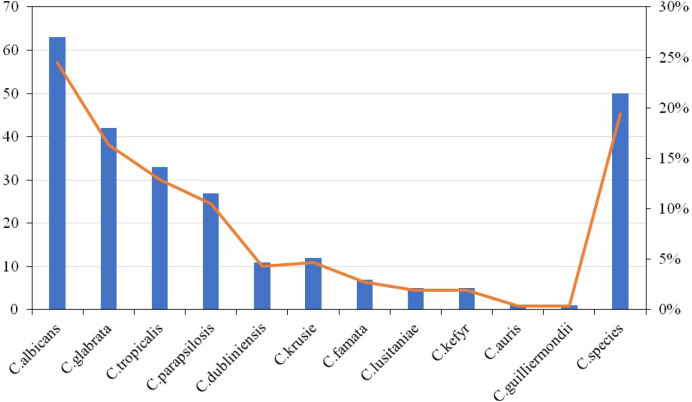 Figure 1
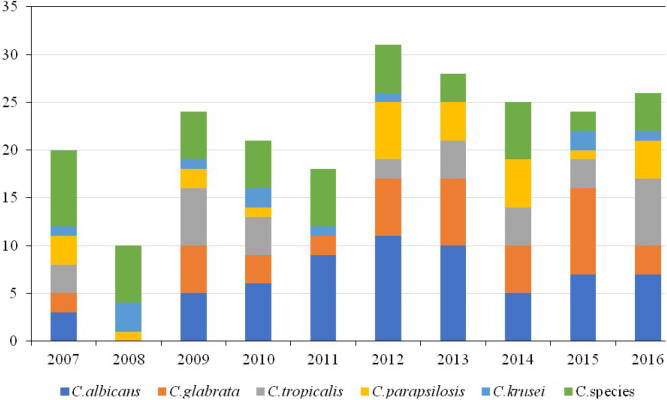 Figure 2
Peer Reviews
No public reviews on file for this paper yet. If you reviewed it on a platform where reviews are public (OpenReview, ICLR, NeurIPS, ICML), you can paste yours below so the community can read it here.
Videos
No videos yet. Explain this paper in a talk, walkthrough, or lecture? Add one.
Taxonomy
TopicsPharmacovigilance and Adverse Drug Reactions · Intramuscular injections and effects · Infectious Encephalopathies and Encephalitis