Coexisting Dual Mechanisms of Ischaemic Stroke: Frequency and outcomes in a university hospital-based stroke registry
Arunodaya R Gujjar, Darshan Lal, Sunil Kumar, Shyam S Ganguly, Sameer Raniga, Faizal Al-Azri, Abdullah Rashid Al-Asmi

TL;DR
This study found that about 14.5% of ischaemic stroke patients have two coexisting stroke mechanisms, which are linked to older age, more risk factors, and worse outcomes.
Contribution
The study identifies the frequency and clinical impact of dual stroke mechanisms in ischaemic stroke patients using a hospital-based registry.
Findings
14.5% of ischaemic stroke patients had dual mechanisms, with small vessel disease being the most common second mechanism.
Patients with dual mechanisms were older, had more risk factors, and worse outcomes compared to those with a single mechanism.
Poor outcomes were independently associated with older age, female gender, poor sensorium, and primary stroke type.
Abstract
Ischaemic stroke (IS) is a heterogeneous condition with varied mechanisms. Some patients have more than 1 stroke mechanism coexisting, irrespective of the mechanism of the incident stroke.~This study aimed to examine the association of coexisting dual stroke mechanisms among IS patients with risk factors and clinical outcomes. This retrospective study included adult patients with IS diagnosed using the TOAST criteria in Sultan Qaboos University Hospital's stroke registry who were admitted and treated from January 2011 to December 2020. The records were reviewed for the presence of dual IS mechanisms (combinations involving small vessel disease [SVD], cardioembolism [CE] or large artery atherosclerosis [LA]). Outcomes were classified as modified Rankin score (mRS) = 0–3 (favourable) or mRS = 4–6 (poor). Univariate and multivariate methods of analysis were used. Among 1,220 patients…
Genes, proteins, chemicals, diseases, species, mutations and cell lines named across the full text — each resolved to its canonical identifier and authoritative record.
Click any figure to enlarge with its caption.
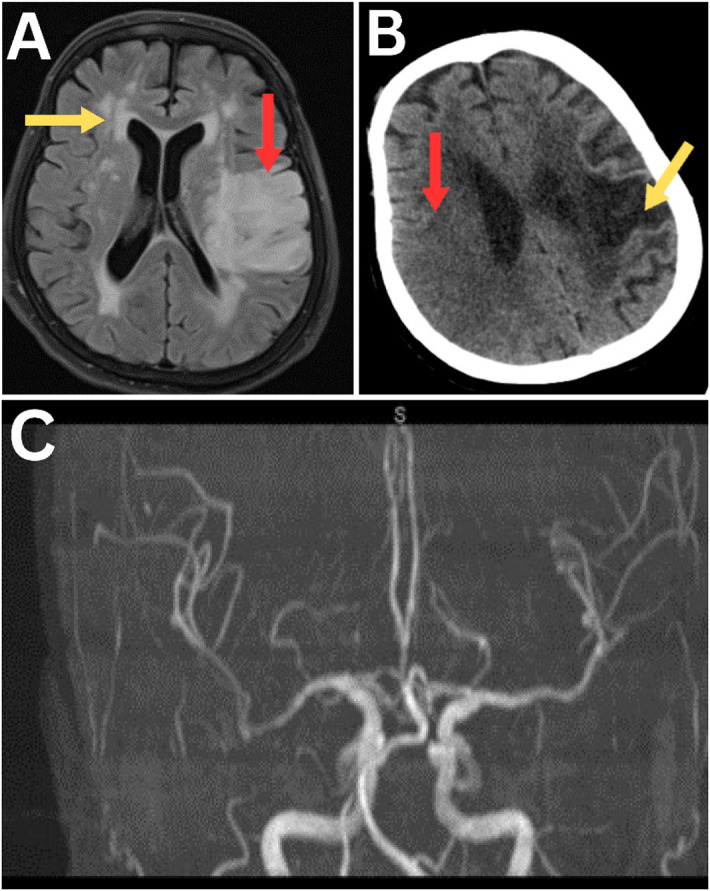 Figure 1
Peer Reviews
No public reviews on file for this paper yet. If you reviewed it on a platform where reviews are public (OpenReview, ICLR, NeurIPS, ICML), you can paste yours below so the community can read it here.
Videos
No videos yet. Explain this paper in a talk, walkthrough, or lecture? Add one.
Taxonomy
TopicsAcute Ischemic Stroke Management · Stroke Rehabilitation and Recovery