Association of cancer and outcomes of patients hospitalized for COVID-19 between 2020 and 2023
Abdulai Tejan Jalloh, Laura Merson, Divya Nair, Shermarke Hassan, Ibrahim Franklyn Kamara, Innocent Nuwagira, Sia Morenike Tengbe, Yusuf Sheku Tejan, Mustapha Kabba, Sulaiman Lakoh, Donald S Grant, Robert J Samuels, Rugiatu Z Kamara, Robert F Terry, Tom Fowler

TL;DR
Cancer patients hospitalized for COVID-19 had higher mortality and longer hospital stays compared to non-cancer patients, but were less likely to be admitted to the ICU.
Contribution
This study provides large-scale evidence on the outcomes of cancer patients hospitalized for COVID-19 across multiple countries.
Findings
Cancer patients had a 30-day in-hospital mortality rate of 29.1% compared to 18.0% in non-cancer patients.
Cancer patients had longer hospital stays (median of 12 days) than non-cancer patients (8 days).
Cancer patients were less likely to be admitted to the ICU (12.6% vs 17.1%) and receive invasive mechanical ventilation.
Abstract
The coronavirus disease 2019 (COVID-19) has caused substantial morbidity and mortality on a global scale. A strong correlation has been found between COVID-19 treatment outcomes and noncommunicable diseases such as cancers. However, there is limited information on the outcomes of cancer patients who were hospitalised for COVID-19. We conducted an analysis on data collected in a large prospective cohort study set-up by the International Severe Acute Respiratory and Emerging Infection Consortium (ISARIC). All patients with laboratory-confirmed or clinically-diagnosed SARS-CoV-2 infection were included. Cancer was defined as having a current solid organ or haematological malignancy. The following outcomes were assessed; 30-day in-hospital mortality, intensive care unit (ICU) admission, length of hospitalization and receipt of higher-level care. Of the 560,547 hospitalised individuals who…
Genes, proteins, chemicals, diseases, species, mutations and cell lines named across the full text — each resolved to its canonical identifier and authoritative record.
Click any figure to enlarge with its caption.
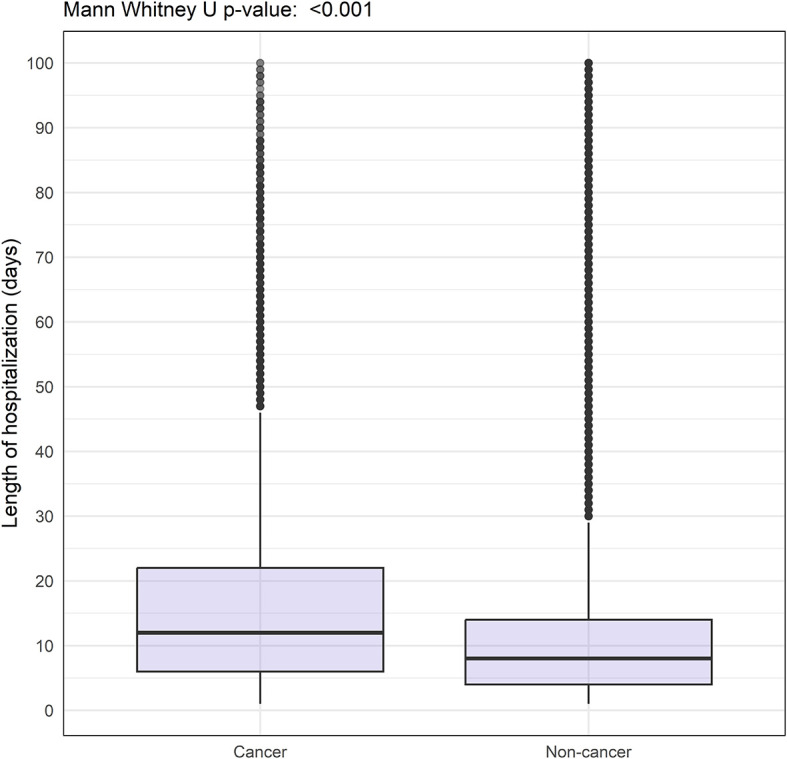 Figure 1
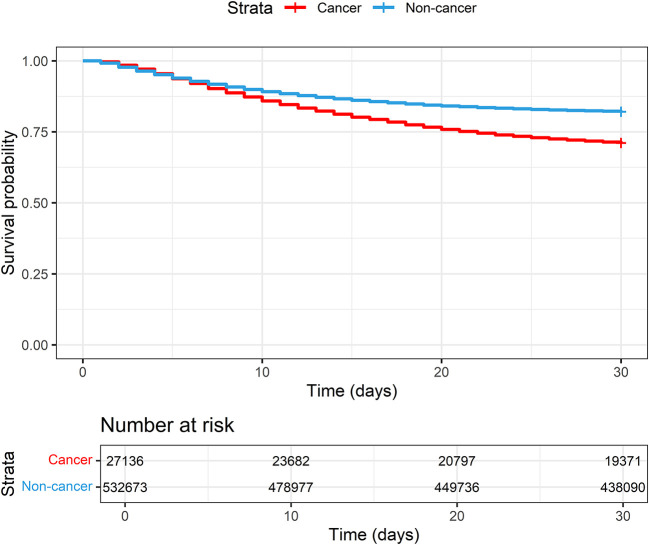 Figure 2
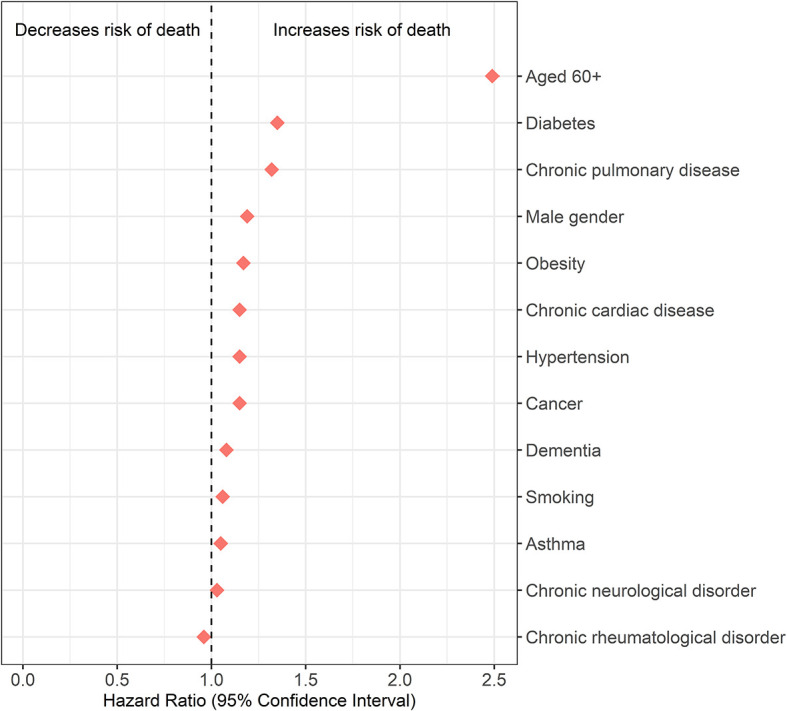 Figure 3
| Cancer (N=27243) | Non-cancer (N=533304) | |
|---|---|---|
| Age in years | ||
| 0-4 | 66 (0.2%) | 9074 (1.7%) |
| 5-14 | 153 (0.6%) | 10811 (2.0%) |
| 15-29 | 217 (0.8%) | 39848 (7.5%) |
| 30-44 | 824 (3.0%) | 90335 (16.9%) |
| 45-59 | 2981 (10.9%) | 136110 (25.5%) |
| 60 and above | 23002 (84.4%) | 247126 (46.3%) |
| Gender | ||
| Male | 15812 (58.1%) | 261479 (49.1%) |
| Female | 11395 (41.9%) | 271435 (50.9%) |
| Countries, by income | ||
| High income | 24692 (90.6%) | 195230 (36.6%) |
| Upper middle income | 2497 (9.2%) | 330196 (61.9%) |
| Lower middle income | 29 (0.1%) | 5684 (1.1%) |
| Low income | 25 (0.1%) | 2190 (0.4%) |
| Hypertension | ||
| Yes | 12037 (50.8%) | 185555 (36.6%) |
| No | 11681 (49.2%) | 321205 (63.4%) |
| Chronic cardiac disease | ||
| Yes | 9018 (34.7%) | 61224 (11.5%) |
| No | 16965 (65.3%) | 469010 (88.5%) |
| Smoking | ||
| Yes | 7674 (52.3%) | 58420 (31.4%) |
| No | 7005 (47.7%) | 127878 (68.6%) |
| Diabetes | ||
| Yes | 7362 (28.0%) | 124843 (23.9%) |
| No | 18901 (72.0%) | 397550 (76.1%) |
| Chronic pulmonary disease | ||
| Yes | 5168 (19.9%) | 42312 (8.0%) |
| No | 20812 (80.1%) | 488232 (92.0%) |
| Chronic rheumatological disorder | ||
| Yes | 3727 (15.8%) | 23328 (11.1%) |
| No | 19867 (84.2%) | 186487 (88.9%) |
| Chronic neurological disorder | ||
| Yes | 3179 (13.2%) | 22432 (10.4%) |
| No | 20831 (86.8%) | 193715 (89.6%) |
| Dementia | ||
| Yes | 2954 (12.6%) | 21656 (10.4%) |
| No | 20569 (87.4%) | 187540 (89.6%) |
| Asthma | ||
| Yes | 2654 (10.3%) | 46029 (8.7%) |
| No | 23144 (89.7%) | 484495 (91.3%) |
| Obesity | ||
| Yes | 2411 (11.1%) | 40334 (14.7%) |
| No | 19390 (88.9%) | 234157 (85.3%) |
|
| Cancer (N=27243) | Non-cancer (N=533304) |
|---|---|---|
| 30-day in-hospital mortality | ||
| Yes | 7940 (29.1%) | 95896 (18.0%) |
| No | 19303 (70.9%) | 437408 (82.0%) |
| Median duration of hospitalization (IQR) in days | 12.0 (6.00, 22.0) | 8.00 (4.00, 14.0) |
| Total (N=560547) | Deaths (N=103836) | Unadjusted hazard ratio (95% CI) | Adjusted hazard ratio
| |
|---|---|---|---|---|
| Age | ||||
| 60 years and above | 270128 | 76514 | 2.01 (1.98-2.04) | 2.43 (2.39-2.46) |
| 0-59 years | 290247 | 27309 | ref | ref |
| Diabetes mellitus | ||||
| Yes | 132205 | 34293 | 1.4 (1.38-1.42) | 1.32 (1.31-1.34) |
| No | 416451 | 67133 | ref | ref |
| Chronic pulmonary disease | ||||
| Yes | 47480 | 13571 | 1.31 (1.28-1.33) | 1.30 (1.28-1.33) |
| No | 509044 | 89157 | ref | ref |
| Gender | ||||
| Male | 277291 | 56727 | 1.11 (1.1-1.12) | 1.19 (1.18-1.21) |
| Female | 282830 | 47020 | ref | ref |
| Cancer | ||||
| Yes | 27243 | 7940 | 1.16 (1.13-1.18) | 1.18 (1.15-1.2) |
| No | 533304 | 95896 | ref | ref |
| Chronic cardiac disease | ||||
| Yes | 70242 | 20692 | 1.2 (1.19-1.22) | 1.15 (1.13-1.17) |
| No | 485975 | 81965 | ref | ref |
| Obesity | ||||
| Yes | 42745 | 8327 | 0.97 (0.95-0.99) | 1.15 (1.13-1.18) |
| No | 253547 | 48963 | ref | ref |
| Hypertension | ||||
| Yes | 197592 | 48449 | 1.37 (1.35-1.38) | 1.13 (1.12-1.15) |
| No | 332886 | 47568 | ref | ref |
| Dementia | ||||
| Yes | 24610 | 8212 | 1.51 (1.48-1.55) | 1.08 (1.05-1.1) |
| No | 208109 | 35207 | ref | ref |
| Smoking | ||||
| Yes | 66094 | 14328 | 1.04 (1.02-1.06) | 1.06 (1.04-1.08) |
| No | 134883 | 22727 | ref | ref |
| Asthma | ||||
| Yes | 48683 | 8790 | 0.93 (0.91-0.95) | 1.04 (1.02-1.07) |
| No | 507639 | 93839 | ref | ref |
| Chronic neurological disorder | ||||
| Yes | 25611 | 6384 | 1.13 (1.1-1.16) | 1.02 (0.99-1.04) |
| No | 214546 | 38379 | ref | ref |
| Chronic rheumatological disorder | ||||
| Yes | 27055 | 6398 | 1.13 (1.1-1.16) | 0.96 (0.94-0.99) |
| No | 206354 | 37244 | ref | ref |
- —Special Programme for Research and Training in Tropical Diseases (TDR), Geneva, Switzerland
Peer Reviews
No public reviews on file for this paper yet. If you reviewed it on a platform where reviews are public (OpenReview, ICLR, NeurIPS, ICML), you can paste yours below so the community can read it here.
Videos
No videos yet. Explain this paper in a talk, walkthrough, or lecture? Add one.
Taxonomy
TopicsCOVID-19 and healthcare impacts · COVID-19 Clinical Research Studies · Body Contouring and Surgery
Introduction
Early in the COVID-19 pandemic, data were collected to identify risk factors for poor outcomes that could inform a risk-based approach to health policy and patient management. Risk factors including age, sex, and several comorbidities were reported to be associated with an increased risk of death. ^ 1 ^ ^,^ ^ 2 ^ The most common comorbidities identified in hospitalised patients during the first wave of the COVID-19 pandemic were chronic cardiac or cardiovascular diseases, diabetes mellitus, hypertension, non-asthmatic chronic pulmonary disease, obesity, and chronic kidney disease. ^ 1 ^ ^,^ ^ 3 ^ ^–^ ^ 6 ^ Understanding which individuals are likely to have a poor prognosis could help inform vaccine prioritisation, shielding policies, or allocation of health care resources in future infectious disease outbreaks and pandemics.
Several studies have reported COVID-19 patients with cancer to be at higher risk of adverse outcomes compared with COVID-19 patients without cancer. ^ 7 ^ ^,^ ^ 8 ^ In a study from China, COVID-19 patients with cancer had higher observed increased rates of death, intensive care unit (ICU) admission, and need for invasive mechanical ventilation. ^ 9 ^ A study of COVID-19 patients in the United States of America reported that cancer patients were at higher risk of death and hospitalisation but were not found to have significantly different rates of ICU admission or ventilator use compared to non-cancer patients. ^ 10 ^ Data from the United States Centre for Disease Control showed that in 2020 and 2021 respectively, 2.0% and 2.4% of people who died of cancer had COVID-19 listed as the underlying cause of death. ^ 11 ^ There is a dearth of evidence on the outcomes of patients with cancer in middle- and low-income countries.
The studies referenced above and other national studies have shown that patients with cancer have worse outcomes than those without cancer when hospitalised due to COVID-19. ^ 12 ^ ^,^ ^ 13 ^ However, to our knowledge, no study has been conducted to evaluate the association between cancer and hospital outcomes among hospitalised COVID-19 patients using an international data set. This study, seeking to build on the collection of existing evidence, uses secondary COVID-19 patient data collected in 54 countries via the Clinical Characterisation Protocol designed by the International Severe Acute Respiratory and Emerging Infections Consortium (ISARIC) and the World Health Organisation (WHO). ^ 14 ^ We investigated the association of cancer as a comorbidity with 30-day in-hospital mortality, ICU admission, length of hospitalization and receipt of higher-level care in COVID-19 patients with and without cancer.
Methods
Study design and setting
This was a prospective cohort study that utilised secondary data from the COVID-19 clinical database hosted by the Infectious Diseases Data Observatory (IDDO). The database contains individual patient data from more than 800,000 hospitalised patients in more than 1,200 institutions from 60 countries across 6 continents. The data were collected using the ISARIC-WHO case report form as a part of the ISARIC-WHO Clinical Characterisation Protocol. ^ 15 ^ ^,^ ^ 16 ^
Study population
We included hospitalised patients of any age with clinically or laboratory-diagnosed SARS-CoV-2 infection. Patients were enrolled between 30 ^th^ January 2020 and 10 ^th^ January 2023. Patients with unknown cancer status were excluded. Patients were followed from the time of hospital admission to discharge or death.
Study variables
We compared the differences in demographic characteristics, comorbidities, treatment with intensive interventions, length of hospitalisation, death (defined as 30-day in-hospital mortality), and hospital outcomes to characterise hospitalised COVID-19 patients with and without cancer.
Severe disease was defined as treatment with higher-level care, including one or more of the following events: admission to an ICU, treatment with invasive mechanical ventilation (IMV), non-invasive ventilation (NIV), high-flow nasal cannula (HFNC), inotropes and/or vasopressors. Length of hospital stay was censored at 100 days.
The presence of cancer was self-reported by patients and recorded as a binary variable classified as malignant neoplasm in the ISARIC-WHO case report form. Cancer was defined as having a current solid organ or haematological malignancy. Malignancies that had been declared ‘cured’ ≥5 years with no evidence of ongoing disease, non-melanoma skin cancer and benign growths or dysplasia were not included in this definition.
Data collection and validation
We used international prospectively collected observational data on demographics, clinical features and outcomes of patients hospitalized with COVID-19 with or without cancer (coded as ‘malignant neoplasm’). Data were collected using the ISARIC-WHO Clinical Characterisation Protocol and contributed to a central repository at the University of Oxford, England. Participating sites used the ISARIC-WHO case report form to enter data onto a Research Electronic Data Capture ( REDCap, version 8.11.11, Vanderbilt University, Nashville, TN) database or used local databases before uploading to the central data repository. ^ 15 ^ Open Data Kit is a suitable open access alternative. Centrally collated data were wrangled and mapped to the structure and controlled terminologies of the Study Data Tabulation Model (version 1.7, Clinical Data Interchange Standards Consortium, Austin, TX) using Trifacta ^®^ software version 9.7.1. OpenRefine is a suitable open access alternative to using Trifacta ^®^. The data collection, aggregation, curation, and harmonisation process has been previously described. ^ 16 ^ Though more than 50% of the data were collected from low- and middle-income countries, most data on patients with cancer were collected from patients in higher income countries.
Analysis and statistical method
Continuous variables such as age and length of hospital stay were summarised as means with standard deviations or medians with interquartile ranges depending upon the distribution of data. Categorical variables (sex, presence of cancer, hospital exit outcomes, etc.) were summarised as frequencies and percentages.
Categorical variables such as death and treatment with intensive interventions between patients with cancer and those without cancer were compared using the chi-square test. Continuous variables such as length of hospital stay were compared between the two groups using the unpaired t-test or Mann Whitney U test depending on the distribution of data. A Kaplan-Meier curve was plotted to show the cumulative incidence of mortality during hospitalization. To assess the independent effect of cancer on mortality in hospitalized COVID-19 patients, a survival analysis model was fitted to the data. The model was adjusted for the following confounders: age, sex, and country income-level. Unadjusted and adjusted hazard ratios with 95% confidence intervals were reported as measures of association. Denominators on individual analyses differ due to availability of data on different variables across the dataset. A P-value of <0.05 was considered statistically significant.
Information on country income level was obtained from the World Bank ( https://datacatalog.worldbank.org/search/dataset/0038543).
All analyses were performed using R version 4.2.2 (IDE PBC, Boston, MA, USA), an open access software. (R: The R Project for Statistical Computing)
Ethics considerations
Execution of the ISARIC-WHO Clinical Characterisation Protocol was approved by the WHO Ethics Review Committee (RPC571 and RPC572, 25 April 2013) and by local or national ethics committees for participating sites. Approvals include the South Central—Oxford C Research Ethics Committee for England (Ref. 13/SC/0149), the Scotland A Research Ethics Committee (Ref. 20/SS/0028) for Scotland, and the Human Research Ethics Committee (Medical) at the University of the Witwatersrand in South Africa as part of a national surveillance programme (M160667), which collectively represent most of the data. Written patient consent for data to be collected and used in research was obtained or waived according to local norms determined by the responsible Ethics Committee. The data were collected using the ISARIC-WHO case COVID-19 report form, locally-tailored versions of the form, or independently designed forms. Arrangements surrounding the pooling, storage, curation and sharing of these data are covered by the IDDO Governance processes. ^ 17 ^
All data were deidentified and ensured of low risk for identification of individuals by a statistical disclosure process prior to sharing. Data were shared under a Data Access Agreement following approval from the IDDO Data Access Committee. ^ 18 ^ Execution of this secondary analysis was approved by the Union Ethics Advisory Group of the International Union against Tuberculosis and Lung Disease, Paris, France (EAG number 18/23, dated 8 ^th^ September 2023).
Results
Among 841,640 individual records in the dataset, 560,547 (66.6%) met the criteria for analysis. Of those that did not, 73,327 (8.7%) did not have clinical or laboratory confirmation of SARS-CoV-2 infection; a further 3,879 (0.5%) were not admitted to hospitals between January 30 ^th^ 2020 and January 10 ^th^ 2023; and 203,887 (24.2%) did not have information on cancer status available.
Demographics and comorbidities
Of the 560,547 individuals analysed, 27,243 (4.9%) had cancer. Furthermore, 219,922 (39.2%) individuals that met the criteria for analysis were hospitalised in high-income countries. There were differences in age, sex, country income level, and other comorbidities in the group of patients with cancer versus those without cancer. Those with cancer were older (84.4% versus 46.3% aged ≥60 years), were more likely to be male (58.1% versus 49.1%) and were more likely to come from a high-income country (90.6% versus 36.6%). Of the 10 comorbidities most common in the whole population, all except obesity were more prevalent in the group of patients with cancer ( Table 1).
Mortality, severity, and length of hospitalization
Patients with cancer had higher 30-day in-hospital mortality (29.1% vs 18.0%) and longer duration of hospitalization (median of 12 days (IQR 6.0-22.0) vs 8 days (IQR 4.0-14.0)) compared with those without cancer ( Table 2 and Figures 1 and 2).
Boxplot showing length of hospitalisation among COVID-19 patients with and without cancer hospitalised between 2020-2023 and enrolled to the ISARIC-WHO Clinical Characterisation Protocol.
Kaplan-Meier plot of COVID-19 patients with and without cancer hospitalised between 2020-2023 and enrolled to the ISARIC-WHO Clinical Characterisation Protocol.
However, patients with cancer were reported to have received higher-level care slightly less often than those without cancer (28.9% vs 29.8%) including lower rates of ICU admission (12.6% vs 17.1%) and invasive mechanical ventilation (4.5% vs 7.6%). There were similar levels of treatment with high-flow nasal cannulas (17.5% vs 16.1%), extracorporeal membrane oxygenation (0.1% and 0.5%), non-invasive ventilation (11.6% vs 11.7%), and treatment with inotropes or vasopressors (3.5% vs 4.5%) across both groups ( Table 2).
The effect of cancer and other comorbidities on 30-day in-hospital mortality among COVID-19 patients is reported in Table 3 and Figure 3. Hospitalised COVID-19 patients with cancer had a higher risk of 30-day in-hospital mortality compared to those without cancer. The hazard ratio of dying from cancer, adjusted for age, sex and country income level was 1.18 (1.15-1.2).
Effect of comorbidities (including cancer) on 30-day in-hospital mortality, after adjustment for age, sex and country income level.
Adjusted hazard ratios were higher for age and gender compared with those for cancer. Adjusted for sex and country income level, individuals aged ≥ 60 years had the highest hazard ratio 2.43 (2.39-2.46). Adjusted for age and country income level, male sex had a hazard ratio of 1.19 (1.18-1.21).
Among all comorbidities, only diabetes mellitus (HR: 1.32, 95%CI: 1.31-1.34) and chronic pulmonary disease (HR: 1.30, 95%CI: 1.28-1.33) were more strongly associated with an increased risk of death compared with cancer, after adjusting for age, sex and country income level.
Discussion
Our study findings underscore the heightened vulnerability of cancer patients hospitalized with COVID-19, revealing a higher mortality rate, longer hospital stays, and a nuanced pattern of care that reflects the complexity of managing severely ill patients during a public health crisis. These outcomes align with the existing literature on the association of cancer with COVID-19 prognosis and treatment approaches during the pandemic. ^ 13 ^ ^,^ ^ 19 ^ In keeping with our findings, other studies conducted in high-income countries have also documented that the proportion of COVID-19 patients with cancer and other comorbidities is higher in the elderly (>60 years) as compared to the general population. ^ 13 ^ ^,^ ^ 20 ^ ^,^ ^ 21 ^
A meta-analysis of 4 studies (4691 non-cancer patients, 154 cancer patients) that looked at mortality in cancer patients versus non-cancer patients reported a pooled odds ratio of death of 3.91 (95%CI: 2.70-5.67). ^ 12 ^ This is higher than reported in our study. This could be explained by the lack of adjustment for potential confounders in the meta-analysis. It is also unclear whether or not the patients in these studies were primarily admitted for COVID-19, for cancer, or for other reasons. When considering other significant risk factors for mortality, we observed that cancer ranked prominently. Cancer demonstrated a stronger association with mortality compared to all other comorbidities, except for diabetes mellitus and chronic pulmonary disease.
Despite the higher mortality risk, cancer patients in our study were slightly less likely to receive higher-level care compared to patients without cancer (28.9% vs 29.8%). Specifically, cancer patients were less frequently admitted to the ICU (12.6% vs. 17.1%) and had invasive mechanical ventilation less often (4.5% vs. 7.6%). These findings diverge from the expectation that higher-risk patients would necessitate more aggressive treatment. Though these event rates align with other studies of cancer patients, few comparators with non-cancer patients hospitalised for COVID-19 are in the literature. Marta et al. (2020) reported ICU admission rates of 39.1% in cancer patients with COVID-19 and use of invasive mechanical ventilation in 84.4 %. ^ 22 ^ Elgohary et al.’s (2021) systematic review and meta- analysis of cancer patients with COVID -19 reported an ICU admission rate of 14.5% (95% CI: 8.5-20.4) and a mechanical ventilation rate of 11.7% (95% CI: 5.5-18). ^ 12 ^ When comparing cancer patients with non-cancer patients, Abuhelwa et.al (2022) found cancer patients hospitalized for COVID-19 had similar rates of invasive mechanical ventilation compared to those without cancer (10.14% vs 9.36.%). ^ 13 ^
We found differences in mean hospital stay between patients with cancer and those without cancer. The longer hospital stay might be related to cancer patients having several other comorbidities and the management of the side effects of cancer treatment. However, we cannot explain why they stayed longer in hospital but received less high-level care compared to COVID-19 patients without cancer. Abuhelwa’s 2022 nation-wide study reported no difference in hospital stays between these patient groups (8.07 vs 7.46 days). The difference between these findings and ours may reflect differences in admission policy or availability of hospital beds. The lower mortality rates in Abuhelwa’s study as compared to our findings may indicate less severe disease, and therefore a population requiring less in-hospital care.
Strengths and limitations
One key strength of our study was the use of a large sample size, orders of magnitude larger than most previous studies. Therefore, our estimates should be more generalisable and should have a higher power to demonstrate significant associations than previously published studies. We adhered to the STROBE (Strengthening the Reporting of Observational Studies in Epidemiology) guidelines for reporting study findings.
This analysis has several limitations. This study encompassed all patients with current cancer, but we couldn’t distinguish between various cancer types as detailed information on each patients’ cancer diagnosis, staging and treatment modalities were not available. However, other studies have highlighted lung cancer and haematological cancers as being those most closely linked to mortality in COVID-19 patients. ^ 13 ^ ^,^ ^ 23 ^ ^,^ ^ 24 ^
Differences in reporting of the type and details of cancer diagnosis across the available literature make it challenging to make comparisons. Studies that analysed data through the use of electronic health records may have included patients in remission. Though enrolment to the ISARIC-WHO Clinical Characterisation Protocol focused on individuals admitted for COVID-19 illness, some individuals may have been admitted due to cancer related illness.
In order to enable future research to disaggregate cancer patients by the following characteristics i.e. type of cancer, staging of cancer and treatment modalities, - a more comprehensive case report form is needed. Having these data available would enable a more personalized risk assessment and a better understanding of how management strategies relate to patient outcomes. Additionally, the availability of vaccination data will allow the examination of the impact of COVID-19 vaccination status on outcomes in cancer patients. The majority of data on patients with cancer (90.6%) were collected from patients in high income countries. so no inferences could be drawn from patient outcomes linked with World Bank income classifications.
Conclusions
Our study found that patients with cancer were older with more comorbidities. They had an increased risk of mortality with longer duration of hospital stay as compared to non-cancer patients but received less high-level care including ICU admission and invasive mechanical ventilation. This highlights the importance of collecting data in emerging infections to identify at-risk groups, facilitating appropriate resource allocation and informing policy decisions aimed at resource allocation during health emergencies. The availability and collection of data on our platforms were predominantly from high-income countries. To prepare for a future pandemic, data availability and coverage must be more universal. More must also be done to support data collection and the capacity to analyse those data within low- and middle-income countries.
The reference list from the paper itself. Each links out to its DOI / PubMed record.
- 1Docherty AB : Features of 20 133 UK patients in hospital with covid-19 using the ISARIC WHO Clinical Characterisation Protocol: prospective observational cohort study. BMJ. 2020;369:m 1985. 10.1136/bmj.m 1985 32444460 PMC 7243036 · doi ↗ · pubmed ↗
- 2Rod JE Oviedo-Trespalacios O Cortes-Ramirez J : A brief-review of the risk factors for covid-19 severity. Rev. Saude Publica. 2020;54:60. 10.11606/s 1518-8787.2020054002481 32491116 PMC 7263798 · doi ↗ · pubmed ↗
- 3Huang C : Clinical features of patients infected with 2019 novel coronavirus in Wuhan. China. Lancet Lond. Engl. 2020;395:497–506. 10.1016/S 0140-6736(20)30183-5 31986264 PMC 7159299 · doi ↗ · pubmed ↗
- 4Zhou F : Clinical course and risk factors for mortality of adult inpatients with COVID-19 in Wuhan, China: a retrospective cohort study. Lancet Lond. Engl. 2020;395:1054–1062. 10.1016/S 0140-6736(20)30566-3 32171076 PMC 7270627 · doi ↗ · pubmed ↗
- 5Cummings MJ : Epidemiology, clinical course, and outcomes of critically ill adults with COVID-19 in New York City: a prospective cohort study. Med Rxiv Prepr. Serv. Health Sci. 2020.04.15.20067157 (2020). 10.1101/2020.04.15.20067157 32442528 PMC 7237188 · doi ↗ · pubmed ↗
- 6Yang X : Clinical course and outcomes of critically ill patients with SARS-Co V-2 pneumonia in Wuhan, China: a single-centered, retrospective, observational study. Lancet Respir. Med. 2020;8:475–481. 10.1016/S 2213-2600(20)30079-5 32105632 PMC 7102538 · doi ↗ · pubmed ↗
- 7Liu C Zhao Y Okwan-Duodu D : COVID-19 in cancer patients: risk, clinical features, and management. Cancer Biol. Med. 2020;17:519–527. 10.20892/j.issn.2095-3941.2020.0289 32944387 PMC 7476081 · doi ↗ · pubmed ↗
- 8Liang W : Cancer patients in SARS-Co V-2 infection: a nationwide analysis in China. Lancet Oncol. 2020;21:335–337. 10.1016/S 1470-2045(20)30096-6 32066541 PMC 7159000 · doi ↗ · pubmed ↗