A new genus of Orgyiini (Lepidoptera, Erebidae, Lymantriinae) from China, with description of a new species

Abstract
Genes, proteins, chemicals, diseases, species, mutations and cell lines named across the full text — each resolved to its canonical identifier and authoritative record.
Click any figure to enlarge with its caption.
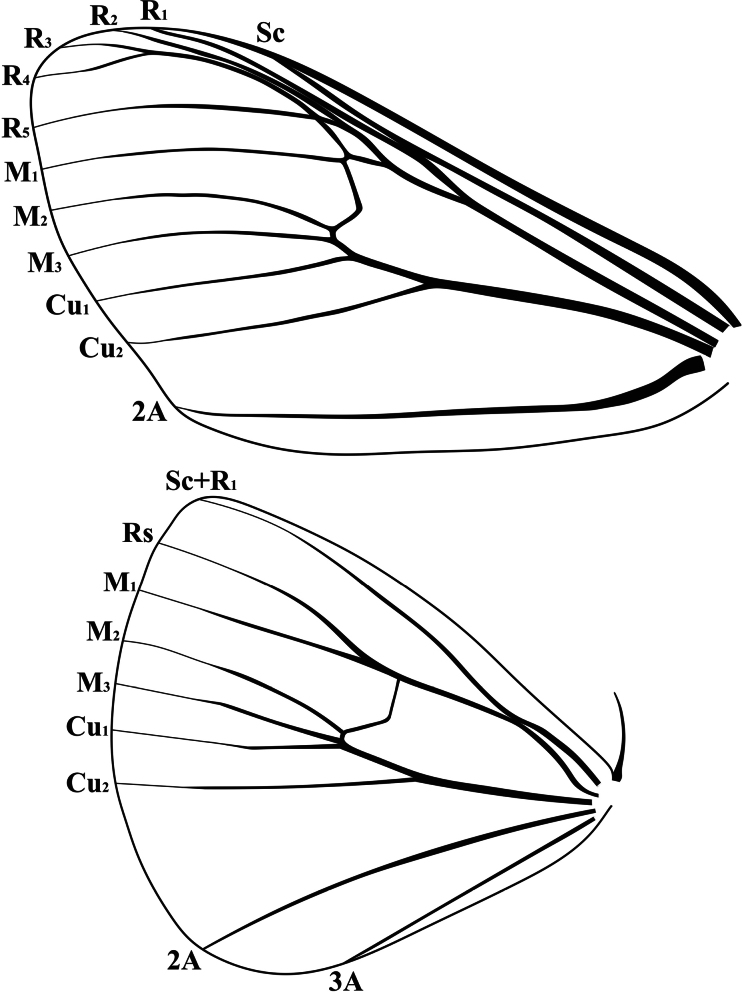 Figure 1
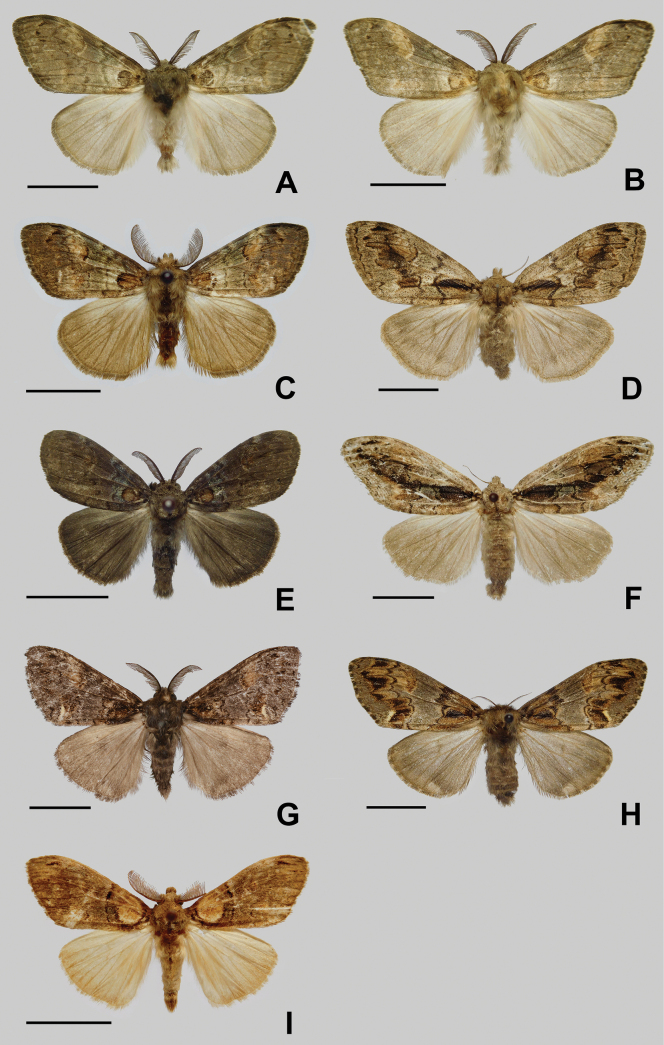 Figure 2
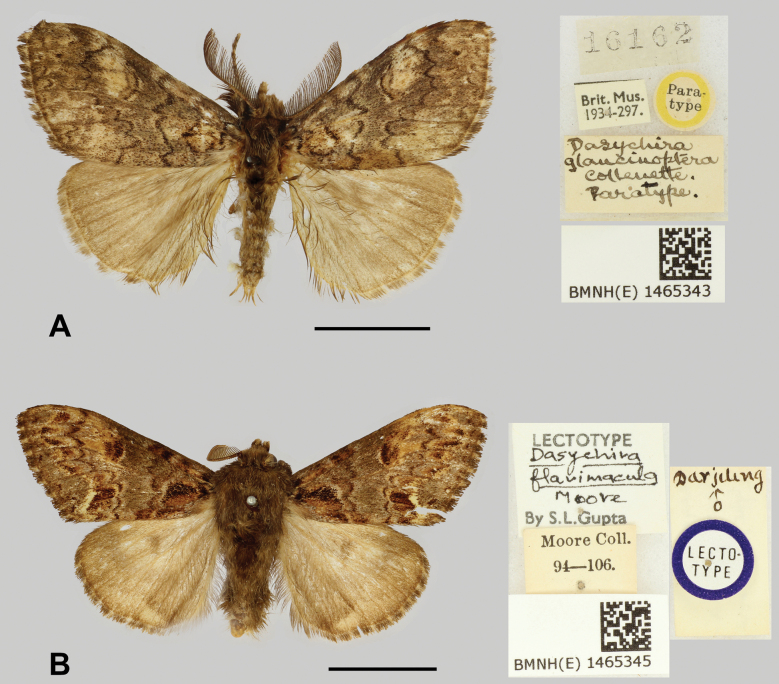 Figure 3
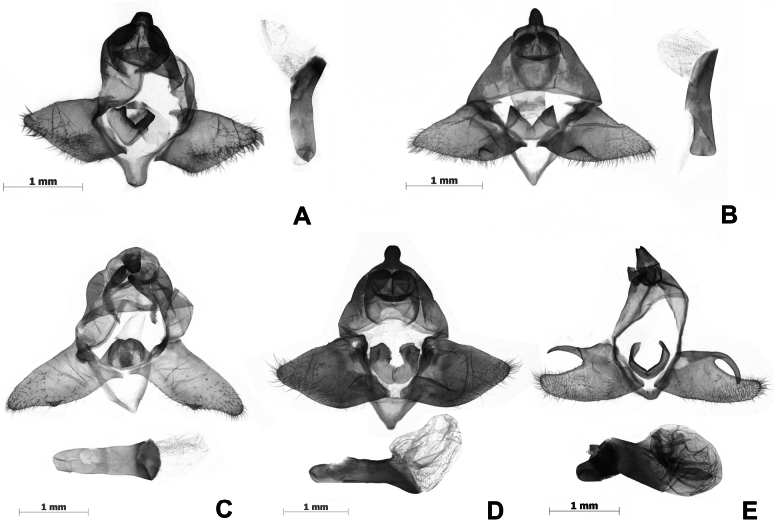 Figure 4
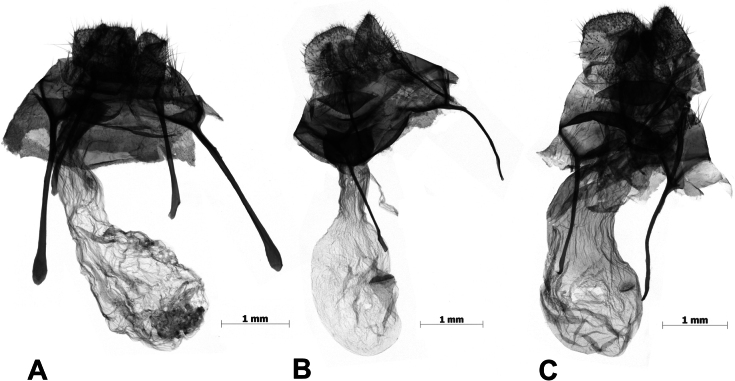 Figure 5
| Taxa | Locality | Date | GenBank | Source |
|---|---|---|---|---|
|
| China | - |
| NCBI, |
|
| China | - |
| NCBI, |
|
| China | 2022-10-02 |
| NCBI, newly sequenced in this study |
|
| China | 2023-11-01 |
| NCBI, newly sequenced in this study |
|
| USA | - |
| NCBI, |
|
| India | - |
| NCBI, |
|
| Canada | 2010-01-01 |
| NCBI |
| Species code | Species name | 1 | 2 | 3 | 4 | 5 | 6 |
|---|---|---|---|---|---|---|---|
|
|
| ||||||
|
|
| 0.082 | |||||
|
|
| 0.105 | 0.112 | ||||
|
|
| 0.108 | 0.115 | 0.122 | |||
|
|
| 0.146 | 0.163 | 0.158 | 0.171 | ||
|
|
| 0.116 | 0.126 | 0.140 | 0.110 | 0.176 | |
|
|
| 0.113 | 0.122 | 0.126 | 0.133 | 0.159 | 0.101 |
| 1 | Forewings without a yellow-white crescent spot near anal angle |
|
| – | Forewings with a yellow-white crescent spot near anal angle |
|
| 2 | Valvae with a triangle sclerotized saccular process |
|
| – | Valvae with an indistinct saccular process |
|
| 3 | Valvae wide, about half the base, narrowed at about the distal half |
|
| – | Valvae wide, about 2/3 the base, narrowed at about the distal 1/3 |
|
Peer Reviews
No public reviews on file for this paper yet. If you reviewed it on a platform where reviews are public (OpenReview, ICLR, NeurIPS, ICML), you can paste yours below so the community can read it here.
Videos
No videos yet. Explain this paper in a talk, walkthrough, or lecture? Add one.
Taxonomy
TopicsLepidoptera: Biology and Taxonomy · Plant and Fungal Species Descriptions · Plant and animal studies
Introduction
The tribe Orgyiini, belonging to the subfamily Lymantriinae of the family Erebidae, is primarily distributed in the Old World and Nearctic Realm (Wang et al. 2015). It is characterized by dorsal brushes on the first four larval abdominal segments and an accessory cell (also called an areole) in the forewings (Ferguson 1978; Holloway 1999). The tribe was originally proposed by Wallengren (1861) and was later revised by Ferguson (1978), who assigned four genera to Orgyiini based on Nearctic taxa. Subsequently, Holloway (1999) further revised the tribe and recorded nine genera from Borneo. Wang et al. (2015) reconstructed the molecular phylogeny of sixteen Orgyiini genera using eight gene regions.
In the present study, we propose a new genus to accommodate a new species and three species previously classified under the complex genus Dasychira Hübner, 1809. We provide illustrations of adults and genitalia of the currently recognized species of the new genus, as well as wing venation of the type species. We also provide a key and DNA barcode data for the species of this genus.
Material and methods
Examined specimens
The type specimens of Cyclomaculaglaucinoptera (Collenette, 1934), comb. nov. and C.flavimacula (Moore, 1865), comb. nov. are from the Natural History Museum in London, UK. The other specimens were collected by light trap and were deposited at the Insect Collection, Department of Entomology, College of Plant Protection, South China Agricultural University, Guangzhou, China. Photos of male adults were taken with a NIKON CoolPix S7000 digital camera. The male genitalia were examined after the abdomen was removed and boiled in 10% NaOH solution for 3–5 minutes. The genital slides were photographed with a Carl Zeiss Stemi 2000-CS stereoscope. All photos were processed with Adobe Photoshop CC2023 and SAI ver. 2 software. The terminology of adults and genitalia follows Ferguson (1978), Holloway (1999) and Chao (2003).
Molecular data analyses
Total genomic DNA was extracted from two or three legs of adults using a TIANamp Genomic DNA Kit (Tiangen Biotech Co. Ltd, Beijing, China). A 658 bp fragment of the mitochondrial gene cytochrome c oxidase I (COI), namely DNA barcode, was amplified from the new species and Cyclomaculaglaucinoptera comb. nov., with the universal primers LCO1490 and HCO2198 (Folmer et al. 1994). DNA extraction and PCR amplification followed Wang et al. (2014). The DNA barcode sequences of C.dudgeoni comb. nov. and C.flavimacula comb. nov. were sourced from Wang’s research (2015). Other Cyclomacula and species of other genera were downloaded from the NCBI database. The detailed sampling data in this study are listed in Table 1. The pairwise genetic distances of the COI gene in these species were calculated under the Kimura 2-Parameter (K2P) model (Kimura 1980) in the MEGA11 software (Tamura et al. 2021).
Results
The genetic distances of COI among the species of Cyclomacula gen. nov. and the type species of three closely related genera are listed in Table 2. The pairwise distances between species of the new genus and the type species of its closely related genera range from a minimum of 0.110 between Cyclomaculadudgeoni comb. nov. and Dasychiratephra Hübner, 1809 to a maximum of 0.163 between Cyclomaculaglaucinoptera comb. nov. and Olenemendosa Hübner, 1823. The mean genetic distance among Cyclomacula species is 10.7%. The minimal interspecific genetic distance within the new genus is between species C.medogensis sp. nov. and C.glaucinoptera comb. nov. with a value of 8.2%.
Key to species of Cyclomacula gen. nov. in China based on the male
**: **
Cyclomacula
gen. nov.
Taxon classificationAnimaliaLepidopteraErebidae
BD71B1B5-C130-58AD-9327-2F44A0199F86
https://zoobank.org/89844E6C-A08B-456A-AFA9-9217456C7364
Type species.
Dasychiraglaucinoptera Collenette, 1934, by present designation.
Diagnosis.
The new genus usually possesses a nearly ring-like basal spot on the male forewings. It can be easily distinguished from the type species of Dasychira and Olene Hübner, 1823 (D.tephra and O.mendosa) by valvae without branching into two arms in the male genitalia. The new genus is also similar to Telochurus Maes, 1984, but can be separated from the latter by the aedeagus without a cornutus.
Description.
Labial palpi short and brown. Antennae bipectinate, stronger in male compared to female. Forewings usually with a ring-like basal spot in male, and an irregular, sometimes wavy oblique postmedial fascia in female; wing venation (Fig. 1) with an accessory cell; R_1_ branching from distal 1/3 of dorsal margin of discal cell, R_2_, R_3+4_ and R_5_ arising from accessory cell, respectively; M_1_ originated from upper angle of discal cell, M_2_ and M_3_ originated from lower angle of discal cell, respectively; Cu_1_ parallel to Cu_2_. Hindwings without markings in male, but an indistinct postmedian fascia often present in female; Rs short stalked with M_1_; M_2_ present, arising from lower angle of discal cell; Cu_1_ parallel to Cu_2_.
Wing venation of Cyclomaculaglaucinoptera comb. nov., male.
Male genitalia. Uncus short, digitate. Gnathus bifid, each fork crescent-shaped. Valvae board basally, narrowed distally. Saccus small. Aedeagus simple.
Female genitalia. Anal papillae broad. Apophyses well developed. Ductus poorly sclerotized at base. Bursa large, signum sclerotized medially or absent.
Etymology.
The new genus is named after the Latin words “cyclus” and “macula”, which refer to the ring-like basal spot on the forewings.
Distribution.
China (Jiangsu, Zhejiang, Hubei, Hunan, Fujian, Guangdong, Guangxi, Hainan, Shaanxi, Gansu, Sichuan, Yunnan, Xizang); India, Nepal, Malaysia, Indonesia.
Cyclomacula
medogensis
Taxon classificationAnimaliaLepidopteraErebidae
Qiao & Wang sp. nov.
2C585992-FDEA-5484-B41F-41E276649FE3
https://zoobank.org/C6ACCD0C-617C-4938-A0F6-5F8A5E0A93C1
Type materials.
Holotype: China • ♂; Xizang Autonomous Region, Linzhi City, Medog County; alt. 2400 m; 1 Nov. 2023; Chuhang Qiao & Ziqi Yuan & Liang Guo leg. Paratype: • 1♂; same collection data as for preceding.
Diagnosis.
The new species is similar to C.glaucinoptera (Collenette, 1934), comb. nov. in male, but can be distinguished from the latter by the hindwings light brown, uncus slightly pointed, valvae with a weak and indistinct saccular process. It also resembles C.dudgeoni comb. nov. in male, but the latter has dark brown wings and longer valvae. The new species differs from C.flavimacula comb. nov. by forewings without a yellow-white crescent spot near anal angle, and gnathus bifurcating into two slenderer forks.
Description.
Male adult (Fig. 2A, B). Forewing length: 19–20 mm. Antennae bipectinate, dark brown. Vertex and frons with greyish hair. Labial palpi yellowish-brown. Thorax dark brown or yellowish-brown. Abdomen light brown. Forewings ground color greyish-brown, with two dark brown or yellowish-brown basal spots in which the ventral one is nearly ring-like; a large, faint yellow crescent spot present along the outer margin of discal cell slanting to costa; antemedian line blurred, dark brown; postmedian fascia wavy; and cilia of outer margin dark brown. Hindwings light brown, without markings; cilia of outer margin dark brown.
Adults of Cyclomacula species (A–H) and Olene species (I). A.Cyclomaculamedogensis sp. nov. holotype, male; B.C.medogensis sp. nov. paratype, male; C.C.glaucinoptera comb. nov., male; D.C.glaucinoptera comb. nov., female; E.C.dudgeoni comb. nov., male; F.C.dudgeoni comb. nov., female; G.C.flavimacula comb. nov., male; H.C.flavimacula comb. nov., female; I.Olenemendosa, male. Scale bars: 10 mm.
Male genitalia (Fig. 4A). Uncus short, digitate. Gnathus well developed, bifid, each fork crescent-shaped. Valvae broad at basal half, narrowed at distal half. Juxta well sclerotized at dorsal margin. Saccus small. Aedeagus simple, slightly curved distally.
Etymology.
The species is named after its type locality: Medog County.
Distribution.
China (Xizang Autonomous Region).
Cyclomacula
glaucinoptera
Taxon classificationAnimaliaLepidopteraErebidae
(Collenette, 1934) comb. nov.
D5ECA9D8-70F2-5412-A14C-200C35E5E49D
Dasychira glaucinoptera Collenette, 1934: 117; Chao 2003: 94.
Material examined.
China • 1♂, paratype of C.glaucinoptera; Zhejiang Province, Hangzhou City, West Tianmu Mountian; alt. 1600 m; 25 Jul. and Oct. 1931; H. Höne leg (Fig. 3A). Hubei Province • 1♂1♀; Yichang City; 20 Oct. 2012; Min Wang leg. Shaanxi Province • 2♂; Baoji City, Feng County; alt. 1500 m; 22 Sep. 2022; Liping Zhou leg.; • 1♂2♀; same collection data as for preceding; 2 Oct. 2023. Sichuan Province • 1♂; Yaan City, Yingjing County, Longcanggou National Forest Park; 25 Jul. 2015; Min Wang leg.
Type materials of Cyclomacula. A.C.glaucinoptera comb. nov. (paratype, male, copyright from Natural History Museum in London); B.C.flavimacula comb. nov. (lectotype, male, copyright from the Natural History Museum in London). Scale bars: 10 mm.
Redescription.
Male adult (Fig. 2C). Forewing length: 19–22 mm. Antennae bipectinate, dark brown. Vertex and frons with light greyish-brown hair. Labial palpi light greyish-brown. Thorax and abdomen greyish-brown. Forewings ground color greyish-brown, with two reddish-brown basal spots in which the ventral one is nearly ring-like; a black line present along the outer margin of discal cell; antemedian and postmedian line dark brown, wavy; cilia of outer margin dark brown. Hindwings brown, without markings; cilia of outer margin brown.
Female adult (Fig. 2D). Forewing length: 25–27 mm. Antennae bipectinate, greyish-brown. Vertex and frons with greyish hair. Labial palpi greyish-brown. Thorax greyish. Abdomen light greyish-brown. Forewings greyish-brown, with a basal stripy black spot; antemedian line black; postmedian fascia broad, irregular, ending at vein 2A; outer margin with a black line, cilia dark brown. Hindwings light greyish-brown, with an indistinct submarginal dark brown band.
Male genitalia (Fig. 4B). Uncus short, digitate. Gnathus well developed, bifid, each fork crescent-shaped. Valvae broad at basal half, narrowed at distal half, with a triangle sclerotized saccular process about the middle of the ventral margin. Saccus small, triangular. Aedeagus relatively straight, with tiny spines terminally.
Male genitalia of Cyclomacula species (A–D) and Olene species (E). A.Cyclomaculamedogensis sp. nov.; B.C.glaucinoptera comb. nov.; C.C.dudgeoni comb. nov.; D.C.flavimacula comb. nov.; E.Olenemendosa. Scale bars: 1 mm.
Female genitalia (Fig. 5A). Anal papillae broad. Apophyses anterioris slightly longer than apophyses posterioris. Ductus poorly sclerotized at base. Bursa broad and thin without signum.
Distribution.
China (Zhejing, Hubei, Fujian, Sichuan, Yunnan, Xizang, Shaanxi, Gansu).
Cyclomacula
dudgeoni
Taxon classificationAnimaliaLepidopteraErebidae
(Swinhoe, 1907) comb. nov.
1FA732ED-C7A1-5313-BDA8-E37297D29538
Dasychira dudgeoni Swinhoe, 1907: 203; Chao 2003: 90. Pseudodura dasychiroides Strand, 1914: 333. Orgyia dudgeoni
Swinhoe 1923: 404. Olene dudgeoni
Holloway 1999: 33.
Material examined.
China • 1♂; Fujian Province, Wuyishan City, Wuyishan National Park; alt. 1200 m; 17 May 2021; Min Wang & Chuyang Huang leg. Guangdong Province • 4♂1♀; Huizhou City, Longmen County, Nankun Mountain; 10 Sep. 2024; Chuhang Qiao & Ziqi Yuan leg. Guangdong Province • 2♂; Shaoguan City, Ruyuan County, Nanling National Nature Reserve; 31 May 2017; Min Wang leg. Hainan Province • 1♂1♀; Jianfengling National Nature Reserve; 9 Jul. 2018; Shifang Mo & Houshuai Wang & Zhipeng Miao leg. Zhejiang Province, • 1♂; Hangzhou City, Linan County, Tianmu Mountain; alt. 1080 m; 14 Jun. 2015; Min Wang leg.
Redescription.
Male adult (Fig. 2E). Forewing length: 14–19 mm. Antennae bipectinate, dark brown. Vertex and frons with greyish-brown hair. Labial palpi dark brown. Thorax dark brown. Abdomen greyish-brown. Forewings dark brown, with a ring-like reddish-brown basal spot; antemedian fascia dark blue, postmedian fascia inconspicuous. Hindwings greyish-brown.
Female adult (Fig. 2F). Forewing length: 20–27 mm. Antennae bipectinate, greyish-brown. Vertex, frons and labial palpi greyish-brown. Thorax greyish-brown. Abdomen dark khaki. Forewings ground color greyish-brown, with a broad black patch at base, antemedian and postmedian lines black, postmedian fascia broad, black. Hindwings dark khaki, without markings.
Male genitalia (Fig. 4C). Uncus short, digitate. Gnathus bifid, each fork crescent-shaped. Valvae broad about the basal 2/3, narrowed about the distal 1/3, with a small triangular sclerotized saccular process near the distal 1/3 of the ventral margin. Saccus small and triangular. Aedeagus straight, inflated terminally.
Female genitalia (Fig. 5B). Anal papillae broad. Apophyses anterioris slightly longer than apophyses posterioris. Ductus short. Bursa large, signum with a transverse stripe-shaped sclerotization in middle.
Female genitalia of Cyclomacula. A.C.glaucinoptera comb. nov.; B.C.dudgeoni comb. nov.; C.C.flavimacula comb. nov. Scale bars: 1 mm.
Distribution.
China (Jiangsu, Zhejing, Hubei, Hunan, Fujian, Guangdong, Guangxi, Hainan, Yunnan); India, Malaysia, Indonesia.
Cyclomacula
flavimacula
Taxon classificationAnimaliaLepidopteraErebidae
(Moore, 1865) comb. nov.
32FD35EA-727E-5BFE-8F88-5E4D805EBE9C
Dasychira flavimacula Moore, 1865: 803–804: Chao 2003: 92. Orgyia flavimacula Swinhoe, 1923: 298.
Material examined.
China • 1♂; Shaanxi Province, Baoji City, Taibai County; alt. 1407 m; 25 Sep. 2019; Min Wang leg. Xizang Autonomous Region • 1♂1♀; Cuona City, Lemenba County, alt. 2400 m, 23 May 2018, Houshuai Wang leg. Yunnan Province • 1♂; Nujiang Lisu Autonomous Prefecture, Gongshan Dulong and Nu Autonomous County, Pukawang village; alt. 1409 m; 4 May 2024; Shaoji Hu leg. Yunnan Province • 1♂1♀; Lijiang City, Yulong Naxi Autonomous County, Yulong Snow Mountain; alt. 3500 m; 18 Jun. 2024; Chuhang Qiao & Ziqi Yuan leg. INDIA • 1♂; lectotype of C.flavimacula, Darjeeling (Fig. 3B).
Redescription.
Male adult (Fig. 2G). Forewing length: 19–21 mm. Antennae bipectinate, dark brown. Vertex and frons with greyish-brown hair. Labial palpi reddish-brown. Thorax and abdomen dark brown. Forewings background color greyish-brown with an indistinct basal patch; antemedian and postmedian lines dark brown, wavy; a yellow crescent spot present near anal angle; cilia of outer margin dark brown. Hindwings brown, without markings; cilia of outer margin dark brown.
Female adult (Fig. 2H). Forewing length: 26–27 mm. Antennae bipectinate, greyish-brown. Frons, vertex and labial palpi greyish-brown. Thorax and abdomen greyish-brown. Forewings background color greyish-brown with a basal dark brown patch; postmedian fascia broad, waved; a yellow-brown patch present along the outer margin of discal cell, and a yellow crescent spot present near anal angle; cilia dark brown mixed with dark yellow. Hindwings greyish-brown, without markings; cilia of outer margin dark brown mixed with dark yellow.
Male genitalia (Fig. 4D). Uncus short, digitate. Gnathus bifid and broad, each fork crescent-shaped. Valvae broad at basal half, tapered at distal half. Juxta U-shaped. Saccus small and triangular, pointed at the terminal. Aedeagus straight, without cornutus.
Female genitalia (Fig. 5C). Anal papillae broad. Apophyses anterioris slightly longer than apophyses posterioris. Ductus short with a short-sclerotized base. Bursa broad, with a small transversely sclerotized signum.
Distribution.
China (Sichuan, Yunnan, Xizang, Shaanxi); India, Nepal.
Discussion
Three of the four recognized species in Cyclomacula gen. nov. were previously classified under the very complex genus Dasychira. However, the valvae of the type species of Dasychira, D.tephra, are divided into two arms (Ferguson 1978: fig. 7), which are distinctly different from those of Cyclomacula species. Ferguson (1978) confirmed D.tephra as a North American species, and asserted that this species is not congeneric with those Dasychira species in the Old World; he thus restricted Dasychira to a group of species from North America. This taxonomic treatment was subsequently accepted by Holloway (1999) and Wang et al. (2015). We hereby establish a new genus to accommodate the three species in the present study. Sexual dimorphism is observed within the new genus.
Cyclomaculadudgeoni comb. nov. was transferred to Olene by Holloway (1999) primarily based on wing facies, but he noted a significant difference between this species and O.mendosa (the type species of Olene; Figs 2I, 4E) in male genitalia. Wang et al. (2015) further confirmed that this taxonomic arrangement was problematic based on their molecular phylogeny of Lymantriinae. The male genitalia of Cyclomacula species are similar to those of the type species of Telochurus Maes, T.recens Hübner, 1819, but the latter possesses a spined, plate-like cornutus (Maes 1984: plate 4, fig. A).
The interspecific genetic distance of the COI gene in Lepidoptera is generally greater than 3% (Hebert et al. 2003). Our results show that the minimum genetic distance of COI between the new species and all the other Cyclomacula species is 8.2%, further supporting the validity of the new species.
Supplementary Material
XML Treatment for Cyclomacula
XML Treatment for Cyclomacula medogensis
XML Treatment for Cyclomacula glaucinoptera
XML Treatment for Cyclomacula dudgeoni
XML Treatment for Cyclomacula flavimacula
The reference list from the paper itself. Each links out to its DOI / PubMed record.
- 1Chao CL (2003) Lepidoptera Lymantriidae. Insecta 30 (Lepidoptera: Lymantriidae).Science Press, Beijing, 484 pp.
- 2Collenette CL (1934) New Lymantriidae (Lep.) from Chekiang and Kiangsu, eastern China. Proceedings of the Royal Entomological Society of London.Series B, Taxonomy 3(5): 113–117. 10.1111/j.1365-3113.1934.tb 01561.x · doi ↗
- 3Ferguson DC (1978) The Moths of America North of Mexico. Noctuoidea, Lymantriidae. E.W. Classey Limited and The Wedge Entomological Research Foundation, London 22.2, 110–110. 10.1093/besa/18.2.127 · doi ↗
- 4Folmer O Black M Hoeh W Lutz R Vrijenhoek R (1994) DNA primers for amplification of mitochondrial cytochrome c oxidase subunit I from diverse metazoan invertebrates.Molecular Marine Biology and Biotechnology 3(5): 294–299.7881515 · pubmed ↗
- 5Hebert PD Cywinska A Ball SL Dewaard JR (2003) Biological identifications through DNA barcodes. Proceedings.Biological Sciences 270(1512): 313–321. 10.1098/rspb.2002.221812614582 PMC 1691236 · doi ↗ · pubmed ↗
- 6Holloway JD (1999) The moths of Borneo, 5: Family Lymantriidae.Malayan Nature Journal 53: 1–188.
- 7Kimura M (1980) A simple method for estimating evolutionary rate of base substitutions through comparative studies of nucleotide sequences.Journal of Molecular Evolution 16(2): 111–120. 10.1007/BF 017315817463489 · doi ↗ · pubmed ↗
- 8Maes K (1984) A comparative study of the genitalia of some Lymantriidae Hampson, [1893] of the Palaearctic Region.Mededelingen van de Koninklijke Academie voor Wetenschappen, Letteren en Schone Kunsten van Belgie 46: 125–149.