Three new species of Carlosrosaea (Trimorphomycetaceae, Tremellales) from China

Abstract
Genes, proteins, chemicals, diseases, species, mutations and cell lines named across the full text — each resolved to its canonical identifier and authoritative record.
Click any figure to enlarge with its caption.
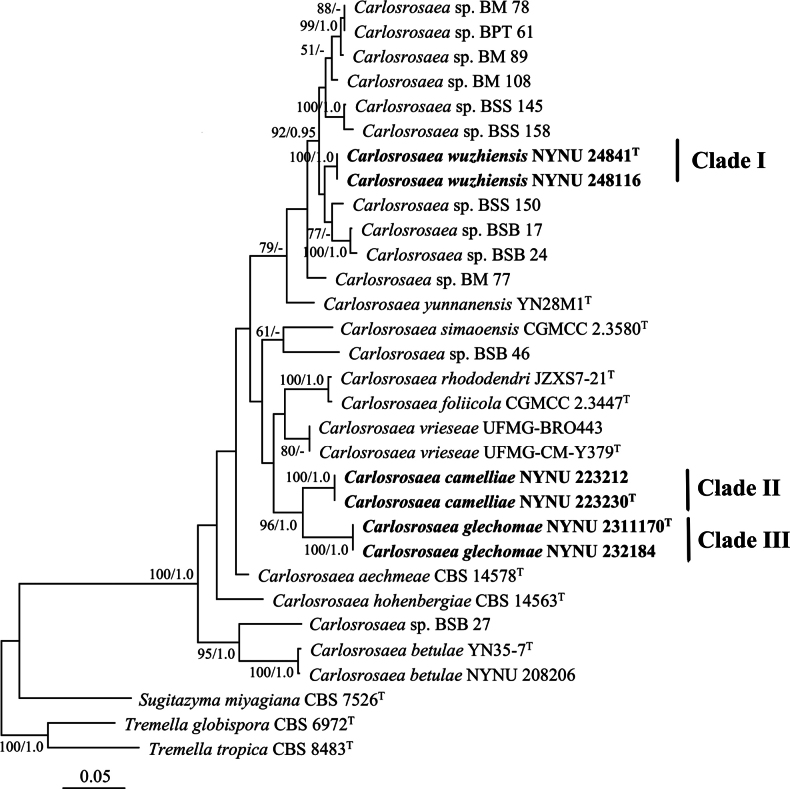 Figure 1
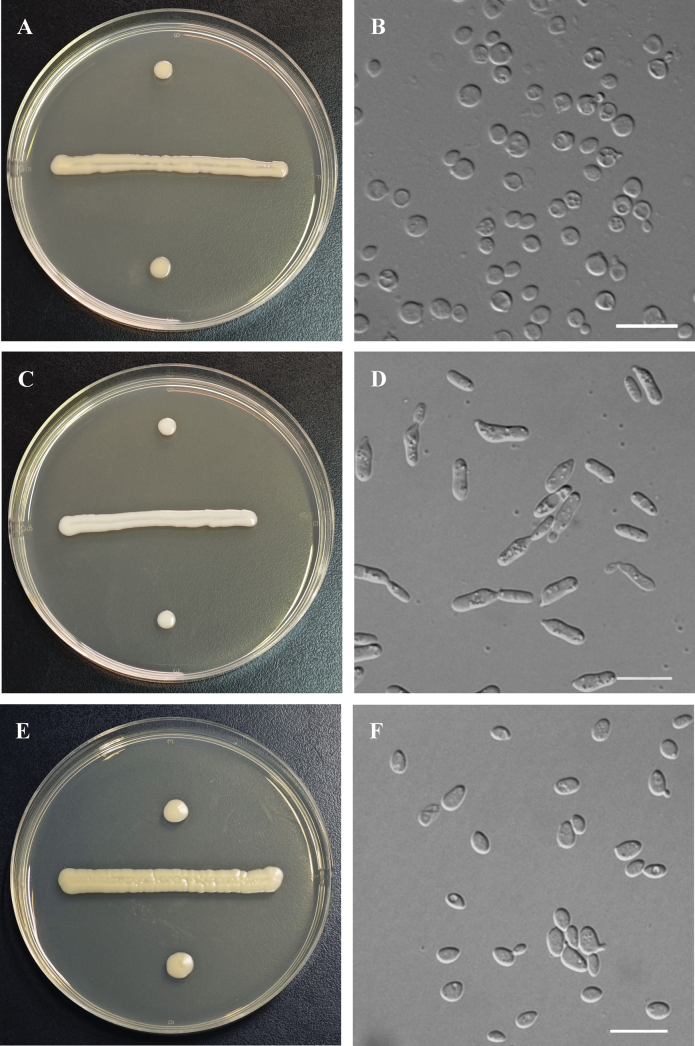 Figure 2
| Taxon name | Strain number | Country | GenBank accession no. | |
|---|---|---|---|---|
| ITS | LSU D1/D2 | |||
|
| CBS 14578T | Brazil |
|
|
|
| YN35-7T | China |
|
|
|
| NYNU 208206 | China |
|
|
|
|
|
|
|
|
|
|
|
|
|
|
|
| CGMCC 2.3447T | China |
|
|
|
|
|
|
|
|
|
|
|
|
|
|
|
| CBS 14563T | Brazil |
|
|
|
| JZXS7-21T | China |
|
|
|
| CGMCC 2.3580T | China |
|
|
|
| UFMG-CM-Y379T | Brazil |
|
|
|
| UFMG-BRO443 | Brazil |
|
|
|
|
|
|
|
|
|
|
|
|
|
|
|
| YN28M1T | China |
|
|
| BSB 46 | China |
|
| |
| BSB 27 | China |
|
| |
| BM 78 | Brazil |
|
| |
| BPT 61 | Brazil |
|
| |
| BM 89 | Brazil |
|
| |
| BM 108 | Brazil |
|
| |
| BSB 17 | Brazil |
|
| |
| BSB 24 | Brazil |
|
| |
| BSS 150 | Brazil |
|
| |
| BSS 145 | Brazil |
|
| |
| BSS 158 | Brazil |
|
| |
| BM 77 | Brazil |
|
| |
|
| CBS 7526T | Japan |
|
|
|
| CBS 6972T | Canada |
|
|
|
| CBS 8483T | Taiwan |
|
|
| Characteristics |
|
|
| |
|---|---|---|---|---|
| Carbon assimilation | ||||
| Inulin | – | + | – | w |
| Lactose | d/w | l/w | – | w |
| Cellobiose | + | – | w | + |
| L-Sorbose | d/w | – | + | d |
| D-Arabinose | + | – | + | + |
| Glycerol | d/w | – | d/w | – |
| Erythritol | – | w | + | – |
| Galactitol | d/w | – | + | w |
| Myo-inositol | d/w | + | – | d/w |
| Citrate | + | – | + | + |
| Nitrogen assimilation | ||||
| Nitrate | d/w | + | – | d/w |
| L-Lysine | + | + | – | + |
| Cadaverine | – | + | – | – |
| Growth tests | ||||
| Growth in vitamin-free medium | + | – | + | + |
| Growth at 25 °C | + | – | + | + |
Peer Reviews
No public reviews on file for this paper yet. If you reviewed it on a platform where reviews are public (OpenReview, ICLR, NeurIPS, ICML), you can paste yours below so the community can read it here.
Videos
No videos yet. Explain this paper in a talk, walkthrough, or lecture? Add one.
Taxonomy
TopicsPlant Pathogens and Fungal Diseases · Mycorrhizal Fungi and Plant Interactions · Yeasts and Rust Fungi Studies
Introduction
The genus Carlosrosaea was established by Liu et al. (2015) to include Bulleravrieseae Landell, L.R. Brandão, Safar, F.C.O. Gomes, C.R. Félix, A.R.O. Santos, D.M. Pagani, J.P. Ramos, Broetto, T. Mott, Vainstein, P. Valente & C.A. Rosa. Subsequently, two additional species, C.hohenbergiae C.R. Félix, H.M.C. Navarro, Paulino, Broetto & Landell and C.aechmeae C.R. Félix, H.M.C. Navarro, Paulino, Broetto & Landell, were described from bromeliads in Brazil (Félix et al. 2017). More recently, five more species—C.foliicola Q.M. Wang, F.Y. Bai & A.H. Li, C.simaoensis Q.M. Wang, F.Y. Bai & A.H. Li, C.betulae Q.M. Wang, C.rhododendri Q.M. Wang, and C.yunnanensis Q.M. Wang—were identified from plant leaves in China (Li et al. 2020; Jiang et al. 2024). Additionally, sequence data from public databases indicate the existence of more than nine putative novel species within the genus (Li et al. 2020; Jiang et al. 2024).
All known species of Carlosrosaea exhibit an asexual morph, characterized by polar budding as the primary mode of reproduction (Landell et al. 2015; Félix et al. 2017; Li et al. 2020; Jiang et al. 2024). Most species do not produce hyphae or ballistoconidia, although some are capable of forming pseudohyphae (Li et al. 2020). Physiologically, members of the genus lack fermentative ability but can assimilate a wide range of carbon sources, excluding methanol and hexadecane. Nitrate utilization has been observed in some species (Liu et al. 2015), while the production of starch-like compounds is generally negative (Li et al. 2020; Jiang et al. 2024). Notably, recent studies have indicated that C.vrieseae possesses plant growth-promoting traits, including phosphate solubilization, siderophore secretion, and indole-3-acetic acid (IAA) synthesis, suggesting potential applications as a biofertilizer (Marques et al. 2021).
Species of the genus Carlosrosaea are considered epiphytic yeasts associated with plants, mostly with flowers (Félix et al. 2017), leaves (Landell et al. 2015; Félix et al. 2017; Li et al. 2020; Jiang et al. 2024), and phytotelmata (Landell et al. 2015; Marques et al. 2021). Carlosrosaea species have also been reported from soil (Félix et al. 2024).
To date, eight species of Carlosrosaea have been reported worldwide, all originally described from Asia and South America (Félix et al. 2024). In China, five species have been described so far (Li et al. 2020; Jiang et al. 2024). Most of these species are found in temperate and subtropical regions of China, while a few occur in tropical areas. In our survey over the past three years, phylogenetic analyses of combined ITS and LSU sequence data, along with phenotypic characterization of six Carlosrosaea isolates obtained from plant leaves across different locations in China, led to the identification of three new species: Carlosrosaeacamelliae sp. nov., Carlosrosaeaglechomae sp. nov., and Carlosrosaeawuzhiensis sp. nov., which are described here.
Materials and methods
Sample collection and yeast isolation
A total of 49 leaf samples were collected from four natural forests in China: nine from a subtropical semi-deciduous forest in Fujian (25°7'N, 118°44'E), seven from a subtropical semi-deciduous and deciduous mixed forest in Guizhou (25°7'N, 107°2'E), 15 from a subtropical deciduous forest in Henan (32°45'N, 113°30'E), and 18 from tropical rainforests in Hainan (18°19'N, 109°9'E). Samples were placed in sterile, self-sealing plastic bags for transport and stored at 5 °C until processing. Yeast strains were isolated from leaf surfaces using a spore drop method described by Toome et al. (2013). Fresh leaves were cut into small pieces and affixed to the inner lid of a Petri dish using a thin layer of petroleum jelly. The Petri dish contained yeast extract–malt extract (YM) agar medium (0.3% yeast extract, 0.3% malt extract, 0.5% peptone, 1% glucose, and 2% agar), supplemented with 0.01% chloramphenicol to inhibit bacterial growth. Plates were incubated at 20 °C and monitored daily for colony development. Emerging yeast colonies were streaked onto fresh YM agar plates for purification. Purified strains were suspended in 20% (v/v) glycerol and stored at −80 °C for long-term preservation. Cultures of all obtained isolates were preserved at the Microbiology Lab, Nanyang Normal University (NNUML), Henan, China.
Phenotypic characterization
Morphological, physiological, and biochemical characteristics were assessed following standardized methods established by Kurtzman et al. (2011). Colony morphology was observed on YM agar after 7 days of incubation at 20 °C. Cell morphology was examined in YM broth after 3 days of incubation at 20 °C using a LEICA DM2500 microscope with LAS V4.13 software. Ballistoconidium-forming activity was assessed using the inverted-plate method on cornmeal agar (CMA: 2.5% cornmeal infusion and 2% agar) at 17 °C, as described by do Carmo-Sousa and Phaff (1962). After 3 to 14 days, discharged spores were collected on a glass slide and examined microscopically. The potential presence of a sexual cycle was investigated by culturing strains on CMA, potato dextrose agar (PDA: 20% potato infusion, 2% glucose, and 2% agar), and V8 agar (10% V8 juice and 2% agar). Strains were inoculated individually and in mixed cultures, with incubation at 20 °C for up to two months. Observations were conducted at two-week intervals (Li et al. 2020). Glucose fermentation was tested in liquid medium using Durham fermentation tubes. Carbon and nitrogen assimilation were assessed in liquid media, with starved inoculum employed for nitrogen assimilation tests (Kurtzman et al. 2011). Growth at different temperatures (15, 20, 25, 30, 35, and 37 °C) was evaluated on YM agar plates. Proposed names and descriptions were deposited in the MycoBank database (http://www.mycobank.org; 25 February 2025).
DNA extraction, PCR amplification, and sequencing
Genomic DNA was extracted from actively growing yeast cells cultured on YM agar using the Ezup Column Yeast Genomic DNA Purification Kit, according to the manufacturer’s protocol (Sangon Biotech Co., Shanghai, China). The ITS region and the D1/D2 domain of the LSU rRNA gene were amplified and sequenced using primers ITS1/ITS4 (White et al. 1990) and NL1/NL4 (Kurtzman and Robnett 1998), respectively.
PCR amplification was performed in a 25 µL reaction volume consisting of 9.5 µL ddH_2_O, 12.5 µL of Taq 2 × PCR Master Mix with blue dye (Sangon Biotech Co., Shanghai, China), 1 µL of DNA template, and 1 µL of each primer. Amplification was conducted using an AB 2720 thermal cycler (Applied Biosystems, Foster City, California, USA), with the following program: 98 °C for 2 min; 35 cycles of 98 °C for 10 s, 52 °C for 10 s, and 72 °C for 15 s; followed by a final extension at 72 °C for 5 min (Chai et al. 2024). PCR products were verified by electrophoresis on a 1% (w/v) agarose gel. Positive reactions showing a bright single band were purified and sequenced by Sangon Biotech (Shanghai) Co., Ltd. (Shanghai, China). The identity and accuracy of each sequence were confirmed by comparison with sequences in the GenBank database. Sequence assembly was performed using BioEdit v.7.1.3.0 (Hall 1999). All newly generated sequences were deposited in the GenBank database (https://www.ncbi.nlm.nih.gov/genbank/).
Phylogenetic analyses
For phylogenetic analyses, 12 newly obtained ITS and LSU sequences from this study, along with 50 sequences retrieved from the GenBank database, were included (Table 1).
The ITS and LSU sequences were aligned using MAFFT v.7.110 (Katoh and Standley 2013) with the G-INS-i option. Poorly aligned regions were excluded and manually adjusted using MEGA v.11 (Tamura et al. 2021). The most appropriate model of DNA substitution was determined using MEGA v. 11 (Tamura et al. 2021), and the GTR + I + G model was selected for both maximum likelihood (ML) and Bayesian inference (BI) analyses. ML analysis was performed using RAxML v.8.2.3 (Stamatakis 2014) with 1,000 rapid bootstrap (BS) replicates. BI analysis was conducted using MrBayes v.3.2.7a (Ronquist et al. 2012) via the CIPRES Science Gateway v.3.3. Six simultaneous Markov chains were run for 50 million generations, with trees sampled every 1,000 generations. The first 25% of trees were discarded as burn-in, and the remaining trees were used to estimate Bayesian posterior probabilities (BPP) for the clades.
Phylogenetic trees were visualized using FigTree v.1.4.3 (Andrew 2016), with further editing and composition conducted in Adobe Illustrator CS v.5. Branches that received BS ≥ 50% and BPP ≥ 0.95 were considered significantly supported.
Results
Phylogeny
Phylogenetic analyses based on a combined ITS and LSU dataset was used to determine the taxonomic position of the newly isolated strains within Carlosrosaea. The aligned dataset was 1,053 bp in length after exclusion of poorly aligned sites, with 512 bp for ITS and 541 bp for LSU. The resulting phylogenetic tree revealed that six isolates grouped into three genetically distinct clades, each representing a putative novel species within Carlosrosaea (Fig. 1).
Maximum likelihood phylogenetic tree of Carlosrosaea generated from the combined ITS and LSU sequence data. The tree is rooted with Tremellaglobispora CBS 6972 and Tremellatropica CBS 8483. Bootstrap values (BS) ≥ 50% and Bayesian posterior probabilities (BPP) ≥ 0.95 are shown above branches. Type strain sequences are marked with (T). New species are highlighted in bold.
Isolates NYNU 24841 and NYNU 248116 possessed identical ITS and D1/D2 sequences, indicating conspecificity. These two isolates formed a distinct clade (Clade I), which grouped with nine unpublished sequences (BM 78, BPT 61, BM 89, BM 108, BSB 17, BSB 24, BSS 150, BSS 145, and BSS 158) from Brazil identified as Carlosrosaea sp., and with C.yunnanensis from China (Fig. 1). The two isolates differed from the nine unpublished sequences by 4–9 nucleotide (nt) substitutions (~0.7–1.6%) in the D1/D2 domain and 17–26 nt mismatches (~3.5–5.4%) in the ITS region. Additionally, they differed from their closest known relative, C.yunnanensis, by 9 nt substitutions (~1.6%) in the D1/D2 domain and 35 nt mismatches (~6.9%) in the ITS region. According to Vu et al. (2016), species-level thresholds for yeast identification based on barcode data from approximately 9,000 strains are 0.49% for the D1/D2 domain and 1.59% for the ITS region, consistent with previous studies (Kurtzman and Robnett 1998; Fell et al. 2000; Scorzetti et al. 2002). Therefore, the observed genetic differences support the designation of NYNU 24841 and NYNU 248116 as a novel species within Carlosrosaea.
Clade II, comprising strains NYNU 223230 and NYNU 223212, formed a separate branch along with Clade III, which included strains NYNU 2311170 and NYNU 232184, in the phylogenetic tree based on the combined ITS and LSU dataset (Fig. 1). The strains in Clade II had identical ITS and D1/D2 sequences, indicating conspecificity. Similarly, strains in Clade III also exhibited identical ITS and D1/D2 sequences but differed from Clade II by 10 nt substitutions (~1.8%) in the D1/D2 domain and 31 nt mismatches (~7.3%) in the ITS region. Furthermore, the four strains in Clades II and III differed from all previously described Carlosrosaea species by more than 13 nt substitutions (~2.3%) in the D1/D2 domain and 41 nt mismatches (~7.9%) in the ITS region. Based on the species-level thresholds proposed by Vu et al. (2016), these genetic divergences support the recognition of the four strains as two additional novel species within Carlosrosaea.
Taxonomy
Carlosrosaea
camelliae
Taxon classificationFungiTremellalesTrimorphomycetaceae
W.L. Gao & F.L. Hui sp. nov.
C658D22A-D4F9-5022-B700-E15739CE2A00
857758
Etymology.
The specific epithet camelliae refers to Camellia, the name of the genus of the plant from which the type species was collected.
Type.
China• Fujian Prov.: Quanzhou City, Qingyuan Mountain, 25°7'N, 118°44'E, in the phylloplane of Camellia sp., March 2022, W.T. Hu and S.B. Chu, NYNU 223230 (holotype CICC 33566^T^, preserved in a metabolically inactive state; culture ex-type PYCC 9958, preserved in a viable metabolically inactive state; GenBank: OP278681, OP278682).
Description.
On YM agar after 7 days at 20 °C, the streak culture is white to pale-yellow, butyrous, smooth, and glossy, with an entire margin (Fig. 2A). After 3 days in YM broth at 20 °C, cells are ovoid, 2.1–4.0 × 2.6–4.9 μm, and single; budding is polar (Fig. 2B). After 1 month at 20 °C, a ring and sediment are present. In Dalmau plate culture on CMA, pseudohyphae and hyphae are not formed. Sexual structures are not observed on PDA, CMA, or V8 agar. Ballistoconidia are not produced. Glucose fermentation is absent. The following compounds are assimilated as sole carbon sources: glucose, sucrose, raffinose, melibiose, galactose, trehalose (weak), maltose (weak), melezitose, methyl-α-D-glucoside, cellobiose (weak), salicin (delayed and weak), L-sorbose, L-rhamnose (weak), D-xylose, L-arabinose (weak), D-arabinose, 5-keto-D-gluconate, D-ribose, glycerol (weak and delayed), erythritol, ribitol (delayed), galactitol, D-mannitol, D-glucitol, DL-lactate (delayed), succinate, citrate, D-gluconate, D-glucosamine (weak), N-acetyl-D-glucosamine, 2-keto-D-gluconate (weak), D-glucuronate (weak), and glucono-1,5-lactone. Inulin, lactose, methanol, ethanol, and myo-inositol are not assimilated. Nitrate, nitrite, ethylamine, L-lysine, and cadaverine are not assimilated as sole nitrogen sources. Maximum growth temperature is 30 °C. Growth on 50% (w/w) glucose-yeast extract agar is negative. Growth in vitamin-free medium is positive. Starch-like substances are not produced. Urease activity is positive. Diazonium Blue B reaction is positive.
Carlosrosaeacamelliae sp. nov. (NYNU 223230T). A Culture on YM agar at 20 °C after 7 d; B. Budding cells grown in YM broth at 20 °C after 3 d. Carlosrosaeaglechomae sp. nov. (NYNU 2311170T); C. Culture on YM agar at 20 °C after 7 d; D. Budding cells in YM broth at 20 °C after 3 d. Carlosrosaeawuzhiensis sp. nov. (NYNU 24841T); E. Culture on YM agar at 20 °C after 7 d; F. Budding cells grown in YM broth at 20 °C after 3 d. Scale bars: 10 μm.
Additional strain examined.
China• Fujian Prov.: Quanzhou City, Qingyuan Mountain, 25°7'N, 118°44'E, in the phylloplane of Camellia sp., March 2022, W.T. Hu and S.B. Chu, NYNU 223212.
Note.
C.camelliae sp. nov. is phylogenetically closely related to C.glechomae sp. nov., which is also described in this study, but they exhibit clear morphological and physiological differences (Table 2). Colonies of C.camelliae sp. nov. are white to pale yellow on YM agar, whereas those of C.glechomae sp. nov. are white to cream-colored. C.camelliae sp. nov. produces ovoid cells, while C.glechomae sp. nov. forms cylindrical cells. In addition, the cells of C.camelliae sp. nov. are shorter (2.6–4.9 μm) compared to those of C.glechomae sp. nov. (3.3–15 μm). Physiologically, C.camelliae sp. nov. differs from C.glechomae sp. nov. by its inability to assimilate inulin, lactose, myo-inositol, nitrate, and L-lysine, and its ability to assimilate glycerol and erythritol.
Carlosrosaea
glechomae
Taxon classificationFungiTremellalesTrimorphomycetaceae
W.L. Gao & F.L. Hui sp. nov.
A480DBCE-2149-5E8F-A773-C6DA74570F30
857759
Etymology.
The specific epithet “glechomae” refers to Glechoma, the name of the genus of the plant from which the type species was collected.
Type.
China• Henan Prov.: Xixia Co., Funiu Mountain, 32°45'N, 113°30'E, in the phylloplane of Glechomalongituba (Nakai) Kuprian, Oct 2023, S. Liu & Y.Z. Qiao, NYNU 2311170 (holotype CICC 33632^T^, preserved in a metabolically inactive state; culture ex-type PYCC 9998, preserved in a viable metabolically inactive state; GenBank: PP049020, PP033670).
Description.
On YM agar after 7 days at 20 °C, the streak culture is white-cream, butyrous, smooth, and glossy, with an entire margin (Fig. 2C). After 3 days in YM broth at 20 °C, cells are cylindrical, 2.6–5.7 × 3.3–15 μm, and single; budding is polar (Fig. 2D). After 1 month at 20 °C, a ring and sediment are present. In Dalmau plate culture on CMA, pseudohyphae and hyphae are not formed. Sexual structures are not observed on PDA, CMA, or V8 agar. Ballistoconidia are not produced. Glucose fermentation is absent. The following compounds are assimilated as sole carbon sources: glucose, inulin (weak), sucrose, raffinose, melibiose, galactose, lactose (weak), trehalose, maltose (weak), melezitose, methyl-α-D-glucoside (weak), cellobiose, salicin (weak), L-sorbose (delayed), L-rhamnose (weak), D-xylose, L-arabinose (weak), D-arabinose, 5-keto-D-gluconate, D-ribose, ribitol, galactitol (weak), D-mannitol (weak), D-glucitol, myo-inositol (delayed and weak), succinate, citrate, D-gluconate (weak), D-glucosamine (weak), N-acetyl-D-glucosamine (weak), 2-keto-D-gluconate (weak), D-glucuronate (weak), and glucono-1,5-lactone. Methanol, ethanol, glycerol, erythritol, and DL-lactate are not assimilated. Nitrate (delayed and weak), nitrite (delayed and weak), and L-lysine are assimilated as sole nitrogen sources. Ethylamine and cadaverine are not assimilated. Maximum growth temperature is 30 °C. Growth on 50% (w/w) glucose-yeast extract agar is negative. Growth in vitamin-free medium is positive. Starch-like substances are not produced. Urease activity is positive. Diazonium Blue B reaction is positive.
Additional strain examined.
China• Guizhou Prov.: Pingtang county, Sifangjing village, 25°7'N, 107°2'E, in the phylloplane of Distyliumracemosum Sieb. et Zucc, Feb 2023, D. Lu, NYNU 232184.
Carlosrosaea
wuzhiensis
Taxon classificationFungiTremellalesTrimorphomycetaceae
W.L. Gao & F.L. Hui sp. nov.
DA037D52-6CD7-56A4-A0FA-5629BBCCF230
857760
Etymology.
The specific epithet “wuzhiensis” refers to the geographic origin of the type strain of the species, Wuzhi Mountain.
Type.
China• Hainan Prov.: Sanya City, Wuzhi Mountain, 32°45'N, 113°30'E, in the phylloplane of Glochidionzeylanicum (Gaertn.) A. Juss, 15 Aug 2024, S.L. Lv, NYNU 24841 (holotype GDMCC 2.526^T^, preserved in a metabolically inactive state; culture ex-type PYCC 10136, preserved in a viable metabolically inactive state; GenBank: PQ568987, PQ568982).
Description.
On YM agar after 7 days at 20 °C, the streak culture is pale-yellow, butyrous, smooth, and glossy, with an entire margin (Fig. 2E). After 3 days in YM broth at 20 °C, cells are ovoid and ellipsoidal, 2.4–3.8 × 3.8–6.9 μm, and single; budding is polar (Fig. 2F). After 1 month at 20 °C, a ring and sediment are present. In Dalmau plate culture on CMA, pseudohyphae and hyphae are not formed. Sexual structures are not observed on PDA, CMA, or V8 agar. Ballistoconidia are not produced. Glucose fermentation is absent. The following compounds are assimilated as sole carbon sources: glucose, sucrose (weak), raffinose, melibiose (weak), galactose (weak), lactose (delayed and weak), trehalose (weak), maltose (weak), melezitose (weak), methyl-α-D-glucoside (delayed and weak), cellobiose, salicin (weak), L-sorbose (delayed and weak), L-rhamnose (delayed and weak), D-xylose (weak), L-arabinose, D-arabinose, 5-keto-D-gluconate, D-ribose (weak), glycerol (delayed and weak), ribitol, galactitol (delayed and weak), D-mannitol (delayed and weak), D-glucitol (delayed), myo-inositol (delayed and weak), DL-lactate (delayed and weak), succinate (weak), citrate, D-gluconate (weak), D-glucosamine (delayed and weak), N-acetyl-D-glucosamine (weak), 2-keto-D-gluconate (delayed and weak), D-glucuronate (weak), and glucono-1,5-lactone. Inulin, methanol, ethanol, and erythritol are not assimilated. Nitrate (delayed and weak), nitrite (delayed and weak), and L-lysine are assimilated as sole nitrogen sources. Ethylamine and cadaverine are not assimilated. Maximum growth temperature is 30 °C. Growth on 50% (w/w) glucose-yeast extract agar is negative. Growth in vitamin-free medium is positive. Starch-like substances are not produced. Urease activity is positive. Diazonium Blue B reaction is positive.
Additional strain examined.
China• Hainan Prov.: Sanya City, Wuzhi Mountain, 32°45'N, 113°30'E, in the phylloplane of Glochidionzeylanicum, 15 Aug 2024, S.L. Lv, NYNU 248116.
Note.
Phylogenetic analyses indicate that the closest known species to C.wuzhiensis sp. nov. is C.yunnanensis. Both form pale-yellow colonies and produce ovoid to ellipsoidal cells. However, C.wuzhiensis can be distinguished from C.yunnanensis by its ability to assimilate cellobiose, L-sorbose, D-arabinose, glycerol, galactitol, and citrate, and its inability to assimilate inulin and erythritol. Additionally, C.wuzhiensis can grow in a vitamin-free medium and at 25 °C, whereas C.yunnanensis cannot (Table 2).
Discussion
In this study, six Carlosrosaea yeast strains were isolated from the surfaces of plant leaves collected across various regions of China during a yeast diversity survey conducted between 2022 and 2024. Based on phylogenetic analyses of combined ITS and LSU sequence data, along with phenotypic characterization, three novel species of Carlosrosaea—C.camelliae sp. nov., C.glechomae sp. nov., and C.wuzhiensis sp. nov.—are proposed. These findings increase the number of recognized Carlosrosaea species from eight to eleven. Moreover, our study revealed the presence of more than nine additional putative species within the genus that are currently cataloged but remain undescribed, in agreement with findings from previous studies (Li et al. 2020; Félix et al. 2024; Jiang et al. 2024). The existence of these uncharacterized yet documented taxa underscores the need for the formal description of species already deposited in public databases, as well as expanded sampling to address the Linnean shortfall (Félix et al. 2024).
Carlosrosaea species were initially thought to produce ballistoconidia, a hypothesis inferred from their original classification within the genus Bullera (Liu et al. 2015). However, most known Carlosrosaea species do not exhibit ballistoconidium formation (Félix et al. 2017; Li et al. 2020; Jiang et al. 2024). In the present study, the species were isolated using the ballistospore-fall method, despite their inability to form ballistospores. This finding suggests that the ballistospore-fall method, while selective, is not exclusive for isolating ballistoconidium-forming yeasts. The recovery of these three Carlosrosaea species using this method may reflect the presence of vegetative yeast cells inhabiting the phylloplane, rather than true ballistospore production.
Of the 49 plant leaf samples collected in this study, in addition to the six Carlosrosaea strains, 65 yeast strains belonging to 26 previously described species were isolated. These species represented the genera Bullera, Derxomyces, Dioszegia, Erythrobasidium, Filobasidium, Hannaella, Saitozyma, Symmetrospora, Tilletiopsis, and Vishniacozyma. Symmetrospora was the most frequently recovered genus, suggesting that Carlosrosaea species are relatively rare members of the phyllosphere yeast community. Nevertheless, the discovery of these three new species highlights the widespread, albeit low-abundance, distribution of Carlosrosaea on plant surfaces. These results emphasize the importance of extensive sampling and combined molecular and phenotypic analyses to fully uncover the global diversity of this genus.
Supplementary Material
XML Treatment for Carlosrosaea camelliae
XML Treatment for Carlosrosaea glechomae
XML Treatment for Carlosrosaea wuzhiensis
The reference list from the paper itself. Each links out to its DOI / PubMed record.
- 1Andrew R (2016) Fig Tree: Tree figure drawing tool Version 1.4.3. Institute of Evolutionary Biology, United Kingdom, University of Edinburgh Press.
- 2Chai CY Xi ZW Niu QH Hui FL (2024) Three new species of the genus Kockovaella (Cuniculitremaceae, Tremellales) from the phylloplane in China.Myco Keys 110: 237–253. 10.3897/mycokeys.110.13308439610861 PMC 11602965 · doi ↗ · pubmed ↗
- 3do Carmo-Sousa L Phaff HJ (1962) An improved method for the detection of spore discharge in the Sporobolomycetaceae.Journal of Bacteriology 83(2): 434–435. 10.1128/jb.83.2.434-435.196216561932 PMC 277751 · doi ↗ · pubmed ↗
- 4Félix CR Navarro HMC Paulino GVB Broetto L Landell MF (2017) Carlosrosaeahohenbergiae sp. nov. and Carlosrosaeaaechmeae sp. nov., two tremellaceous yeasts isolated from bromeliads in north-eastern Brazil.International Journal of Systematic and Evolutionary Microbiology 67(6): 1752–1757. 10.1099/ijsem.0.00185628613149 · doi ↗ · pubmed ↗
- 5Félix CR Navarro HMC Landell MF (2024) The Hidden Global Diversity of the Yeast Genus Carlosrosaea: A Biodiversity Databases Perspective.Yeas 41(11–12): 658–667. 10.1002/yea.398639623597 · doi ↗ · pubmed ↗
- 6Fell JW Boekhout T Fonseca A Scorzetti G Statzell-Tallman A (2000) Biodiversity and systematics of basidiomycetous yeasts as determined by large-subunit r DNA D 1/D 2 domain sequence analysis.International Journal of Systematic and Evolutionary Microbiology 50(3): 1351–1371. 10.1099/00207713-50-3-135110843082 · doi ↗ · pubmed ↗
- 7Hall TA (1999) Bioedit: A user-friendly biological sequence alignment editor and analysis program for Windows 95/98/NT.Nucleic Acids Symposium Series 41: 95–98.
- 8Jiang YL Bao WJ Liu F Wang GS Yurkov AM Ma Q Hu ZD Chen XH Zhao WN Li AH Wang QM (2024) Proposal of one new family, seven new genera and seventy new basidiomycetous yeast species mostly isolated from Tibet and Yunnan provinces, China.Studies in Mycology 109: 57–153. 10.3114/sim.2024.109.0239717653 PMC 11663428 · doi ↗ · pubmed ↗