Synotislhozhagensis (Asteraceae, Senecioneae), a new species from south-eastern Xizang, China, based on morphological and molecular evidence

Abstract
Genes, proteins, chemicals, diseases, species, mutations and cell lines named across the full text — each resolved to its canonical identifier and authoritative record.
Click any figure to enlarge with its caption.
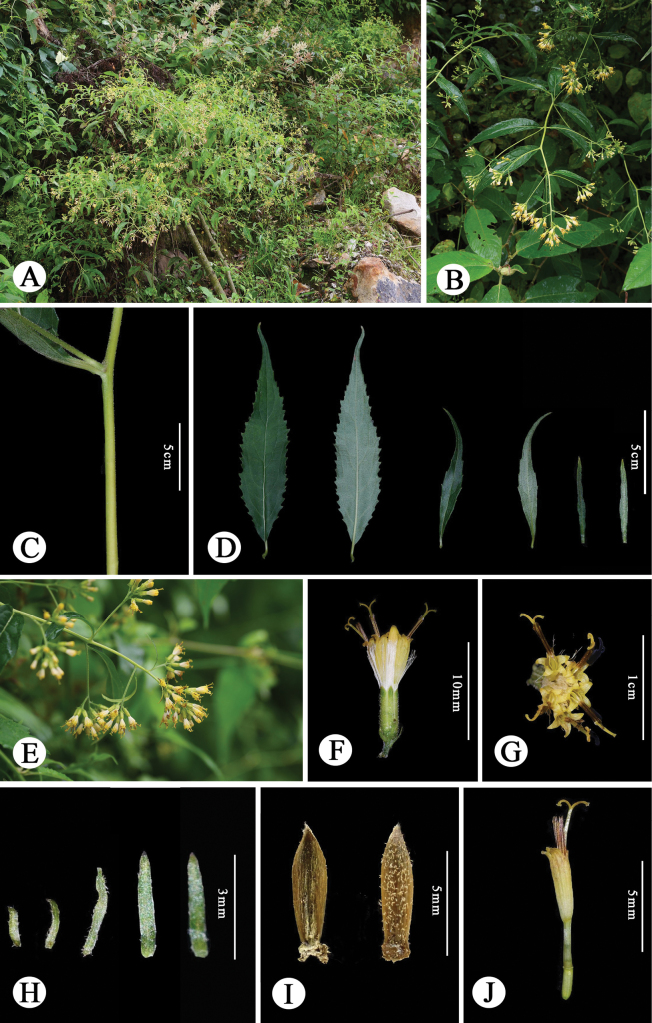 Figure 1
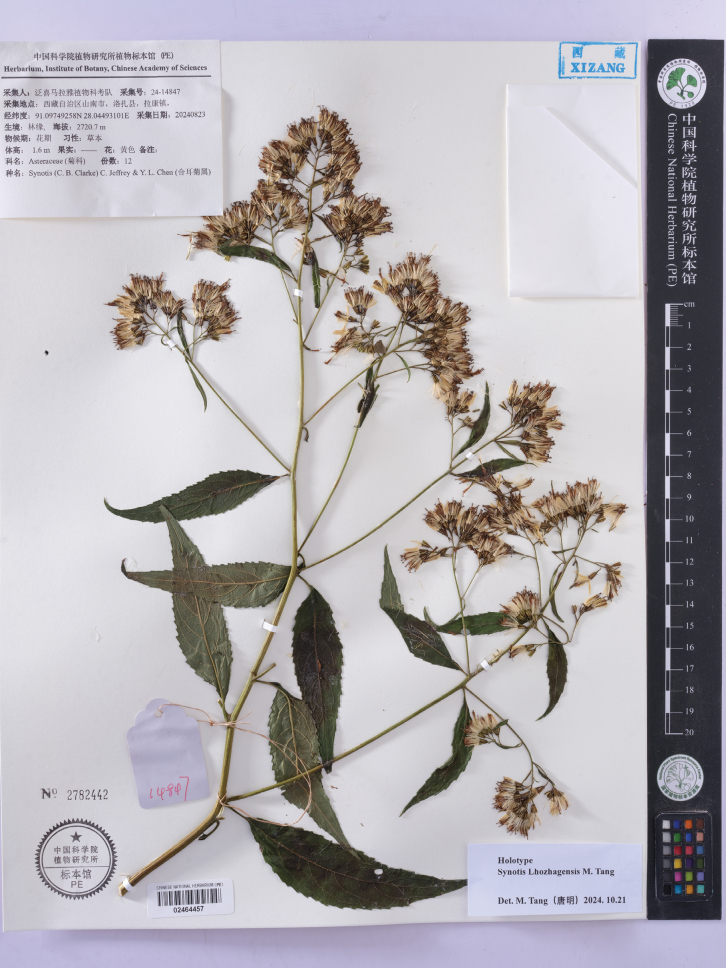 Figure 2
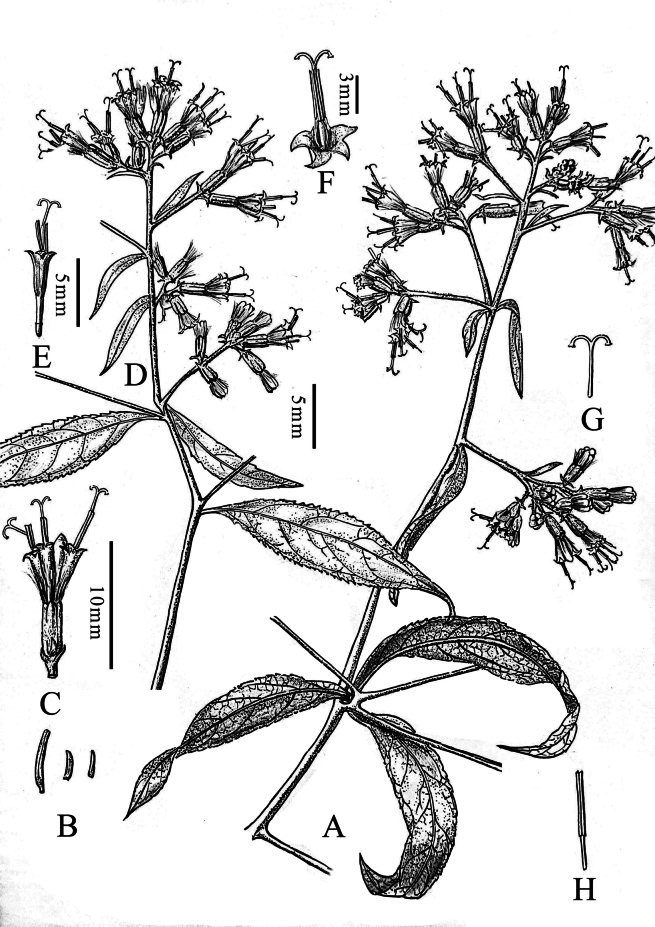 Figure 3
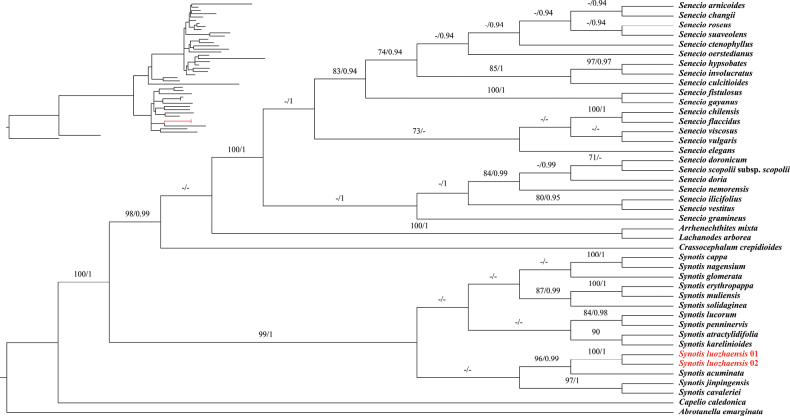 Figure 4
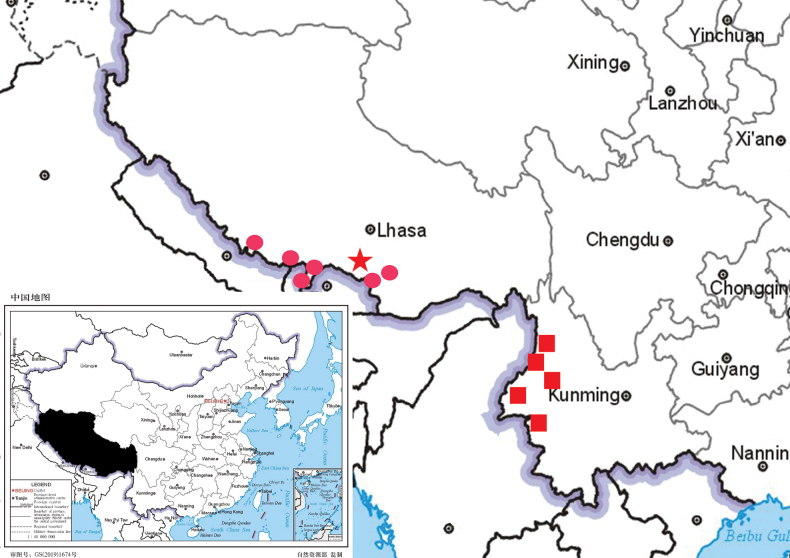 Figure 5
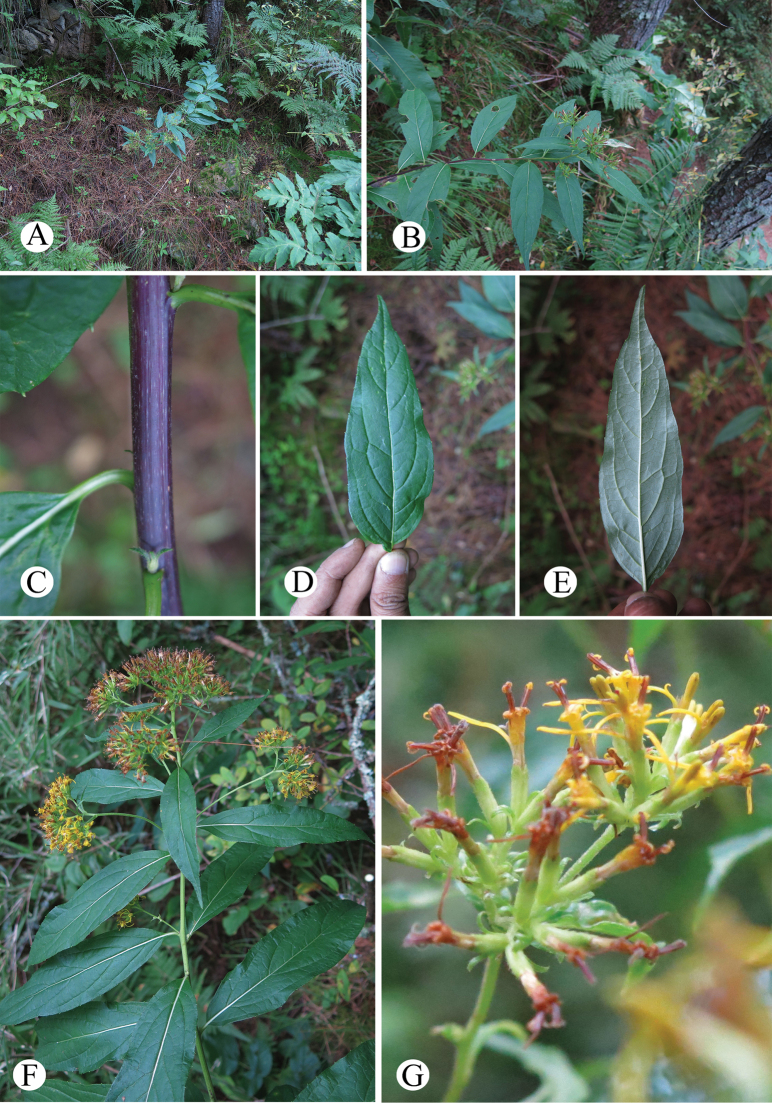 Figure 6
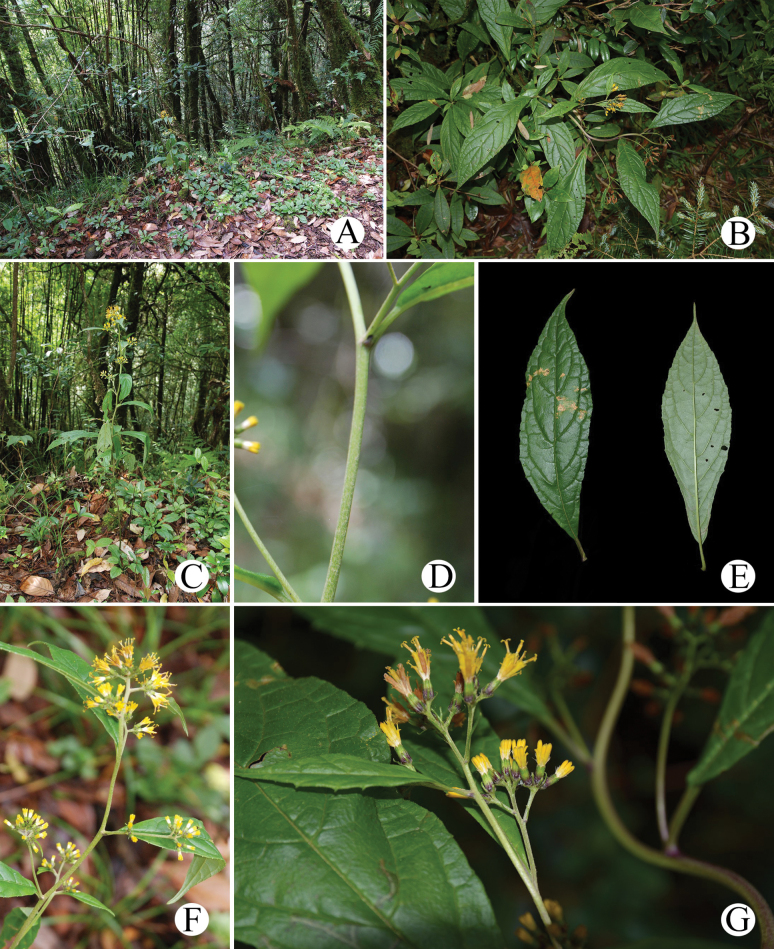 Figure 7
| Character |
|
|
|
|---|---|---|---|
|
| 100–250 cm tall, white-tomentose when young | ≤ 120 cm tall, yellowish-brown tomentose | 40–150 cm tall, yellowish-brown pubescent |
|
| 6–13 × 1.5–3 cm | 6–22 × 1.5–6 cm | 8–18 × 1.5–3.5 cm |
|
| Irregularly serrate-dentate | Finely serrulate with mucronate teeth | Sparsely serrulate |
|
| 4–6 pairs | 8 or 9 pairs | 5 or 6 pairs |
|
| Loose thyrsoid-paniculate | Dense globose corymb (20–25 capitula) | Compound corymb |
|
| 5, oblong, silvery-puberulent | 5, oblong, apex obtuse | 3 or 4, linear-oblong, glabrous |
|
| Absent | 1 or 2, corolla liliform, 3–5 mm long | 1, corolla linear, 5–7 mm long |
|
| 5, pale yellow, corolla 8 mm long | 3 or 4, yellow, corolla 7 mm long | 2 or 3, yellow, corolla 7 mm long |
Peer Reviews
No public reviews on file for this paper yet. If you reviewed it on a platform where reviews are public (OpenReview, ICLR, NeurIPS, ICML), you can paste yours below so the community can read it here.
Videos
No videos yet. Explain this paper in a talk, walkthrough, or lecture? Add one.
Taxonomy
TopicsPlant and Fungal Species Descriptions · Phytochemistry and Biological Activities · Botanical Research and Chemistry
Introduction
Synotis (C.B. Clarke) C. Jeffrey & Y.L. Chen (Asteraceae, Senecioneae), a genus endemic to the Central Himalayas (Jeffrey and Chen 1984; Nordenstam 2007; Tang et al. 2013a, b; Tang 2014; Tong et al. 2017; Zhao et al. 2023; Jin et al. 2024; Liu et al. 2024), comprising approximately 62 species primarily distributed in the Sino-Himalayayan Region. Southwest China serves as its centre of diversity, hosting over 50 documented species (Chen et al. 2011; Tang 2014; Liu et al. 2021; Fan et al. 2022; Liu et al. 2024). Despite the foundational taxonomic framework established by Jeffrey and Chen (1984) through comprehensive revisions, species delimitation within this genus remains challenging due to the high uniformity of morphological traits (Tong et al. 2017; Liu et al. 2024). Tang (2014) conducted an integrative taxonomic study combining morphological analyses (including ultrastructural observations via scanning electron microscopy, SEM), cytological data and molecular phylogenetics on the genus and refined the subordinate taxonomic system, pointed out the five series belonging to two sections, i.e. sect. Synotis and sect. Atractylidifoliae C. Jeffrey & Y. L. Chen, were included in the genus. Li et al. (2018) transferred Seneciokarelinioides C. Winkl. to Synotis based on evidence from morphology, karyology and ITS/ETS sequence data and recombined Sen.karelinioides as Syn.sect.Karelinioidei (O. Fedtsch. & B. Fedtsch. ex Schischk.) C. Ren, Lazkov & I. D. Illar., treating Synotissect.Atractylidifoliae as a synonym of the new combination.
During biodiversity surveys conducted in Lhozhag County, Xizang Autonomous Region in August 2024, we discovered a morphologically distinct population of Synotis near Lakang Town. Initial morphological comparisons showed that its leaf characteristics were congruent with S.acuminata, whereas its floral traits (smaller capitula with five phyllaires) were more aligned with S.glomerata. Subsequent targeted morphological examinations, along with molecular phylogenetic analyses using ITS sequence data, confirmed the phylogenetic distinctiveness of the taxon within the genus. We hereby formally describe this previously undocumented species as Synotislhozhagensis sp. nov., with its systematic placement resolved through integrative taxonomic assessment.
Material and methods
Morphological analyses
Field observations of the natural habitat and habit of the new taxon were systematically recorded. Comparative studies of the new species and its putative allies were conducted by field observation and examination of specimens, focusing on diagnostic characters: leaf and inflorescence shape, capitula size, number of phyllaries and presence or absence of ray florets. Key morphological traits of five specimens were documented using a standardised digital imaging system (Olympus TG-6) according to the protocols of Zhao et al. (2023).
Species sampling, DNA extraction and sequencing
Based on previous phylogenetic studies in Senecioneae (Pelser et al. 2007, 2010; Zhao et al. 2023; Jin et al. 2024), we selected 43 samples encompassing 41 species and one subspecies, across seven genera, including 14 Synotis and 23 Senecio taxa, with Abrotanellaemarginata Cass. (subtribe Abrotanellinae) chosen as the outgroup.
Furthermore, we generated new sequences for the newly-discovered species (vouchers.01/02) using the modified CTAB method (Doyle and Doyle 1987). Low-coverage genomic data (> 2 Gb per sample) were obtained through Illumina NovaSeq PE150 sequencing (Novogene, Beijing), employing library preparation following a 150 bp paired-end strategy. Raw sequencing data were processed using Trimmomatic v. 0.39 (Bolger et al. 2014) to remove unpaired and low-depth reads, enhancing the accuracy and quality of the assembly. Filtered data were assembled into nuclear ribosomal DNA (nrDNA) sequences using GetOrganelle v. 1.7.7(Jin et al. 2020) and ITS sequence was extracted from nrDNA sequence with ITSx (Bengtsson et al. 2013).
In addition to sequencing the newly-described species, nuclear ribosomal (ITS) regions of its putative relatives, S.glomerata and S.acuminata, were amplified using the ITS4 and ITS5 primer pairs (White et al. 1990) following the protocols of Tang (2014). ITS sequences of the remaining species were retrieved from the GenBank database. Voucher information and GenBank accession numbers for the material used in this study are provided in Appendix 1 (Table A1).
Phylogenetic analyses
Data processing and analysis were performed using PhyloSuite v.1.2.3 (Zhang et al. 2020). Multiple sequence alignment was carried out with MAFFT v.7 (Katoh and Standley 2013). Maximum Likelihood (ML) inference was conducted in IQ-TREE v.2.2.0 (Nguyen et al. 2015) under the SYM+G4 model, selected by ModelFinder (Kalyaanamoorthy et al. 2017), based on the corrected Bayesian Information Criterion. Node support was derived from 1,000,000 ultrafast bootstrap replicates (Minh et al. 2013). Bayesian Inference (BI) was executed using MrBayes v.3.2.7 (Ronquist et al. 2012) under the SYM+G4 model, with two independent runs of 2,000,000 generations each, sampling every 1,000 generations. Convergence was assessed by monitoring the average standard deviation of split frequencies (< 0.01) and ensuring effective sample sizes (ESS) exceeded 200 for all parameters. After discarding the initial 25% of samples as burn-in, posterior probabilities (PP) were calculated from the remaining trees. Bootstrap percentage (MLBS) values ≥ 70 (Huelsenbeck et al. 1993) and PP values ≥ 0.90 (Leaché et al. 2002) were considered strong support. Finally, the phylogenetic trees were visualised using FigTree v.1.4.
Results and discussion
General morphology
Synotislhozhagensis closely resembles S.glomerata and S.acuminata morphologically, but is distinguished by a suite of macroscopic morphological traits: S.lhozhagensis is relatively taller (100–250 cm vs. 40–150 cm in S.acuminata and ≤ 120 cm in S.glomerata), leaves with irregularly deep obtuse-acuminate serrate margins (vs. remotely mucronate-serrulate margins in S.acuminata and S.glomerata), capitula lacks ray florets (vs. one in S.acuminata and one or two in S.glomerata), disc florets five (vs. two or three in S.acuminata and three or four in S.glomerata) (Figs 1, 6, 7, Table 1). These differences highlight S.lhozhagensis as a unique taxon within the genus.
Synotislhozhagensis in its natural habitat in Shannan, Xizang, China. A. Habitat; B. Habit; C. Portion of stem (sparsely tomentose); D. Leaf blades (left one and two: adaxial surface and abaxial surface; left three and left four: adaxial surface and abaxial surface; left five and left six: adaxial surface and abaxial surface); E. Synflorescence; F. Capitulum, lateral view; G. Capitulum, apical view; H. Outer phyllaries (= bracts of calyculus); I. Phyllary, adaxial (left) and (right) surfaces; J. Disc floret. Photographed by H.L. Zheng & X.T. Ma.
Phylogenetic analyses
Both Maximum Likelihood (ML) and Bayesian Inference (BI) phylogenetic analyses yield congruent topologies, with the ML tree topology being presented here (Fig. 4). The genus Synotis formed a strongly supported monophyletic clade (MLBS = 99, PP = 1.00), consistent with previous phylogenetic studies (Pelser et al. 2007, 2010; Tang et al. 2014; Tong et al. 2017; Li et al. 2018; Zhao et al. 2023; Jin et al. 2024). The newly-described species S.lhozhagensis was regarded as a strongly supported monophyletic lineage (MLBS = 100, PP = 1.00) with its congener S.acuminata, confirming its taxonomic distinctiveness (MLBS = 96, PP = 0.99).
Taxonomic treatment
Synotis
lhozhagensis
Taxon classificationPlantaeAsteralesAsteraceae
M.Tang sp. nov.
55AE2E35-5A8C-5C5A-BD58-0B4BE671B1FA
urn:lsid:ipni.org:names:77364872-1
Chinese name.
“luò zā hé ěr jú” (洛扎合耳菊)
Type.
China • Xizang Autonomous Region, Shannan City, Lhozhag County, Lakang Town, in fertile loamy soils at the edge of forests, 28°02'41.75"N, 91°05'50.97"E, 2720.7 m elev., 23 August 2024, FLPH Expedition 24-14847 (holotype, PE!; isotype, JXAU! PE!). Fig. 2.
Holotype sheet of Synotislhozhagensis. Lakang, Lhozhag, Shannan, Xizang, China, FLPH Expedition 24-14847 (PE).
Line drawing of Synotislhozhagensis. A. Habit; B. Outer phyllaries (bracts of calyculus); C. Capitula; D. Synflorescence; E. Disc floret; F. Corolla; G. Style; H. Stamen. Illustration by Guo-Xing Peng based on living field-collected material (FLPH Expedition 24-14847).
Diagnosis.
Synotislhozhagensis is similar to S.acuminata, but differs in having phyllaries number five (vs. three or four), ray floret absent (vs. one) and disc florets five (vs. two or three).
Description.
Perennial herbs. Stem solitary, erect, 100–250 cm tall, slightly curved distally, profusely branched into short inflorescence branches, white-tomentose when young, becoming glabrous with age. Leaves papery, long-elliptic to oblanceolate-elliptic, 6–13 cm long, 1.5–3 cm wide; apex long-acuminate; base cuneate to attenuate; margins irregularly deeply obtuse-acuminate-serrate; adaxial surface sparsely adnate white-tomentose to nearly glabrous; abaxial surface sparsely white-tomentose; venation pinnate with 4–6 pairs of lateral veins, arcuately ascending; petiole 5–15 mm long, sparsely white-tomentose to nearly glabrous. Capitula lacking ray florets, aggregated into cymose panicles; peduncles short, 3–6 mm long, silvery-white-tomentose, bearing 1–2 basal bracts and bracteoles; bracts and bracteoles linear. Involucre terete, 4–5 mm long, 1.5–2 mm wide; bracts of calyculus 4–5, linear-subulate, up to 1/3 the length of involucre; involucral phyllaries five, oblong, 1.5 mm wide, apex acute, subleathery, margins broadly scarious, abaxially sparsely silvery-white pubescent. Disc florets five; corolla pale yellow, ca. 6–8 mm long; tube 2.5 mm long; limb funnel-form; Style branches 1–1.2 mm long, apically obtuse, covered with short papillate hairs, central hairs inconspicuous. Achenes cylindrical, 2.5 mm long, glabrous. Crown hairs 5 mm long, white.
Phenology.
Flowering July to August; fruiting September to October.
Etymology.
The specific epithet ‘lhozhagensis’ is derived from the type locality, Lakang Town, Lhozhag County, Shannan City, southeast Xizang Autonomous Region, China.
Distribution and habitat.
Synotislhozhagensis is currently known only from Lakang Town, Lhozhag County, Shannan City, Xizang Autonomous Region, China. This species inhabits forest edges and sparse understorey areas, primarily within mixed forests at elevations between 2,500 and 3,000 m (Fig. 5).
IUCN Red List Category.
Synotislhozhagensis is currently known only from its type locality near Lakang Town, Lhozhag County, Xizang Autonomous Region, China. Several small populations (with a total of no more than 100 plants) occur on forested hillsides within this area, thriving in well-preserved habitats with minimal anthropogenic disturbance. Following the IUCN Red List Categories and Criteria (IUCN 2022), we propose a provisional assessment of Data Deficient (DD) for this species, as it is newly described and additional populations may remain undiscovered.
Additional specimens of Synotislhozhagensis examined.
Xiongqu River Valley, La Jiao Village, Lhozhag County, Xizang, 2751 m elev., 28°03'07.30"N, 91°05'25.88"E, 17 August 2013, Y.S. Chen et al. 13-1370 (PE01992899!, PE01992904!, PE01992905!).
Note.
It is noteworthy that, due to the insufficient number of samples within Synotis, the systematic position of Synotislhozhagensis within Synotis has not been well resolved in the phylogenetic tree (Fig. 4). However, since the new species has loose corymbs that bear no ray florets, it can be easily placed under ser. Oliganthae (J.F.Jeffrey) C.Jeffrey & Y.L.Chen according to Chen et al. (2011) and Tang (2014).
Maximum Likelihood tree for the Senecioneae based on the ITS dataset, with Synotislhozhagensis highlighted in red font. Bootstrap values (MLBS) and posterior probabilities (PP) are indicated above the branches. Dashes (–) indicate MLBS < 70 or PP < 0.90.
Distribution map of Synotislhozhagensis (red pentacle), Synotisacuminata (red round) and Synotisglomerata (red square block).
Synotisacuminata in the wild (Shannan, Xizang, China) A. Habitat; B. Habit; C. Portion of stem (sparsely tomentose); D. Leaf blade adaxial surface; E. Leaf blade abaxial surface; F. Synflorescence; G. Flowers (top view). Photographed by M. Tang.
Synotisglomerata in the wild (Yuxi, Yunnan, China) A. Habitat; B. Habit; C. Habit; D. Portion of stem (sparsely tomentose); E. Adaxial (left) and abaxial (right) sides of leaf blade; F. Synflorescence; G. Flowers (top view). All photographed by M. Tang, except B, G by Y. Yang.
During our specimen review, we characterised a novel population of particular interest, i.e. S. Noshiro et al. 9830074 (BM000810806!, E00226303!, TI!) collected in Sankhuwasabha District, Koshi Zone, Nepal on 20 August 1998, which closely matches Synotislhozhagensis in key features, such as plant form, leaf shape and flower clusters. However, they differ by having only two or three phyllaries. Further research is needed to confirm whether these specimens are the same as Synotislhozhagensis or represent another new taxon never described.
Supplementary Material
XML Treatment for Synotis lhozhagensis
The reference list from the paper itself. Each links out to its DOI / PubMed record.
- 1Bengtsson PJ Ryberg M Hartmann M Branco S Wang Z Godhe A De Wit PSánchez-García M Ebersberger Ide Sousa F Amend A Jumpponen A Unterseher M Kristiansson E Abarenkov K Bertrand YJK Sanli K Eriksson KM Vik U Veldre V Nilsson RH (2013) Improved software detection and extraction of ITS 1 and ITS 2 from ribosomal ITS sequences of fungi and other eukaryotes for analysis of environmental sequencing data.Methods in Ecology and Evolution 4(10): 914–919. 10.1111/2041-210X.12073 · doi ↗
- 2Bolger AM Lohse M Usadel B (2014) Trimmomatic. A flexible trimmer for Illumina sequence data.Bioinformatics (Oxford, England)30(15): 1–7. 10.1093/bioinformatics/btu 17024695404 PMC 4103590 · doi ↗ · pubmed ↗
- 3Chen YL Nordenstam B Jeffrey C (2011) Synotis (C.B. Clarke) C.Jeffrey & Y.L. Chen. In: Wu ZY Raven PH Hong DY (Eds) Flora of China (Vols 20–21).Science Press, Beijing & Missouri Botanical Garden Press, St. Louis, 489–505.
- 4Doyle JJ Doyle JL (1987) A rapid DNA isolation procedure for small quantities of fresh leaf tissue.Phytochemical Bulletin 19(1): 11–15. 10.1016/0031-9422(80)85004-7 · doi ↗
- 5Fan Y Zhang R Guo CL Tang M (2022) On the identity of Synotis ionodasys (Asteraceae: Senecioneae) from Yunnan, China.Phytotaxa 545(2): 207–216. 10.11646/phytotaxa.545.2.9 · doi ↗
- 6Huelsenbeck JP Hilis DM (1993) Success of phylogenetic methods in the four-taxon case.Systematic Biology 42(3): 247–264. 10.1093/sysbio/42.3.247 · doi ↗
- 7IUCN (2022) Guidelines for Using the IUCN Red List Categories and Criteria. Version 15. Prepared by the Standards and Petitions Committee. http://www.iucnredlist.org/documents/Red List Guidelines.pdf
- 8Jeffrey C Chen YL (1984) Taxonomic studies on the tribe Senecioneae (Compositae) of Eastern Asia.Kew Bulletin 39(2): 205–446. 10.2307/4110124 · doi ↗