A syllable-character collaborative model for enhanced Pinyin and Chinese recognition
Zeyuan Chen, Cheng Zhong, Danyang Chen

TL;DR
This paper introduces a new model for Chinese speech recognition that improves accuracy by combining syllables and characters during training.
Contribution
The novel SCCM model uses phonetic elements and an ensemble approach to reduce recognition errors in Chinese speech.
Findings
The SCCM model reduces pinyin and character error rates compared to prior methods.
It achieves a 45.7% relative reduction in Character Error Rate on the AISHELL-1 dataset.
Abstract
In Chinese speech recognition, end-to-end speech recognition models usually use Chinese characters as direct output and perform poorly compared with other language models. The main reason for this phenomenon is that the relationship between Chinese text and pronunciation is more complex. Inspired by the learning process of Chinese beginners, who first master initials, finals, and pinyin before learning characters, we propose the Syllable-Character Collaborative Model (SCCM), which incorporates these phonetic elements into the training process. Additionally, we design a Pinyin-Ensemble module that employs an ensemble learning approach to reduce pinyin recognition errors, which in turn leads to a reduction in text recognition errors. Experiments on AISHELL-1 show that our approach not only reduces pinyin and character error rates compared to a prior end-to-end method using pinyin as…
Genes, proteins, chemicals, diseases, species, mutations and cell lines named across the full text — each resolved to its canonical identifier and authoritative record.
Click any figure to enlarge with its caption.
 Figure 1
 Figure 2
 Figure 3
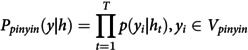 Figure 4
 Figure 5
 Figure 6
 Figure 7
 Figure 8
 Figure 9
 Figure 10
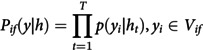 Figure 11
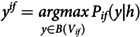 Figure 12
 Figure 13
 Figure 14
 Figure 15
 Figure 16
 Figure 17
 Figure 18
 Figure 19
 Figure 20
 Figure 21
 Figure 22
 Figure 23
 Figure 24
 Figure 25
 Figure 26
 Figure 27
 Figure 28
 Figure 29
 Figure 30
 Figure 31
 Figure 32
 Figure 33
 Figure 34
 Figure 35
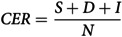 Figure 36
 Figure 37
 Figure 38
 Figure 39
 Figure 40
 Figure 41
 Figure 42
 Figure 43
 Figure 44
 Figure 45
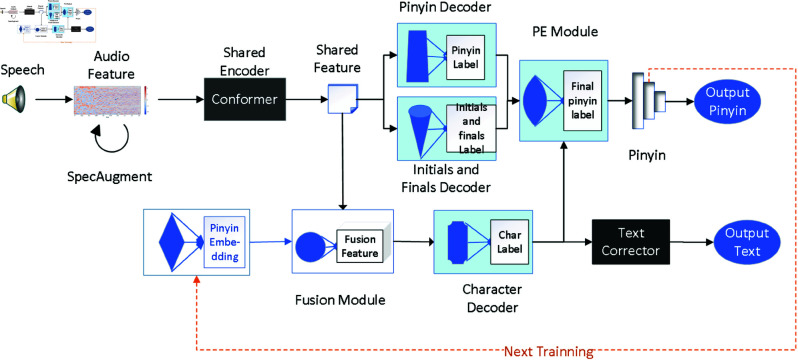 Figure 46
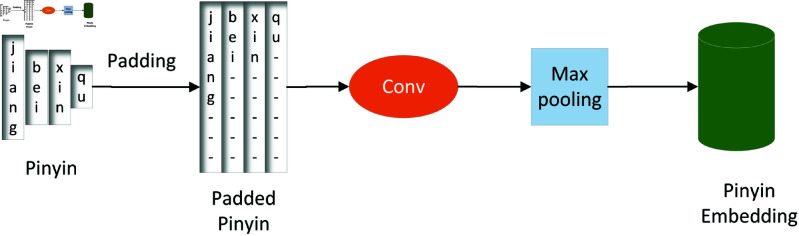 Figure 47
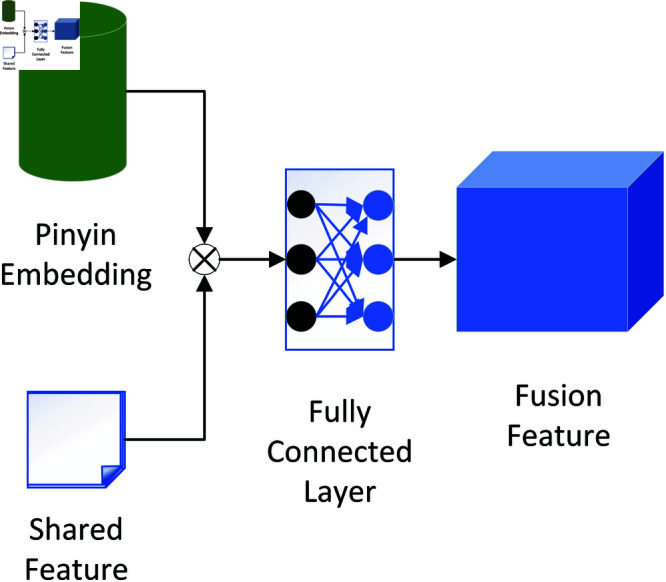 Figure 48
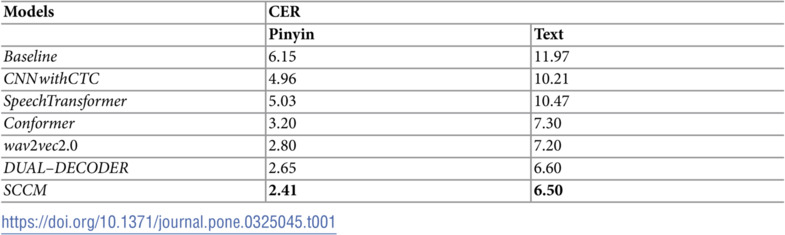 Figure 49
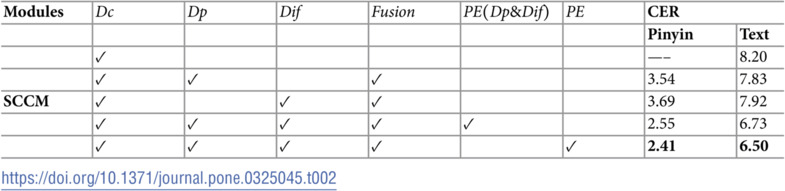 Figure 50
Peer Reviews
No public reviews on file for this paper yet. If you reviewed it on a platform where reviews are public (OpenReview, ICLR, NeurIPS, ICML), you can paste yours below so the community can read it here.
Videos
No videos yet. Explain this paper in a talk, walkthrough, or lecture? Add one.
Taxonomy
TopicsSpeech Recognition and Synthesis · Natural Language Processing Techniques · Topic Modeling