Slow-growing Salmonella enterica serovariety Typhi mis-identified as serovariety Gallinarum in Ibadan, Nigeria
Gabriel Temitope Sunmonu, Veronica O. Ogunleye, Odion O. Ikhimiukor, Oluwafemi A. Popoola, Precious E. Osadebamwen, Aderemi Kehinde, Iruka N. Okeke, Mila Shakya, Mila Shakya, Mila Shakya

TL;DR
Slow-growing Salmonella Typhi was misidentified as Gallinarum in Nigeria, highlighting the need for careful testing to avoid outbreak misdiagnosis.
Contribution
Demonstrates how genomic and biochemical analyses can correct misidentification of Salmonella strains in clinical settings.
Findings
Three isolates initially identified as S. Gallinarum were confirmed as S. Typhi using VITEK2 and whole genome sequencing.
Slow growth and delayed motility led to misidentification, with chromosomal rearrangements contributing to the anomaly.
A household cluster of S. Typhi infections was identified, with one case being an independent infection.
Abstract
Salmonella enterica subsp. enterica serovar Typhi is endemic in Nigeria where serovar Gallinarum is rarely reported. Following routine blood culture and identification, three patients with probable S. Gallinarum infections were reported in Ibadan within 10-days, precipitating an outbreak investigation. All three isolates were re-identified using VITEK2, motility-tested using Sulphide-Indole-Motility (SIM) medium and whole genome sequenced (WGS) on Illumina and Oxford Nanopore platforms. Short reads were used to determine sequence type, serotype and phylogenetic relationships to previously characterized S. Typhi from Nigeria. Chromosomal configurations were deduced from hybrid assemblies using socru v2.2.4. The three isolates, initially identified as S. Gallinarum, re-identified as gamma glutamyl transferase-positive S. Typhi genotype 3.1.1 by VITEK-2 and WGS. Two individuals in the same…
Genes, proteins, chemicals, diseases, species, mutations and cell lines named across the full text — each resolved to its canonical identifier and authoritative record.
Click any figure to enlarge with its caption.
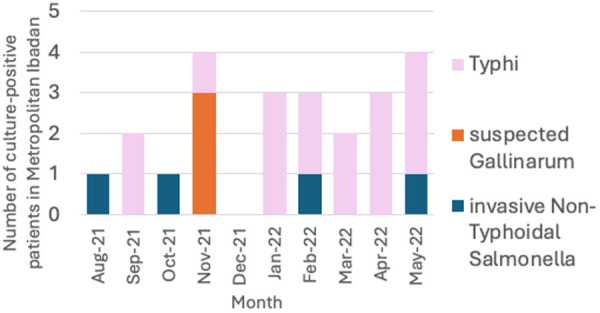 Figure 1
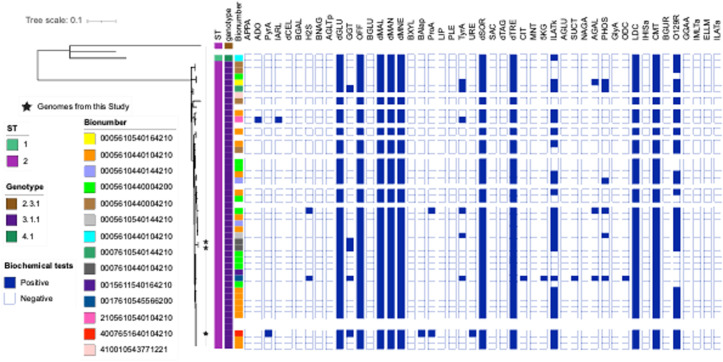 Figure 2
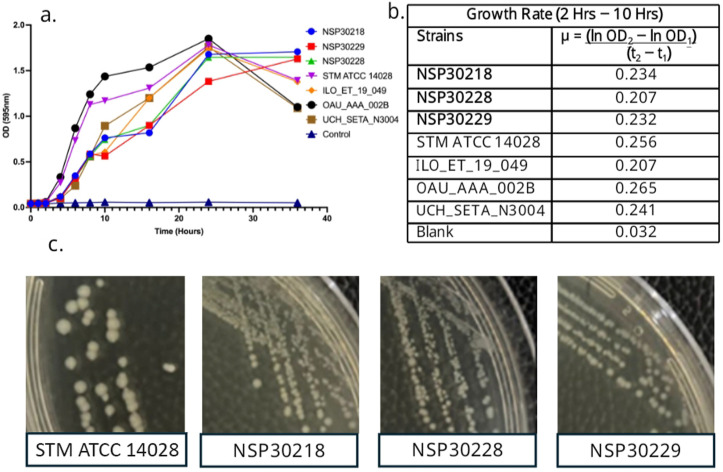 Figure 3
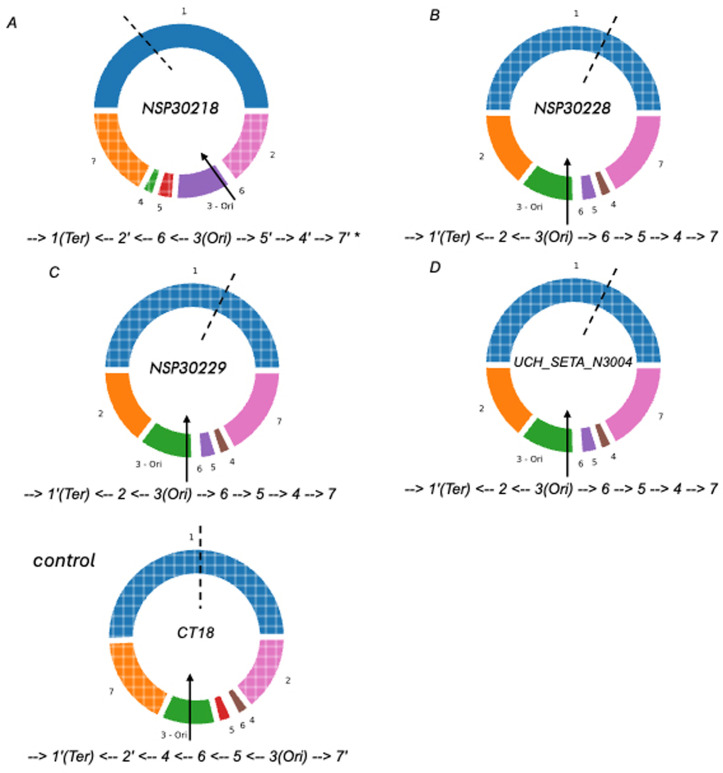 Figure 4
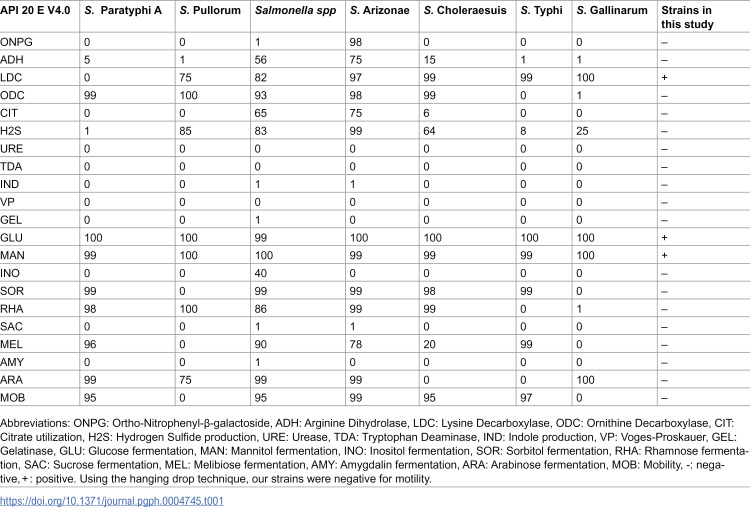 Figure 5
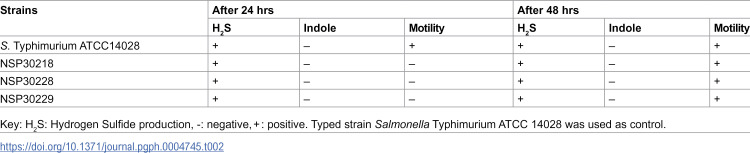 Figure 6
Peer Reviews
No public reviews on file for this paper yet. If you reviewed it on a platform where reviews are public (OpenReview, ICLR, NeurIPS, ICML), you can paste yours below so the community can read it here.
Videos
No videos yet. Explain this paper in a talk, walkthrough, or lecture? Add one.
Taxonomy
TopicsSalmonella and Campylobacter epidemiology · Bacteriophages and microbial interactions · Genomics and Phylogenetic Studies