Label-free morphology-based phenotypic analysis of spinal and bulbar muscular atrophy muscle cell models
Kenji Sakakibara, Kenjiro Tanaka, Madoka Iida, Yuta Imai, Mai Okada, Kentaro Sahashi, Tomoki Hirunagi, Kentaro Maeda, Ryuji Kato, Masahisa Katsuno

TL;DR
This study introduces a noninvasive method to screen drugs for spinal and bulbar muscular atrophy using muscle cell morphology.
Contribution
A novel morphology-based phenotypic analysis method for SBMA drug screening using machine learning.
Findings
Morphological profiling successfully assessed therapeutic effects of drugs on SBMA muscle cells.
The JNK pathway was activated in SBMA cells compared to controls.
A machine learning model accurately classified drug responses based on morphological profiles.
Abstract
Spinal and bulbar muscular atrophy (SBMA) is a neuromuscular disorder caused by CAG trinucleotide expansion in the androgen receptor (AR) gene. To improve the quality of in vitro cell-based assays for the evaluation of potential drug candidates for SBMA, we developed a morphology-based phenotypic analysis for a muscle cell model of SBMA that involves multiparametric morphological profiling to quantitatively assess the therapeutic effects of drugs on muscle cell phenotype. The analysis was validated using dihydrotestosterone and pioglitazone, which have been shown to exacerbate and ameliorate the pathophysiology of SBMA, respectively. Gene expression analysis revealed activation of the JNK pathway in the SBMA cells compared to the control cells. Phenotypic analysis revealed the effect of naratriptan, a JNK inhibitor, on the phenotypic changes of SBMA cells, and the results were confirmed…
Genes, proteins, chemicals, diseases, species, mutations and cell lines named across the full text — each resolved to its canonical identifier and authoritative record.
Click any figure to enlarge with its caption.
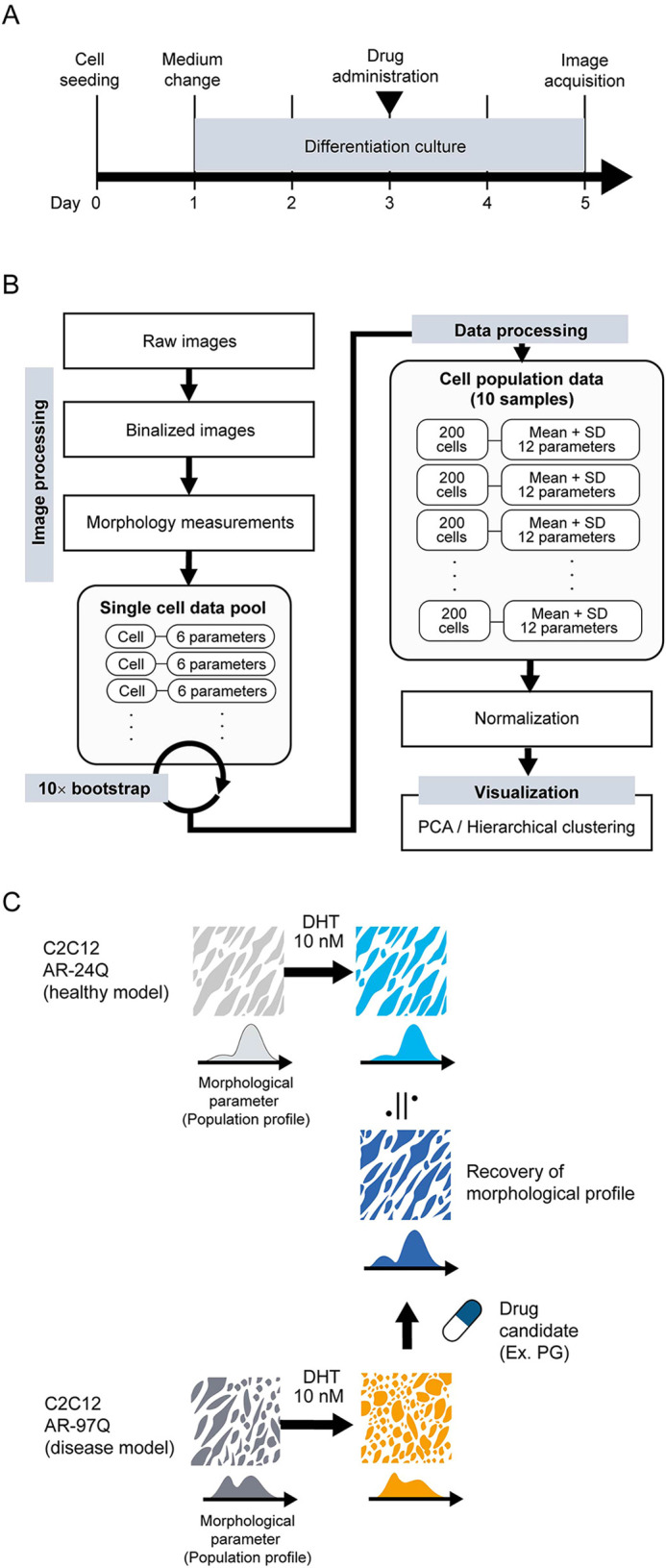 Figure 1
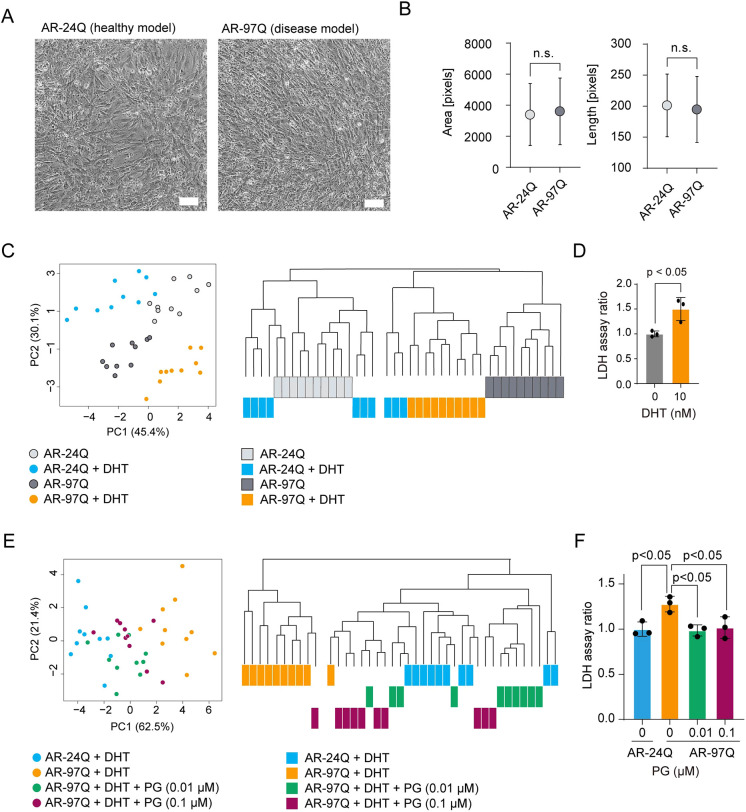 Figure 2
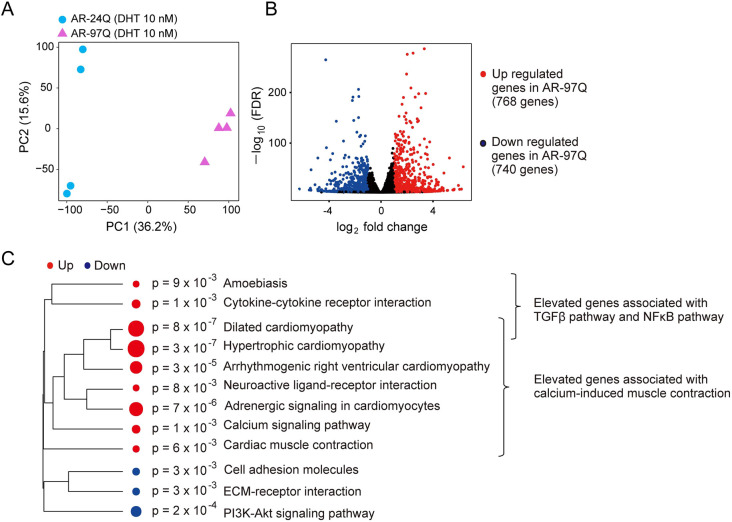 Figure 3
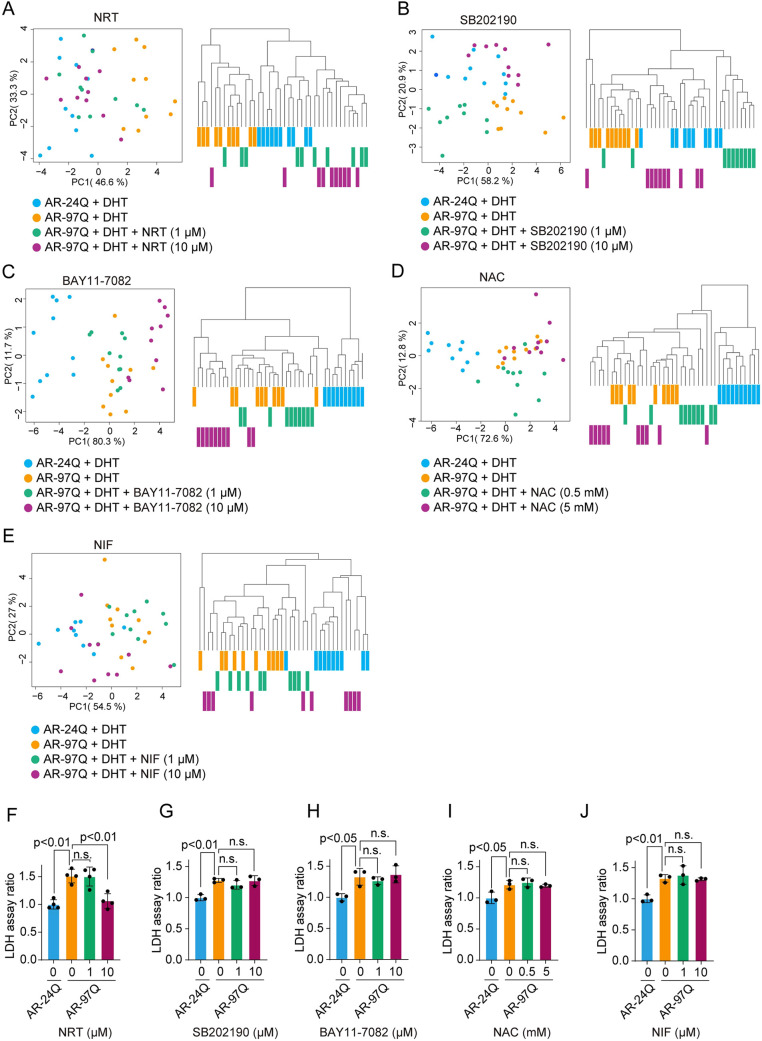 Figure 4
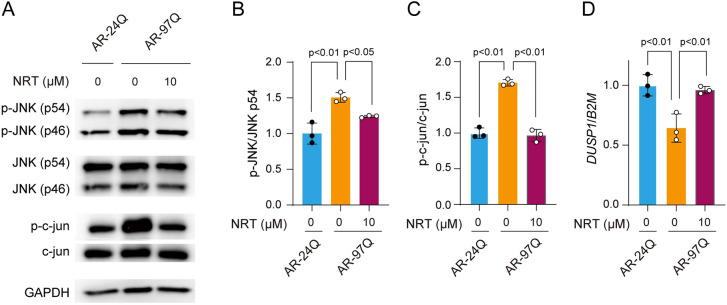 Figure 5
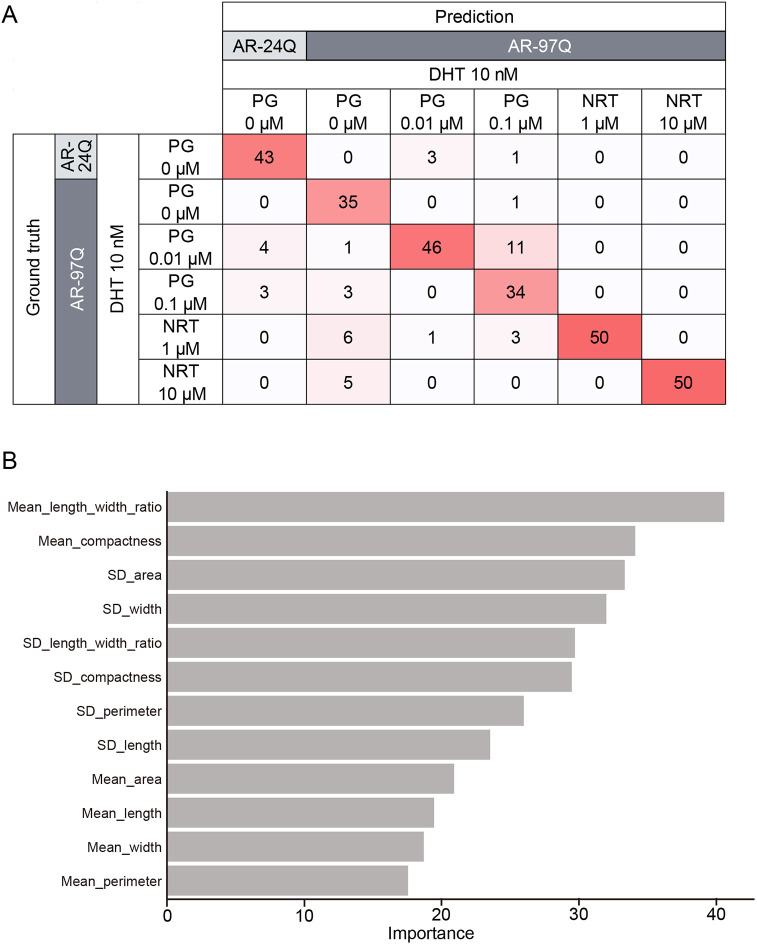 Figure 6
Peer Reviews
No public reviews on file for this paper yet. If you reviewed it on a platform where reviews are public (OpenReview, ICLR, NeurIPS, ICML), you can paste yours below so the community can read it here.
Videos
No videos yet. Explain this paper in a talk, walkthrough, or lecture? Add one.
Taxonomy
TopicsRNA Research and Splicing · Cancer-related molecular mechanisms research · Molecular Biology Techniques and Applications