Neural reactivity to infant faces and trait mindfulness as prospective predictors of postpartum depressive symptoms
Sarah E. Woronko, Emilia F. Cárdenas, Christian A. L. Bean, Resh S. Gupta, Kathryn L. Humphreys, Autumn Kujawa

TL;DR
The study explores how brain responses to baby faces and mindfulness traits during pregnancy predict postpartum depression symptoms.
Contribution
It identifies a novel interaction between neural reactivity to infant faces and mindfulness facets as predictors of postpartum depression.
Findings
Low acting with awareness and reduced LPP to happy infant faces predicted higher postpartum depression symptoms.
Enhanced LPP to positive stimuli may protect against PPD in individuals with low mindfulness.
Findings suggest neural and psychological factors interact to influence postpartum mental health.
Abstract
Postpartum depression (PPD) impacts the health of both mothers and their offspring, underscoring the importance of early identification of risk factors for PPD. While both low-trait mindfulness and blunted neural processing to emotional stimuli (indexed by the late positive potential; LPP) have been separately associated with depression, previous work has highlighted an inverse relationship between trait mindfulness and neural emotional processing. Thus, it remains unclear how facets of trait mindfulness and neural emotional processing interact as risk factors for PPD. During the second trimester, pregnant women (n = 117) completed the Five Facet Mindfulness Questionnaire, the Inventory of Depression and Anxiety Symptoms (IDAS), and an infant face matching task while continuous electroencephalography was recorded. At 9 weeks postpartum, participants’ PPD symptoms were reassessed with…
Genes, proteins, chemicals, diseases, species, mutations and cell lines named across the full text — each resolved to its canonical identifier and authoritative record.
Click any figure to enlarge with its caption.
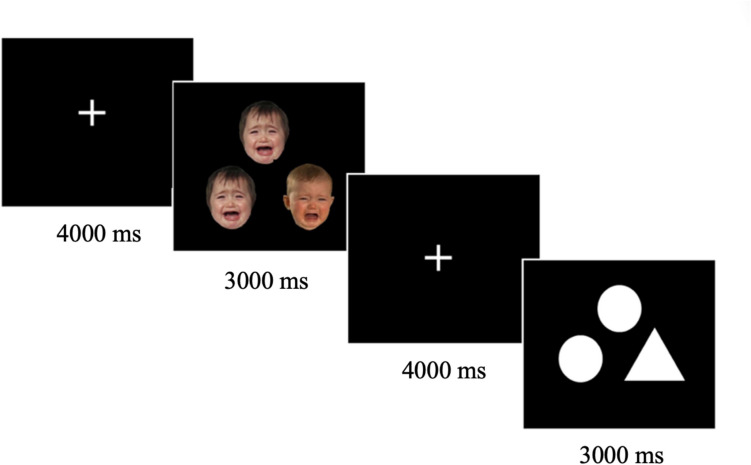 Figure 1
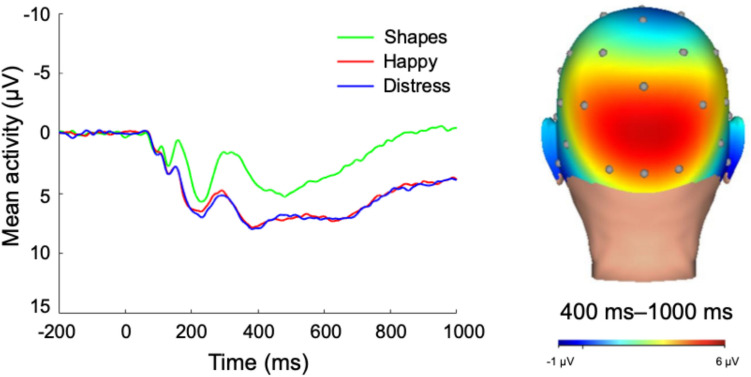 Figure 2
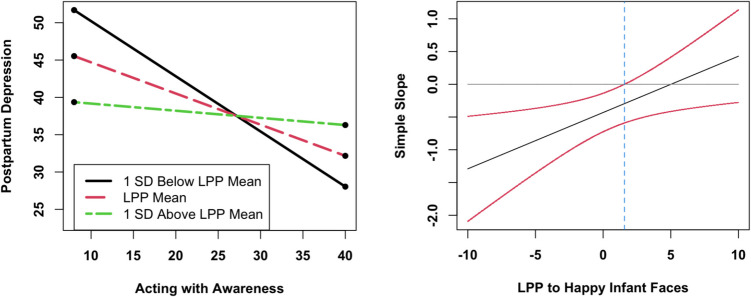 Figure 3
Peer Reviews
No public reviews on file for this paper yet. If you reviewed it on a platform where reviews are public (OpenReview, ICLR, NeurIPS, ICML), you can paste yours below so the community can read it here.
Videos
No videos yet. Explain this paper in a talk, walkthrough, or lecture? Add one.
Taxonomy
TopicsMaternal Mental Health During Pregnancy and Postpartum · Child and Adolescent Psychosocial and Emotional Development · Anxiety, Depression, Psychometrics, Treatment, Cognitive Processes