Insights into the detection of AMPA cross-reactivity: comparing cyclic peptide- to protein-based assays
Roxane Biersteker, Aegli Athanasiadou, Stef van der Meulen, Tineke J. van Wesemael, Linda M. Slot, Theresa Kissel, René E. M. Toes, Leendert A. Trouw, Diane van der Woude

TL;DR
This study compares how different assay types detect cross-reactivity of autoantibodies in rheumatoid arthritis patients, showing that cyclic peptides reveal more cross-reactivity than protein-based methods.
Contribution
The study reveals how antigen backbone variations affect the detection of AMPA cross-reactivity in rheumatoid arthritis.
Findings
CXP2-based assays show higher cross-reactivity to multiple PTM residues compared to FCS-based assays.
Modified FCS captures AMPAs with less cross-reactive epitope recognition than modified peptides.
61.2% of samples reacted to both citrullinated and carbamylated residues on CXP2, but only 54.0% on FCS.
Abstract
Autoantibodies targeting antigens carrying distinct post-translational modifications (PTMs), including citrullinated, carbamylated, and acetylated residues, are characteristic for rheumatoid arthritis (RA). These anti-modified protein antibodies (AMPAs) are typically detected using enzyme-linked immunosorbent assays (ELISAs), with peptides or protein antigens carrying these modifications. AMPAs exhibit significant cross-reactivity towards multiple PTMs, and increased cross-reactivity before disease onset may serve as a biomarker of disease progression. However, the impact of antigen backbone variations on cross-reactivity detection remains unclear. Therefore, we investigated how PTM-backbone variations affect AMPA-reactivity detection. Sera of 608 RA patients from the Early Arthritis Clinic (EAC) were measured for AMPA reactivity using modified fetal calf serum (FCS)- and cyclic…
Genes, proteins, chemicals, diseases, species, mutations and cell lines named across the full text — each resolved to its canonical identifier and authoritative record.
Click any figure to enlarge with its caption.
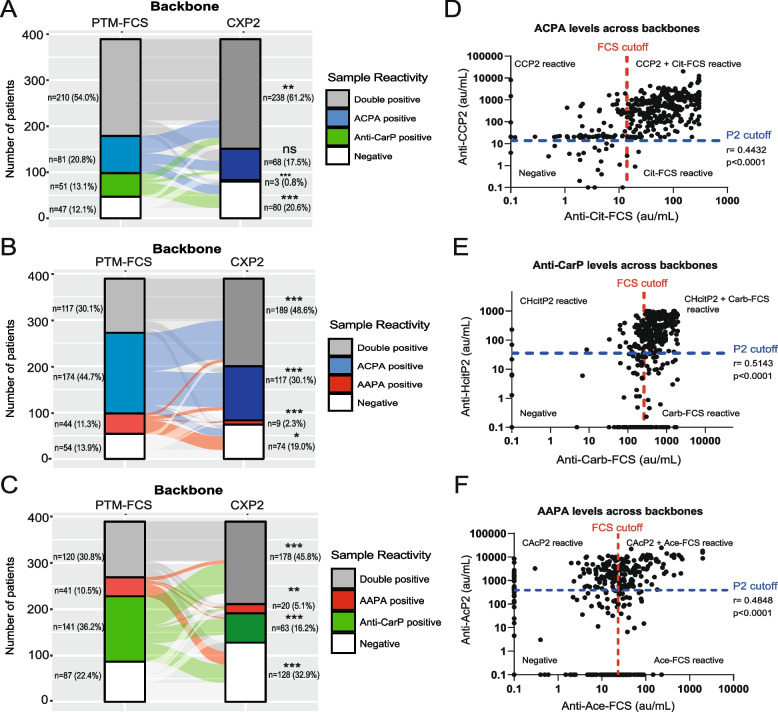 Figure 1
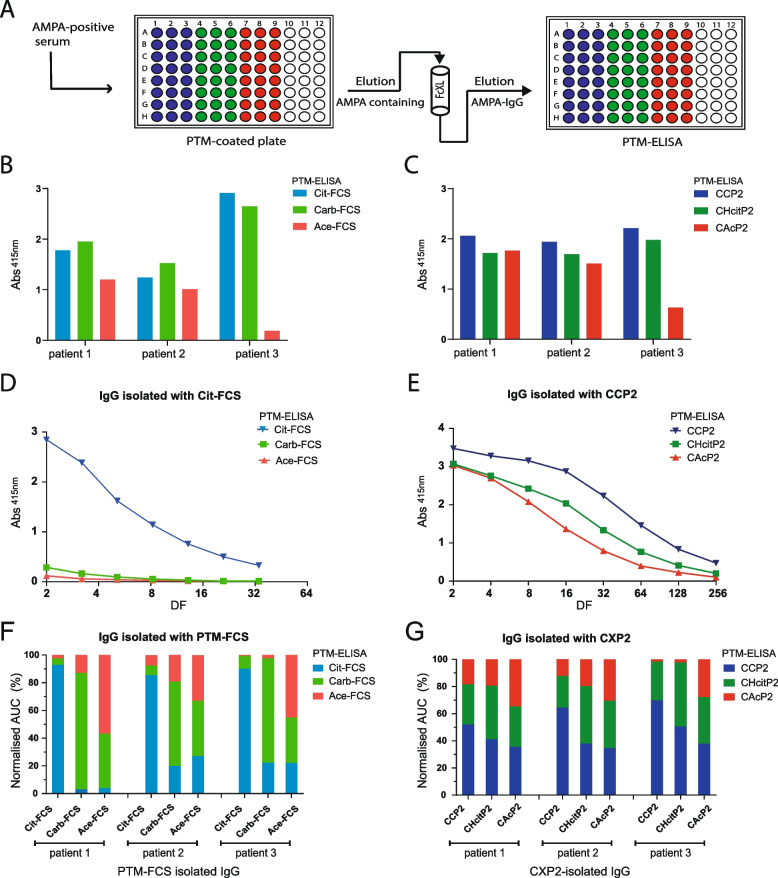 Figure 2
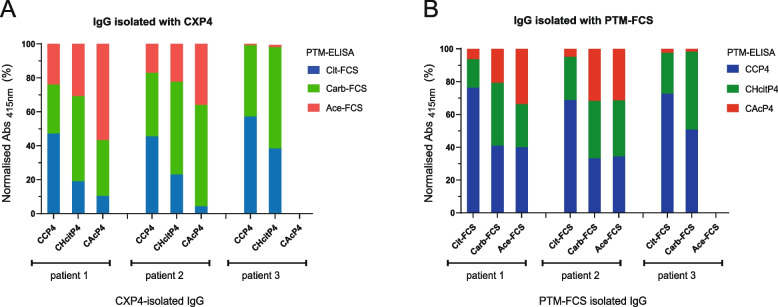 Figure 3
Peer Reviews
No public reviews on file for this paper yet. If you reviewed it on a platform where reviews are public (OpenReview, ICLR, NeurIPS, ICML), you can paste yours below so the community can read it here.
Videos
No videos yet. Explain this paper in a talk, walkthrough, or lecture? Add one.
Taxonomy
TopicsMonoclonal and Polyclonal Antibodies Research · Rheumatoid Arthritis Research and Therapies · Systemic Lupus Erythematosus Research