Trypanosoma dionisii in China: ecology and tentative epidemiology
Qin Liu, Mu-xin Chen, Yu-chun Cai, Yuan-yuan Li, Zi-yi Wang, Yun-hai Guo, Yu-wan Hao, Jing-bo Xue, Yi-dan Jing, Fan-na Wei, Yong-bin Wang, Yue-jin Li, Hai-fang Wang, Jun-ling Sun, Ya-li Wang, Gang Wang, Na Wang, Nai-li Guo, Jian-cun Fang, Wei-xiao Chen, Xun-ming Zhou, Yang Yu

TL;DR
This study explores the ecology and spread of Trypanosoma dionisii in China, finding it in bats and some cats, but no human infections were detected.
Contribution
The study identifies a natural focus of T. dionisii in China and highlights its potential threat to human health.
Findings
No human cases of T. dionisii were found in 241 local population samples.
11 out of 18 bats tested positive for Trypanosoma spp., with 9 specifically for T. dionisii.
Cats showed co-infections with T. dionisii and T. vespertilionis, indicating possible zoonotic risk.
Abstract
Trypanosoma dionisii, one of several species that parasitizes Chiroptera worldwide, was first reported in a 30 year-old pregnant woman in China. It is important to improve our understanding of ecological and epidemiological patterns to identify potential transmission vectors and to estimate the risk of T. dionisii infection in the local population as well as in various species of domestic and wild animals. We performed an ecological survey with epidemiological features in the area where the first T. dionisii case was found, including parasitological and serological tests and local demographic information for six surrounding villages. Sylvatic and domestic mammals and potential vector organisms in the same locality were investigated by nested-PCR for Trypanosoma and the phylogenetic analysis was performed. A total of 241 samples from the local population were screened for…
Genes, proteins, chemicals, diseases, species, mutations and cell lines named across the full text — each resolved to its canonical identifier and authoritative record.
Click any figure to enlarge with its caption.
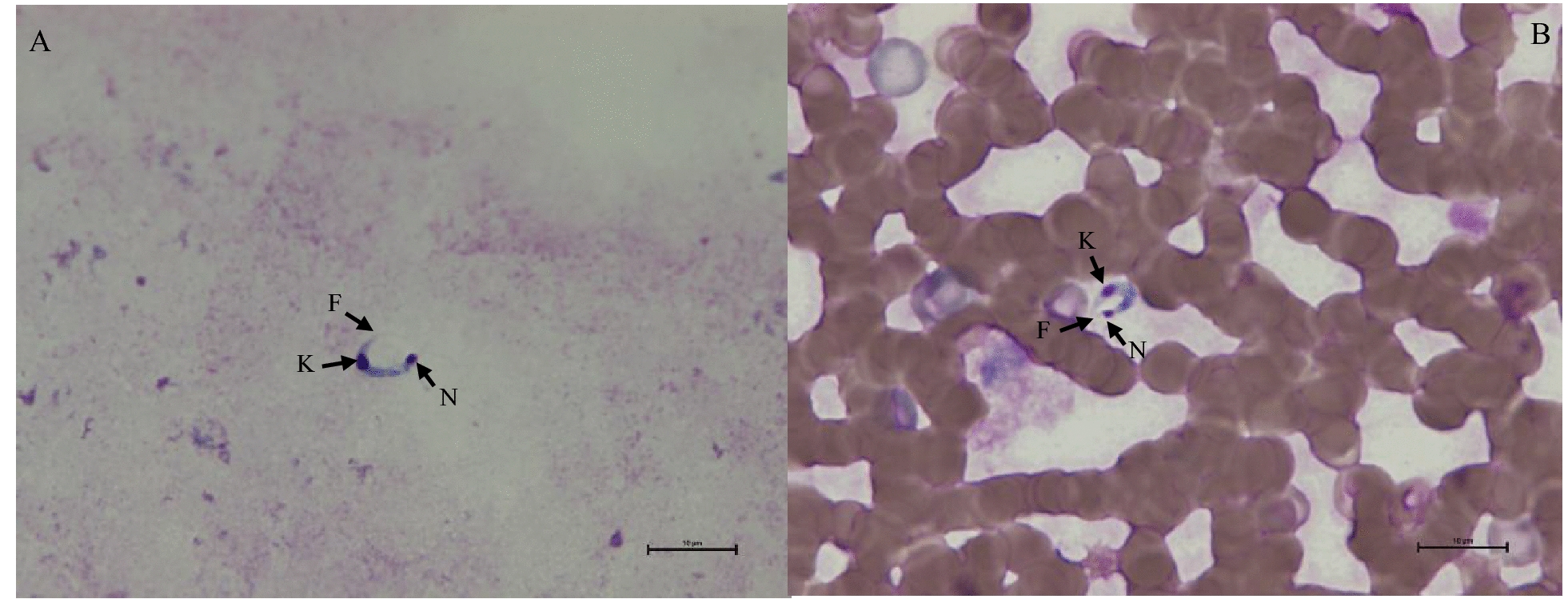 Figure 1
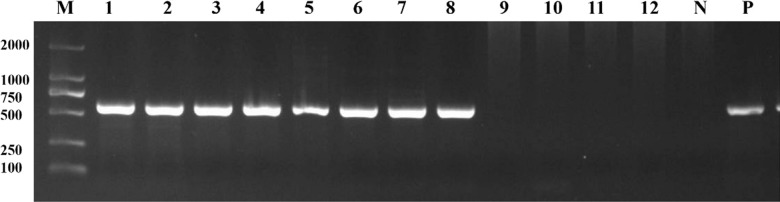 Figure 2
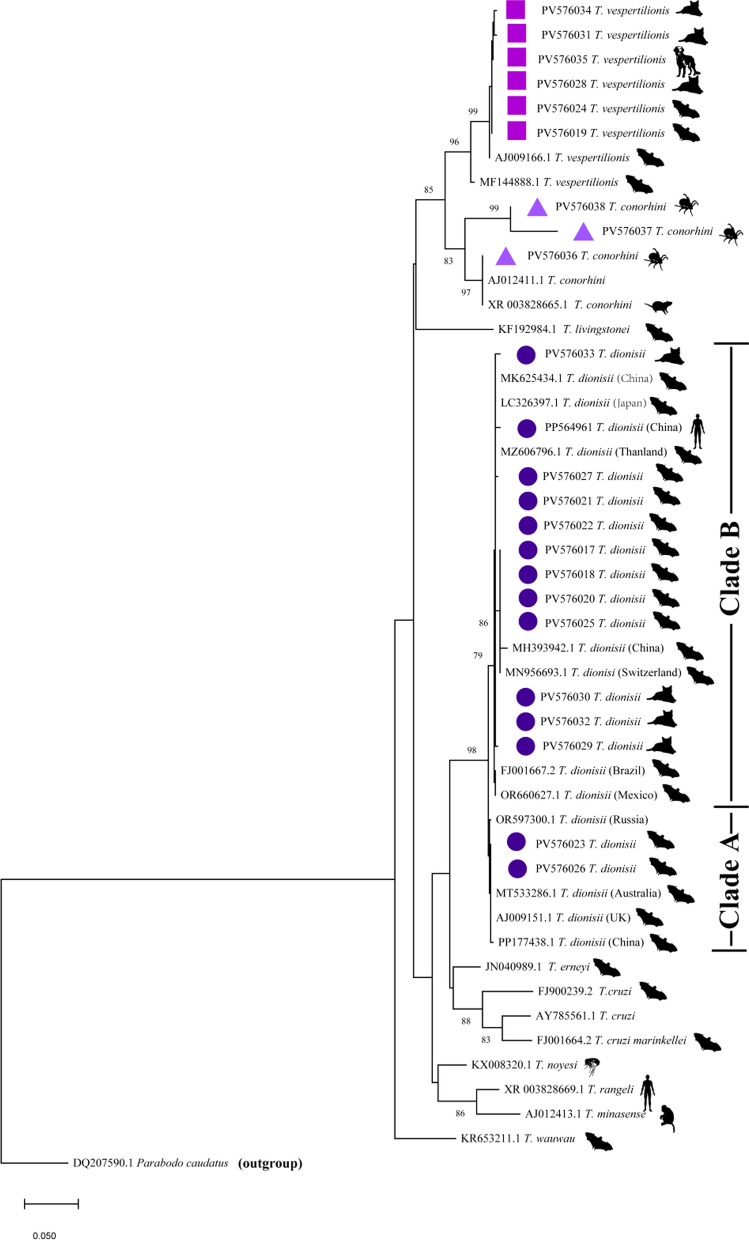 Figure 3
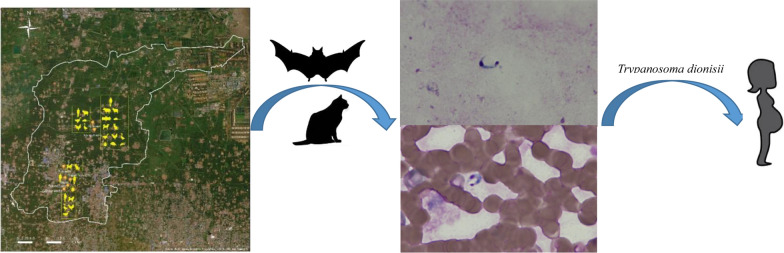 Figure 4
Peer Reviews
No public reviews on file for this paper yet. If you reviewed it on a platform where reviews are public (OpenReview, ICLR, NeurIPS, ICML), you can paste yours below so the community can read it here.
Videos
No videos yet. Explain this paper in a talk, walkthrough, or lecture? Add one.
Taxonomy
TopicsTrypanosoma species research and implications · Vector-borne infectious diseases · Insect symbiosis and bacterial influences