Water evaporation as a function of temperature, humidity, air velocity and body size in inactive terrestrial pulmonate Theba pisana
Sascha Zimmermann, Ulrich Gärtner, Yvan Capowiez, Heinz-R. Köhler, David Wharam

TL;DR
This study explores how environmental factors and body size affect water evaporation in snails, revealing how they adapt to conserve water in arid environments.
Contribution
The study identifies threshold temperatures and active physiological responses in snails that reduce water evaporation under varying environmental conditions.
Findings
Evaporation rates in Theba pisana are explained by 72.8% using temperature, humidity, air velocity, and body size.
Larger snails have lower evaporation rates at low temperatures, but this trend reverses above a threshold temperature.
Snails actively reduce evaporation to conserve water rather than increase it to avoid overheating in arid conditions.
Abstract
The conservation of water is of great importance to terrestrial snails in order to survive in arid environments. However, evaporation of body water does occur, and it is unclear whether snails are able to actively reduce the evaporation or whether increased environmental temperature inevitably leads to increased evaporation. Physically, the quantity of evaporating water is largely determined by the temperature, the relative humidity and the velocity of the surrounding air, as well as the surface area of the evaporating body. Theba pisana, a widespread Mediterranean land snail, is exposed to a wide range of ambient temperatures. For this species the experimentally recorded evaporation rate per mass was tested as a ‘response’ variable to the ‘explanatory’ variables temperature, relative humidity and air velocity using multiple regression modelling. The variation in specific evaporation of…
Genes, proteins, chemicals, diseases, species, mutations and cell lines named across the full text — each resolved to its canonical identifier and authoritative record.
Click any figure to enlarge with its caption.
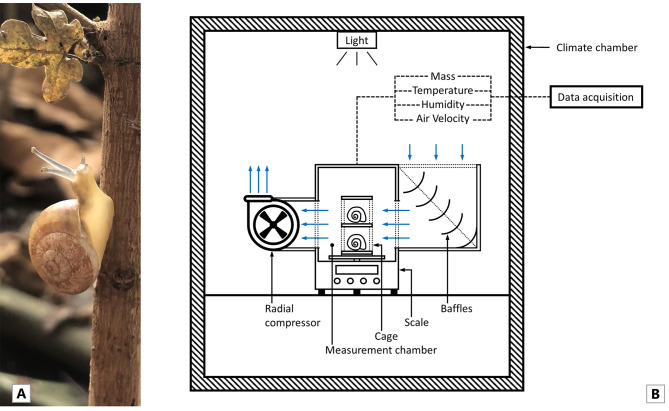 Figure 1
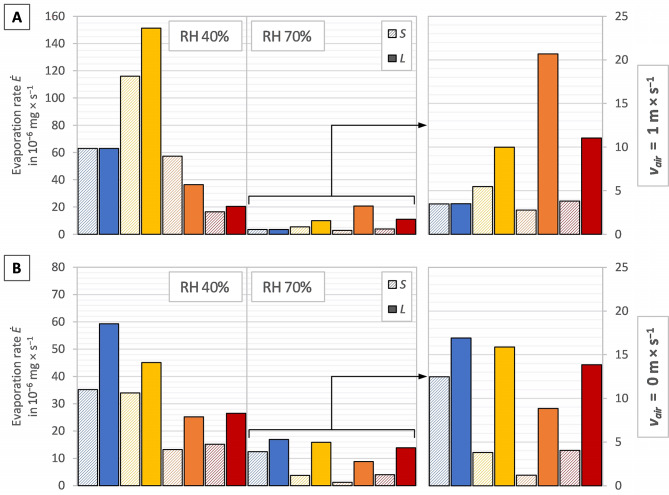 Figure 2
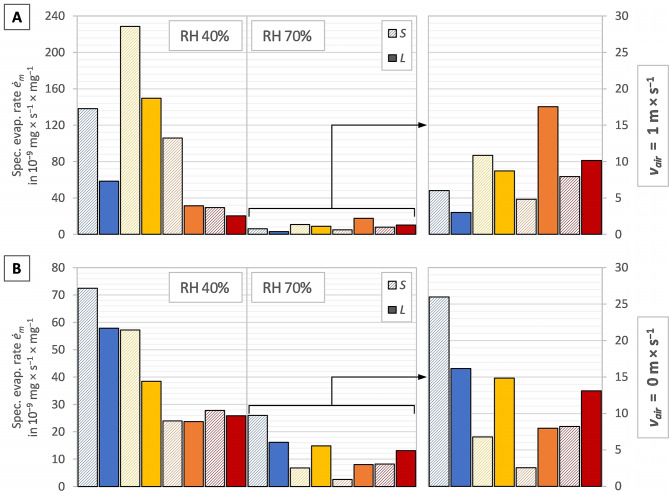 Figure 3
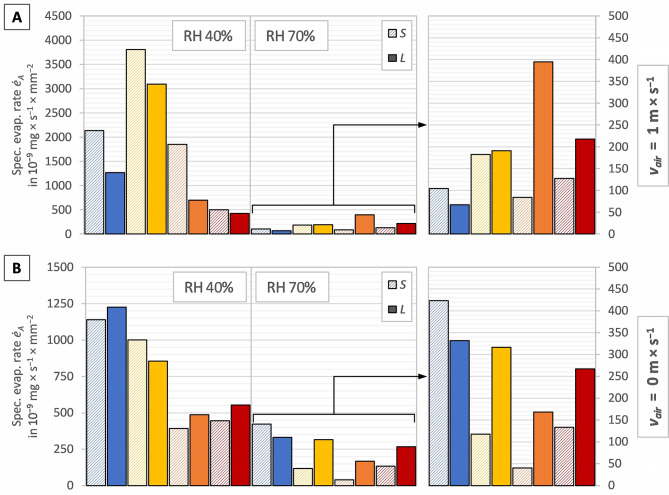 Figure 4
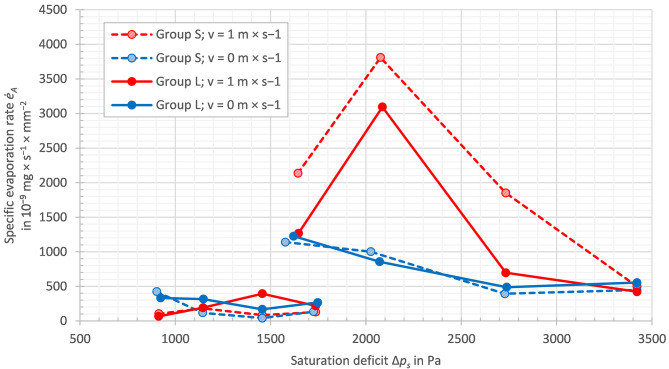 Figure 5
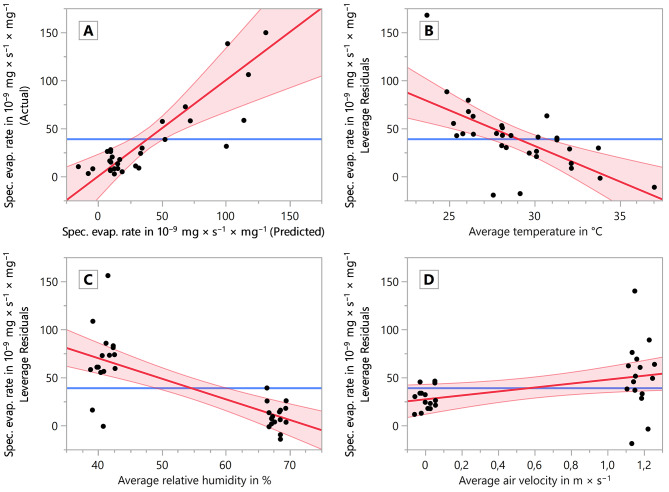 Figure 6
Peer Reviews
No public reviews on file for this paper yet. If you reviewed it on a platform where reviews are public (OpenReview, ICLR, NeurIPS, ICML), you can paste yours below so the community can read it here.
Videos
No videos yet. Explain this paper in a talk, walkthrough, or lecture? Add one.
Taxonomy
TopicsPhysiological and biochemical adaptations · Mollusks and Parasites Studies · Aquatic Invertebrate Ecology and Behavior