MAVS signaling of long-lived brain-resident myeloid cells is needed during viral encephalitis to adjust the transcriptome of CNS infiltrating CD8+ T cells
Andreas Pavlou, Luca Ghita, Felix Mulenge, Inken Waltl, Olivia Luise Gern, Pia-Katharina Larsen, Bibiana Costa, Veronica Duran, Lena Mareike Busker, Shelly J. Robertson, Yvonne Lueder, Stephan Halle, Reinhold Förster, Sonja M. Best, Martin Stangel, Ulrich Kalinke

TL;DR
Brain-resident myeloid cells use MAVS signaling during viral infection to help CD8+ T cells function properly in fighting the virus.
Contribution
MAVS signaling in brain-resident myeloid cells is essential for CD8+ T cell function during viral encephalitis.
Findings
MAVS signaling in brain-resident myeloid cells is crucial for protection against viral infection.
CD8+ T cells infiltrating the CNS show dysfunctional transcriptional profiles without MAVS signaling.
P2RY12+ microglia with MAVS deletion have abnormal gene expression related to antigen cross-presentation.
Abstract
Neurotropic viruses like vesicular stomatitis virus (VSV) can infect the central nervous system (CNS) through the olfactory route. Following intranasal instillation, VSV moves along the axons of olfactory sensory neurons to the olfactory bulb. While within the olfactory bulb the spread of the virus is controlled by microglia activation and the recruitment of peripheral leukocytes, some of the underlying mechanisms remain unknown. To investigate these mechanisms, we used mice with conditional deletions of the mitochondrial antiviral-signaling protein (MAVS), an adaptor for RIG-I-like receptor (RLR) signaling. By selectively deleting MAVS in neurons, astrocytes, or long-lived myeloid cells, we discovered that RLR signaling specifically within brain-resident myeloid cells is crucial for protection against the virus. Infected mice with a MAVS deletion in these myeloid cells showed normal…
Genes, proteins, chemicals, diseases, species, mutations and cell lines named across the full text — each resolved to its canonical identifier and authoritative record.
Click any figure to enlarge with its caption.
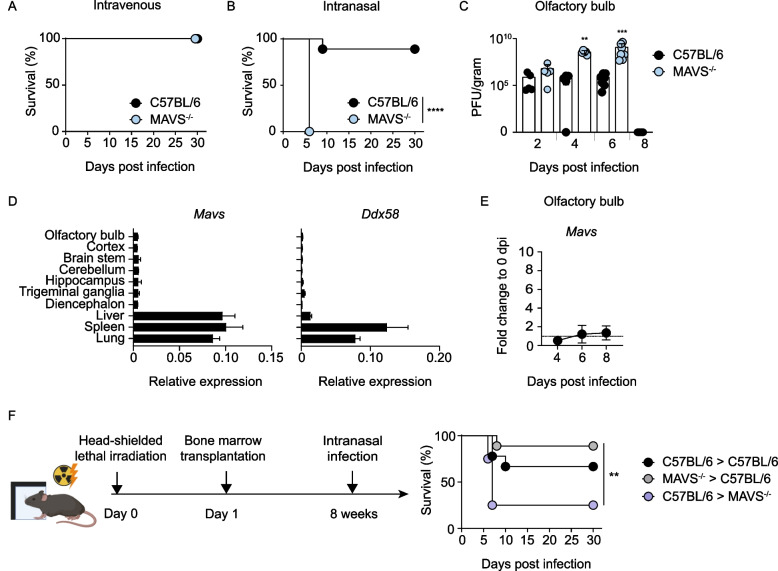 Figure 1
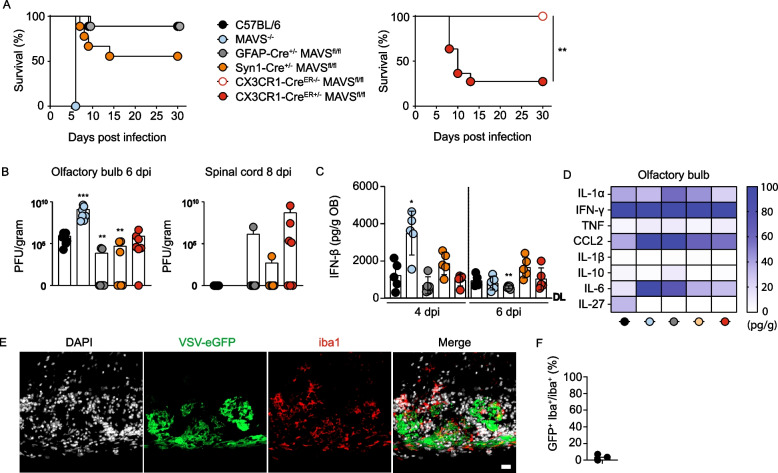 Figure 2
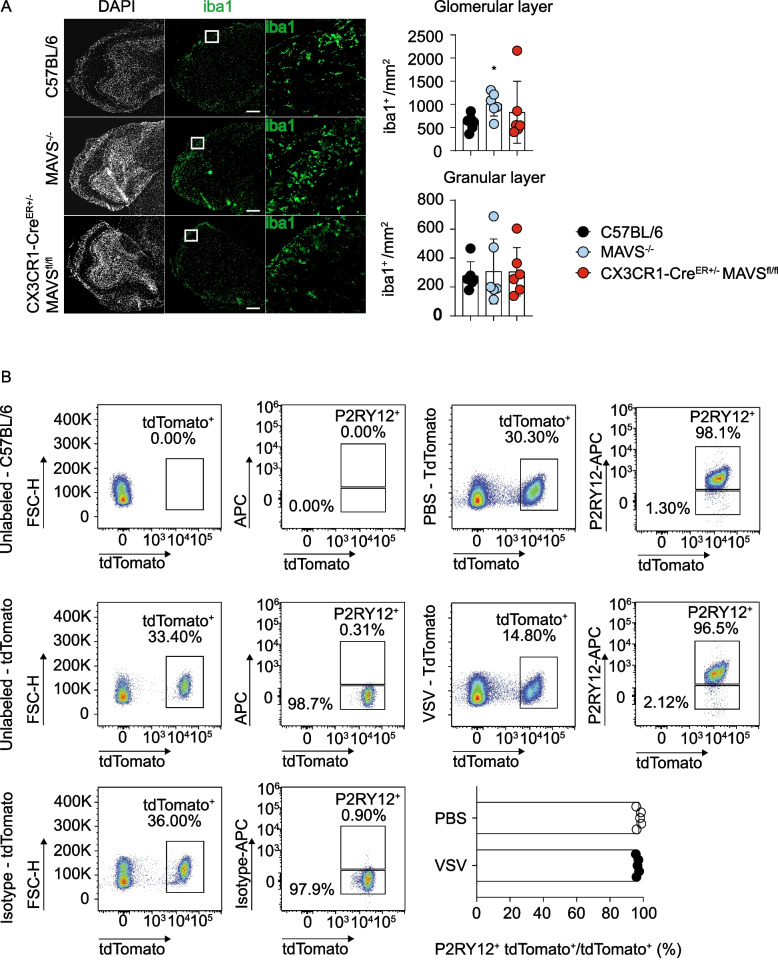 Figure 3
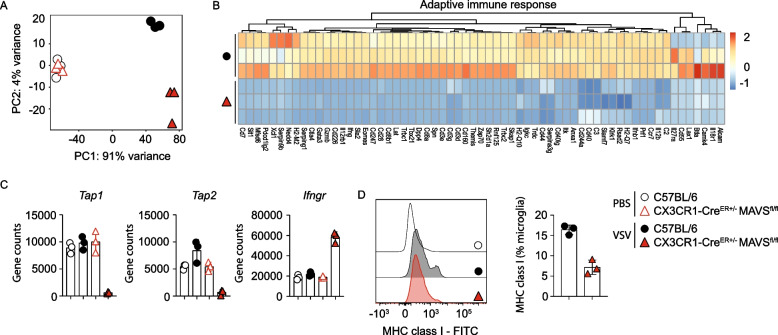 Figure 4
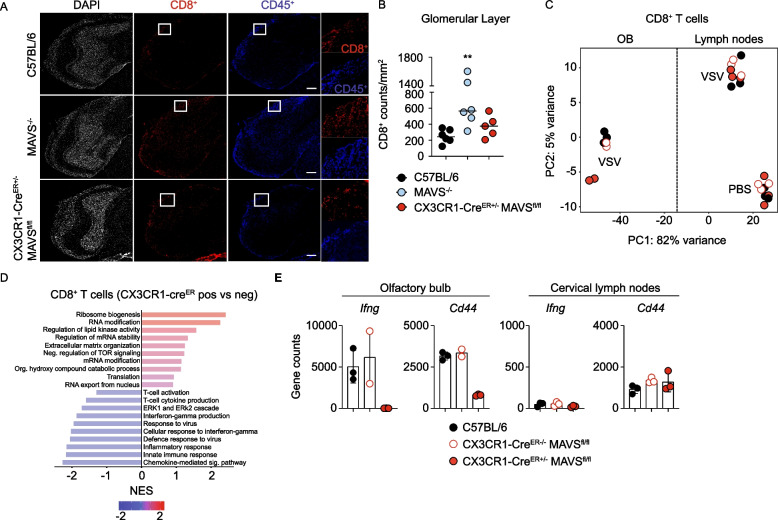 Figure 5
Peer Reviews
No public reviews on file for this paper yet. If you reviewed it on a platform where reviews are public (OpenReview, ICLR, NeurIPS, ICML), you can paste yours below so the community can read it here.
Videos
No videos yet. Explain this paper in a talk, walkthrough, or lecture? Add one.
Taxonomy
Topicsinterferon and immune responses · Neuroinflammation and Neurodegeneration Mechanisms · Immune Response and Inflammation