Accidental dexmedetomidine overdose in preterm newborns: a report of 3 cases
Giulia Paviotti, Mariabeatrice D’Agostini, Isabella Mauro, Federica Bortolotti, Rossella Gottardo, Carla Pittini

TL;DR
This paper reports three cases of accidental dexmedetomidine overdose in preterm newborns and their clinical effects.
Contribution
The study is the first to describe clinical presentations of dexmedetomidine overdose in newborns due to a medication error.
Findings
Three preterm newborns showed similar symptoms including apnea, gasping breathing, and hypotonia after accidental dexmedetomidine overdose.
Symptoms resolved within hours, and no long-term effects were observed during follow-up.
Dexmedetomidine was mistakenly administered instead of caffeine due to a 'look alike' medication error.
Abstract
Dexmedetomidine use in neonatal units is increasing. Data on its safety are still limited. There are no previous reports of clinical presentation of dexmedetomidine overdose in newborns. Three babies simultaneously developed a similar clinical picture of recurrent apneas, a typical “gasping” breathing pattern, irritability followed by hypotonia and hyporeactivity, hyperglycaemia, hypocapnia, increase in lactates and a suppression-burst pattern on CFM/EEG. Babies required intubation and mechanical ventilation due to poor respiratory effort. Symptoms resolved completely in a few hours. Dexmedetomidine was administered enterally by a nasogastric tube in place of caffeine due to “look alike” medication error. Dexmedetomidine was retrieved in biological samples. Babies were developing regularly at post-discharge follow up visits. Dexmedetomidine overdose due to medication error is possible…
Genes, proteins, chemicals, diseases, species, mutations and cell lines named across the full text — each resolved to its canonical identifier and authoritative record.
Click any figure to enlarge with its caption.
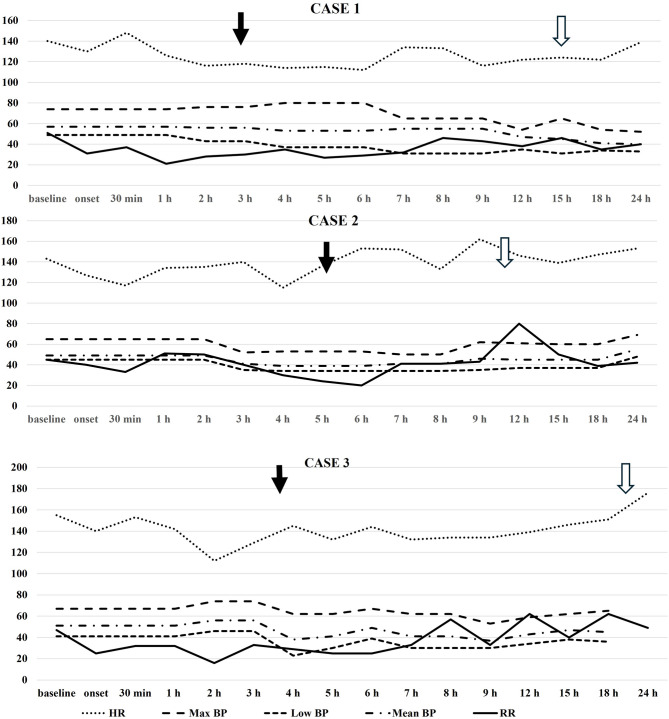 Figure 1
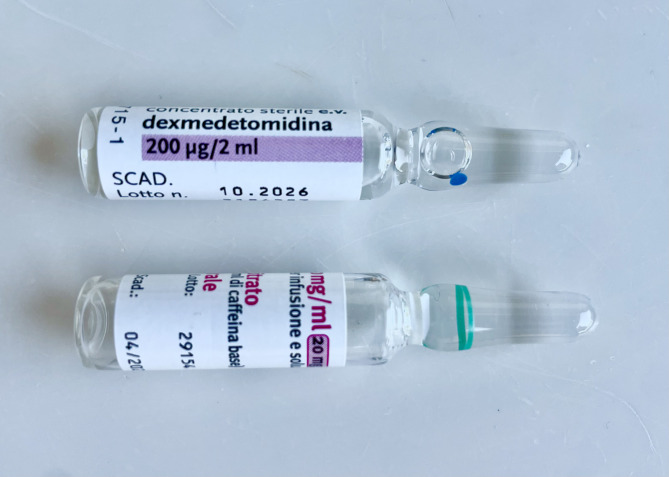 Figure 2
Peer Reviews
No public reviews on file for this paper yet. If you reviewed it on a platform where reviews are public (OpenReview, ICLR, NeurIPS, ICML), you can paste yours below so the community can read it here.
Videos
No videos yet. Explain this paper in a talk, walkthrough, or lecture? Add one.
Taxonomy
TopicsAnesthesia and Sedative Agents · Anesthesia and Neurotoxicity Research · Intensive Care Unit Cognitive Disorders