Associations of Metabolic Syndrome and Insulin Resistance With Attenuated Executive Function Post‐Preeclampsia: A Nested Case–Control Study
Robert‐Jan Alers, Chahinda Ghossein‐Doha, Yentl Brandt, M. Eline Kooi, Suzanne C. Gerretsen, Jacobus F. A. Jansen, Walter H. Backes, Vincent van de Ven, Petra P. M. Hurks, Marc E. A. Spaanderman

TL;DR
Women who had preeclampsia and also have metabolic syndrome or insulin resistance show worse executive function, such as working memory and task focus, years later.
Contribution
This study identifies metabolic syndrome and insulin resistance as novel risk factors for long-term cognitive issues after preeclampsia.
Findings
Metabolic syndrome is linked to a 4.20 times higher risk of reduced executive function after preeclampsia.
Insulin resistance is strongly associated with impaired executive function, with an odds ratio of 7.26.
Over half of the cognitive decline after preeclampsia may be attributed to insulin resistance.
Abstract
Preeclampsia contributes to maternal cognitive problems, particularly involving executive functions. These higher‐order cognitive functions—including working memory, organisation of materials, and task focus—are essential for adaptive, purposeful, and goal‐directed behaviour. Similar cognitive problems are observed in metabolic syndrome and insulin resistance. This study investigates whether these conditions are also associated with executive function after preeclampsia. Nested case–control study. Maastricht University Medical Centre+, a tertiary care hospital. Women 0.5 to 30 years after preeclampsia. The Behaviour Rating Inventory of Executive Function for Adults provided a measure of executive function performance. The National Cholesterol Education Program Adult Treatment Panel III defined metabolic syndrome. The Homeostatic Model Assessment for Insulin Resistance (HOMA‐IR)…
Genes, proteins, chemicals, diseases, species, mutations and cell lines named across the full text — each resolved to its canonical identifier and authoritative record.
Click any figure to enlarge with its caption.
 Figure 1
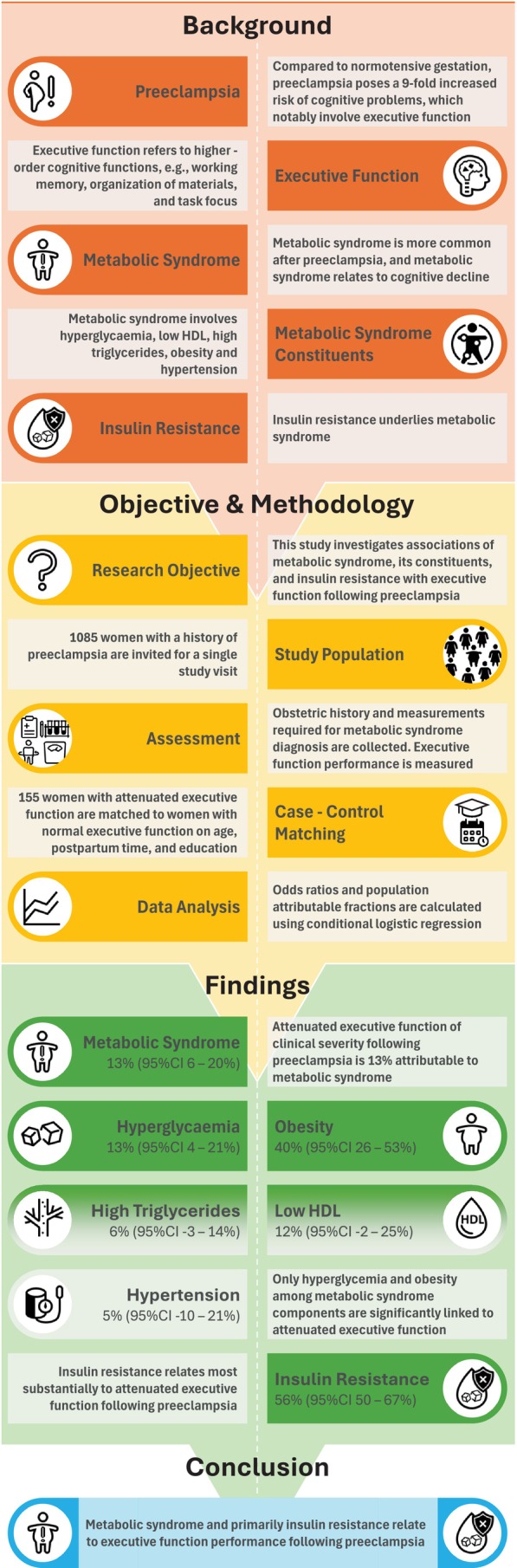 Figure 2
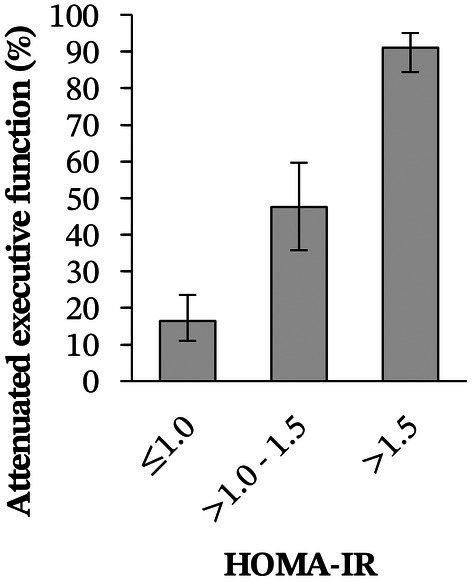 Figure 3
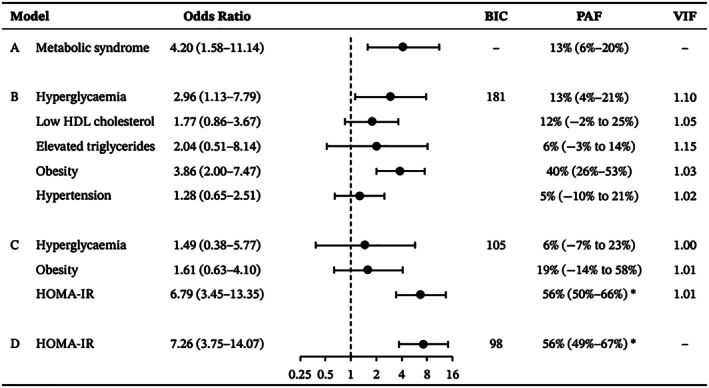 Figure 4
Peer Reviews
No public reviews on file for this paper yet. If you reviewed it on a platform where reviews are public (OpenReview, ICLR, NeurIPS, ICML), you can paste yours below so the community can read it here.
Videos
No videos yet. Explain this paper in a talk, walkthrough, or lecture? Add one.
Taxonomy
TopicsPregnancy and preeclampsia studies · Birth, Development, and Health · Neonatal and fetal brain pathology