Time to pathologic diagnosis of suspicious breast lesions: An institution‐based study in five Ethiopian hospitals
Friedemann Rabe, Sefonias Getachew, Clara Yolanda Stroetmann, Nikolaus Christian Simon Mezger, Tewodros Yalew Gebremariam, Bereket Berhane, Alex Mremi, Blandina Theophil Mmbaga, Pauline Boucheron, Valerie McCormack, Pablo Santos, Adamu Addissie, Eva Johanna Kantelhardt

TL;DR
This study examines how long it takes to diagnose breast cancer in Ethiopia and finds that only 55% of patients meet the WHO's 2-month benchmark.
Contribution
The study provides empirical data on diagnostic delays in Ethiopian hospitals and identifies factors affecting timely breast cancer diagnosis.
Findings
The median time from symptom onset to first healthcare visit was 2.8 months.
55% of patients received a diagnosis within the WHO-recommended 2 months.
Older patients and those referred for pathology at first visit had shorter diagnostic delays.
Abstract
Most breast cancer (BC) patients in sub‐Saharan Africa are diagnosed at advanced stages. The World Health Organization's Global Breast Cancer Initiative Pillar II has a benchmark to diagnose BC within 2 months of the first contact with a health care provider (HCP). In this study, we interviewed 345 women who received a diagnostic workup of a suspicious breast lesion (eventually diagnosed as benign or malignant) at five Ethiopian hospitals in 2022. We assessed the length of the diagnostic journey encompassing the pre‐contact interval between the first experience of symptoms and the first HCP visit, and the post‐contact interval between HCP visit and diagnostic pathology procedures. We used negative binomial regression models to identify factors influencing these time intervals. The median pre‐contact interval was 2.8 months (interquartile range [IQR] 0.5–9.8). The median post‐contact…
Genes, proteins, chemicals, diseases, species, mutations and cell lines named across the full text — each resolved to its canonical identifier and authoritative record.
Click any figure to enlarge with its caption.
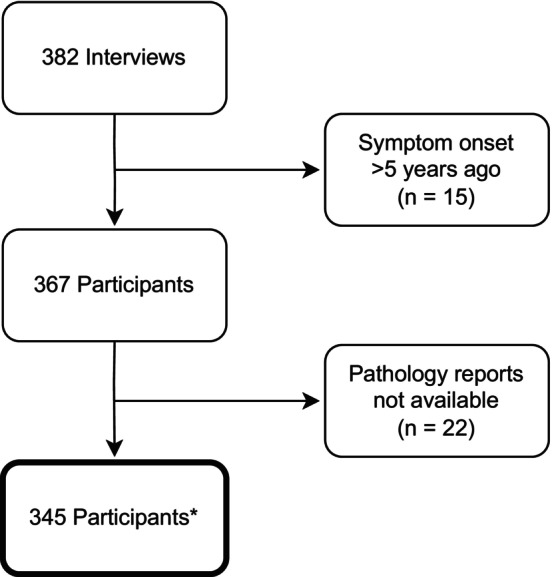 Figure 1
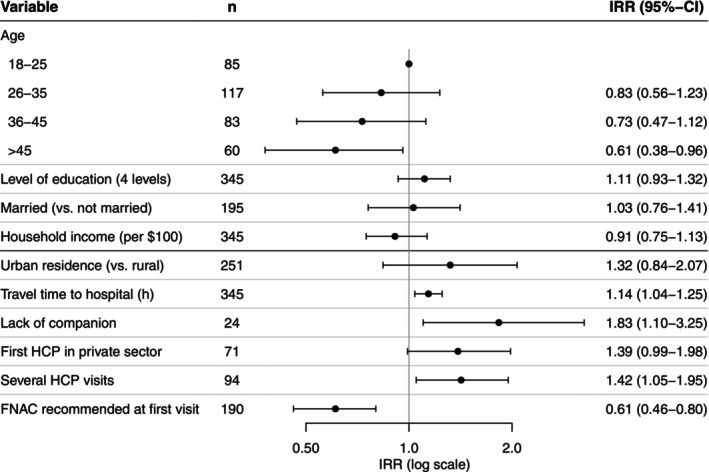 Figure 2
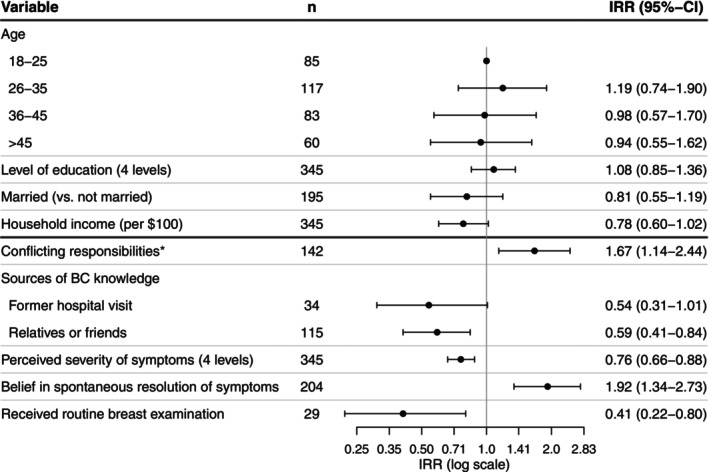 Figure 3
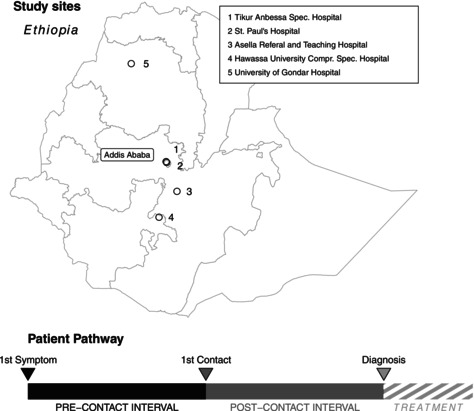 Figure 4
Peer Reviews
No public reviews on file for this paper yet. If you reviewed it on a platform where reviews are public (OpenReview, ICLR, NeurIPS, ICML), you can paste yours below so the community can read it here.
Videos
No videos yet. Explain this paper in a talk, walkthrough, or lecture? Add one.
Taxonomy
TopicsGlobal Cancer Incidence and Screening · AI in cancer detection · Cervical Cancer and HPV Research