Small Protein Domains as Potential Spin Labels for In Vitro, Cellular, and Light-Induced Dipolar EPR Spectroscopy
Andreas Günter, Susanna Ciuti, Lukas Denkhaus, Anna Sappler, Laura Orian, Stefan Gerhardt, Oliver Einsle, Stefan Weber, Marilena Di Valentin, Erik Schleicher

TL;DR
This paper shows how small protein domains can act as spin labels for EPR spectroscopy, enabling distance measurements in cells using light.
Contribution
The study introduces LOV domains as genetically encoded spin labels for dipolar EPR spectroscopy, enabling in-cell distance measurements.
Findings
LOV domains can generate multiple FMN radicals upon blue light exposure for EPR spectroscopy.
LOV1-LOV2 fusion proteins show distinct distances due to domain interactions and dimerization.
Light-induced EPR measurements can infer structure and dynamics of LOV proteins in cells.
Abstract
This study explores the potential of small light-oxygen-voltage (LOV) domains for utilization as protein spin labels in different dipolar EPR spectroscopy methods. The distinctive photochemical properties of selected LOV domain variants are exploited to generate a variety of (meta)stable flavin mononucleotide (FMN) radicals upon blue light absorption. Three different radicals, FMN·–, FMNH·, and an FMN-methionine radical, and an excited FMN triplet species, were generated. The FMN radicals were generated in LOV single domains and two model LOV1-LOV2 fusion proteins, and the latter proteins demonstrated that simple and effective orthogonal spin labeling can be performed. Subsequently, dipolar EPR experiments were conducted in aqueous solution and in cells with and without additional light excitation, in order to measure the distances between the FMN cofactor radicals, and to infer the…
Genes, proteins, chemicals, diseases, species, mutations and cell lines named across the full text — each resolved to its canonical identifier and authoritative record.
Click any figure to enlarge with its caption.
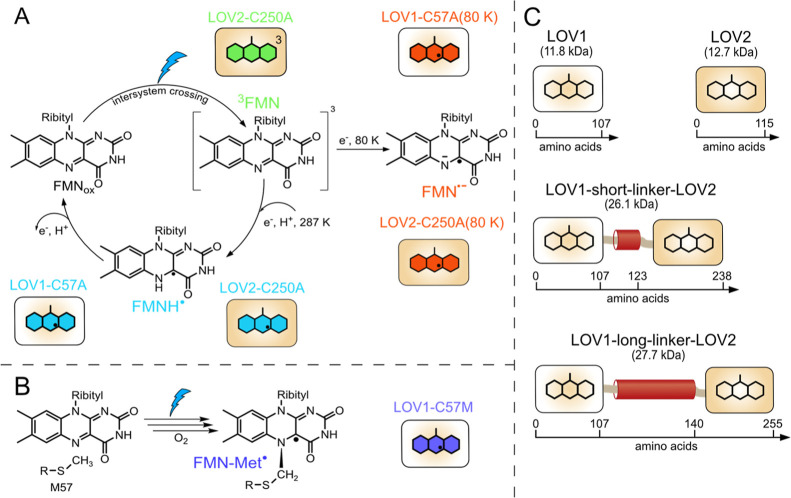 Figure 1
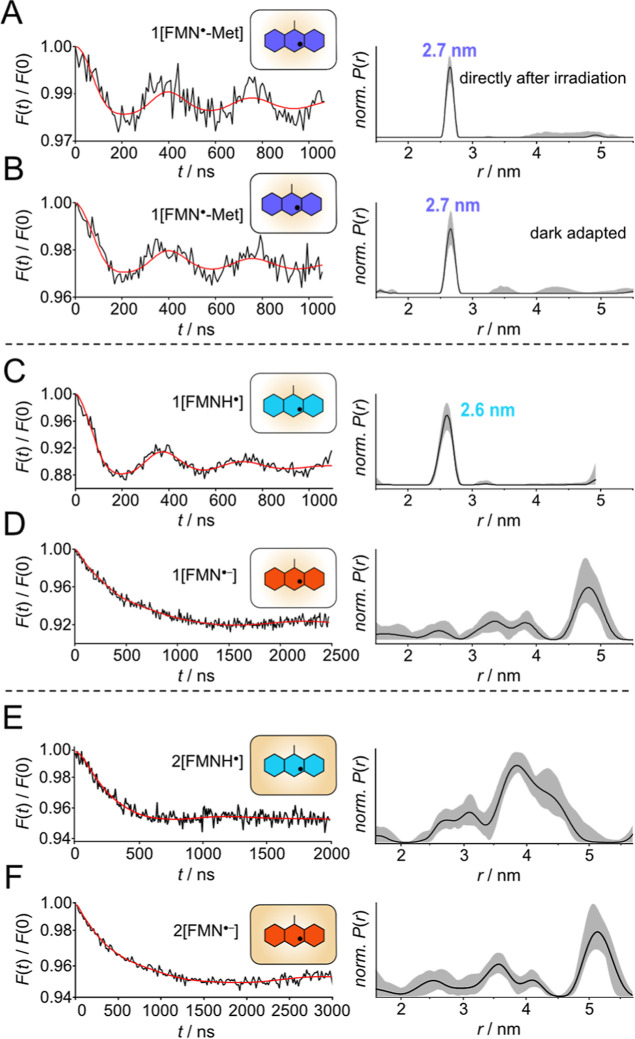 Figure 2
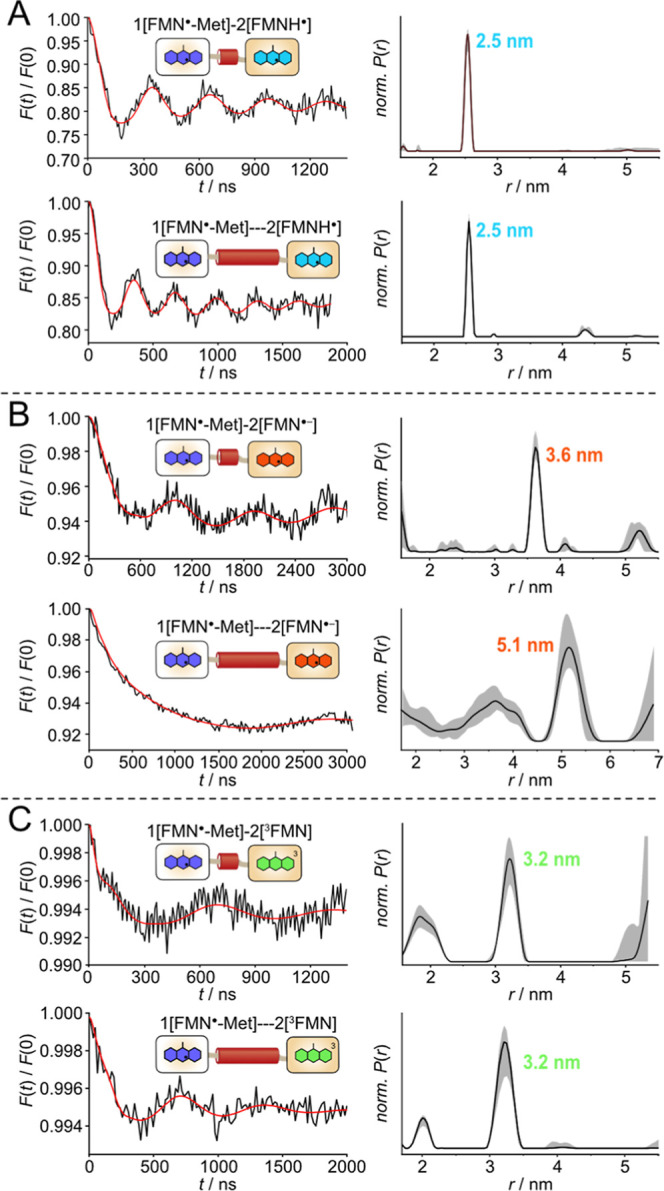 Figure 3
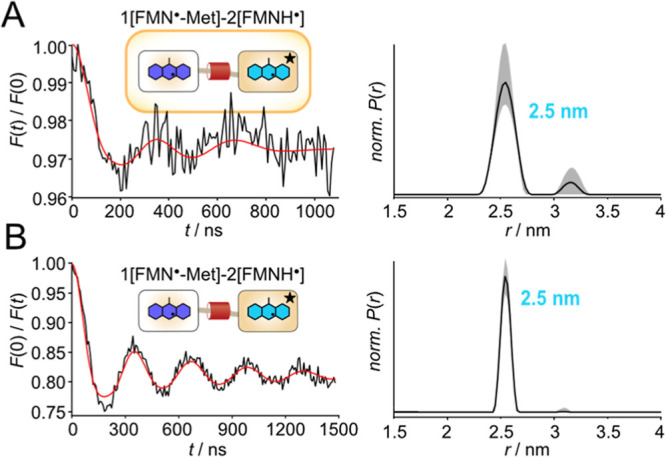 Figure 4
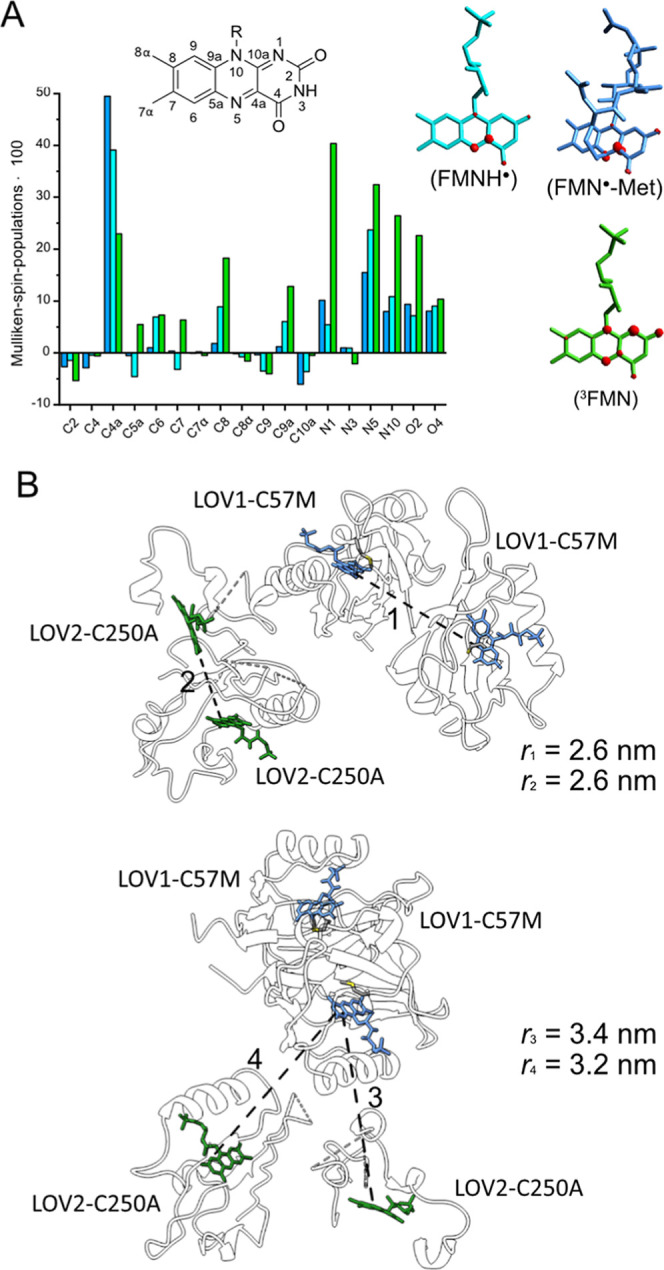 Figure 5
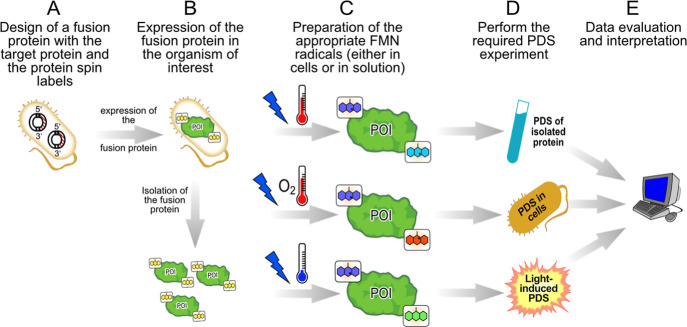 Figure 6
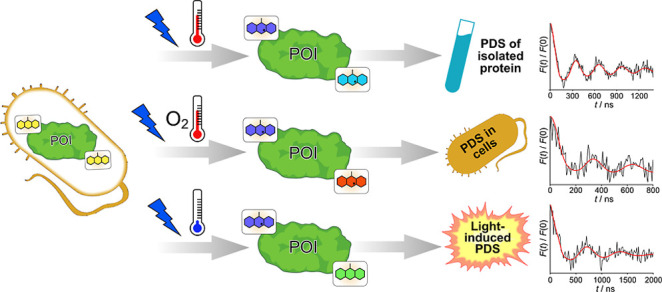 Figure 7
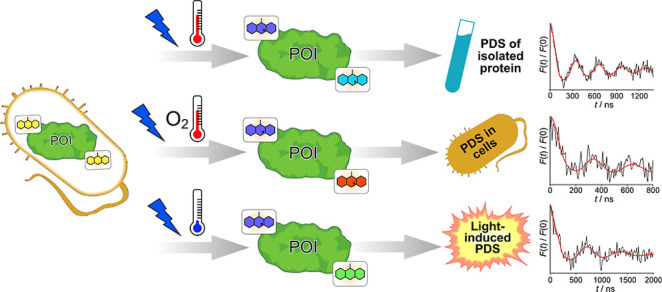 Figure 8
Peer Reviews
No public reviews on file for this paper yet. If you reviewed it on a platform where reviews are public (OpenReview, ICLR, NeurIPS, ICML), you can paste yours below so the community can read it here.
Videos
No videos yet. Explain this paper in a talk, walkthrough, or lecture? Add one.
Taxonomy
TopicsElectron Spin Resonance Studies · Photosynthetic Processes and Mechanisms · Advanced NMR Techniques and Applications