Biomimetic Glycosaminoglycan‐Analog Hydrogel for Improved Embolization of Aneurysms: Environment‐Selective Swelling
Sarit S. Sivan, Iris Bonshtein, Maria Khoury, Yevgeniy Kreinin, Dmitry Korneyev, Tirosh Mekler, Sumaya Kaiyal, Iris Sonia Weitz, Netanel Korin

TL;DR
A new injectable hydrogel that swells only in specific environments could improve aneurysm embolization by staying in place and blocking blood flow effectively.
Contribution
Development of a biomimetic hydrogel with environment-selective swelling for improved aneurysm embolization.
Findings
The hydrogel swells minimally in blood (30%) but significantly in plasma and PBS.
The hydrogel prevents protrusion into the parent artery and completely blocks aneurysm flow in 3D models.
Abstract
Injectable hydrogels are promising biomaterials for treating aneurysms, life‐threatening blood‐filled saccular lesions, enabling complete filling of the aneurysm and supporting tissue repair. Yet, the challenge is to enable clinical translation as hydrogels must not protrude into the parent vessel, nor migrate from the aneurysm cavity. Here, injectable, negatively‐charged, biologically and mechanically compatible hydrogels with environment‐sensitive swelling capabilities that cease swelling upon contact with blood are developed. Hydrogels are fabricated by copolymerizing sodium 2‐acrylamido‐2‐methylpropanesulfonic acid (NaAMPS) and 3‐sulfopropyl acrylate (KSPA) by using polyethylene glycol diacrylate (PEGDA). Three formulations (2%, 4%, and 6%) demonstrating a wide range of physiological‐relevant stiffnesses are fabricated. The selected mechano‐compatible 4% hydrogel exhibits a suitable…
Genes, proteins, chemicals, diseases, species, mutations and cell lines named across the full text — each resolved to its canonical identifier and authoritative record.
Click any figure to enlarge with its caption.
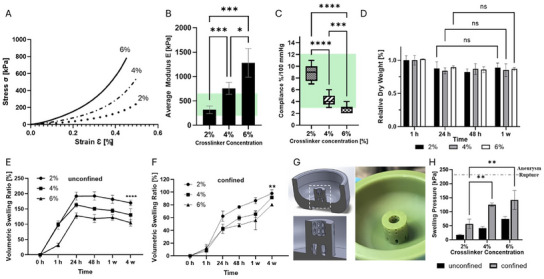 Figure 1
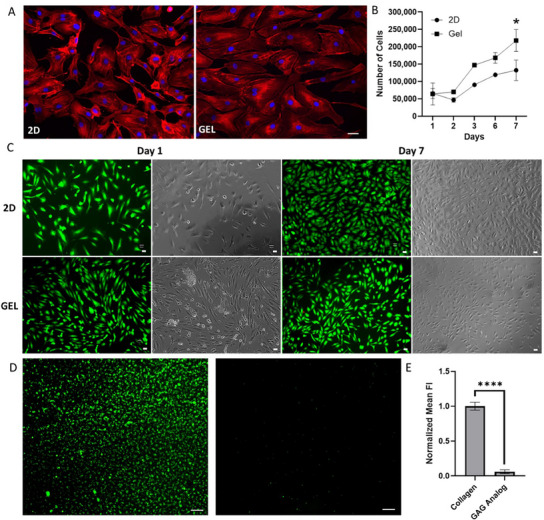 Figure 2
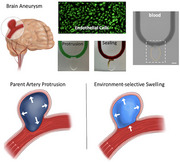 Figure 3
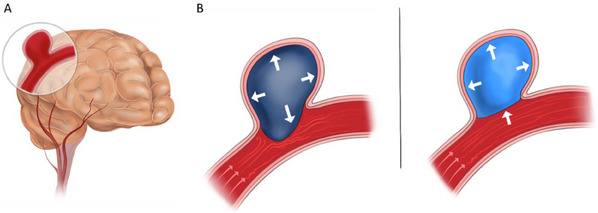 Figure 4
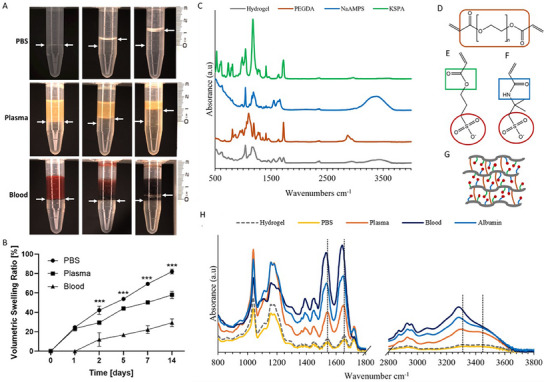 Figure 5
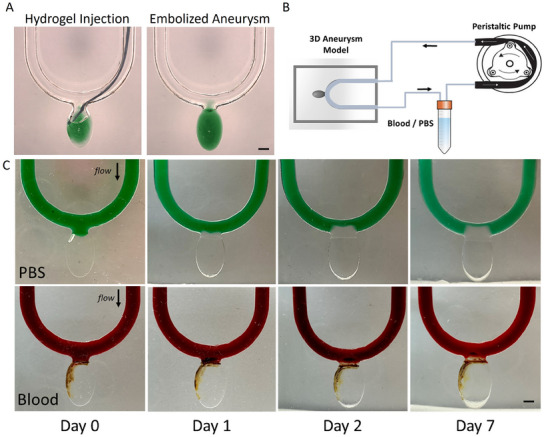 Figure 6
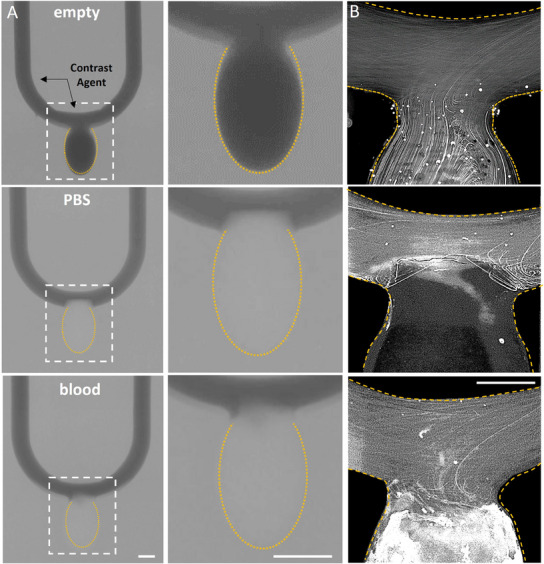 Figure 7
Peer Reviews
No public reviews on file for this paper yet. If you reviewed it on a platform where reviews are public (OpenReview, ICLR, NeurIPS, ICML), you can paste yours below so the community can read it here.
Videos
No videos yet. Explain this paper in a talk, walkthrough, or lecture? Add one.
Taxonomy
TopicsIntracranial Aneurysms: Treatment and Complications · Electrospun Nanofibers in Biomedical Applications · Connective tissue disorders research