Preferences for Attachment Devices for Individuals with Lower-Limb Loss: A Discrete-Choice Study to Inform Regulatory Decisions
Leslie Wilson, Matthew Garibaldi, Ruben Vargas, Molly Timmerman

TL;DR
This study explores how people with lower-limb loss weigh the risks and benefits of osseointegration devices to help guide medical decisions.
Contribution
The study introduces a discrete-choice experiment to quantify patient preferences for osseointegration risks and benefits, informing regulatory decisions.
Findings
Participants strongly preferred avoiding infection risks and device failure, but were willing to accept these risks for benefits like pain reduction.
Latent class analysis revealed two groups: one risk-averse and another with more balanced risk-benefit preferences.
Eliminating daily pain was the most preferred benefit of osseointegration, outweighing concerns about infection risk.
Abstract
Objective. The patient’s perspective in shared decision making has expanded to regulatory decision making for medical devices under the Food and Drug Administration’s Patient Preference Initiative. Methods. Using choice-based conjoint (CBC) procedures, a discrete-choice experiment measure describing the risks and benefits of osseointegration was designed and used in a preference study among 188 adults with lower-limb loss. Our measure included 8 attributes of 1) risks: chance of infection, complete device failure rate, time without prosthesis, activity limitations, and 2) benefits: avoidance of socket problems, limb perception, improved motion with less fatigue, and chance of limiting daily pain, with 3 to 4 levels each. We used a random, full-profile, balanced-overlap design in which 18 CBC conjoint pairs, sociodemographic, and clinical questions were completed. The analysis included…
Genes, proteins, chemicals, diseases, species, mutations and cell lines named across the full text — each resolved to its canonical identifier and authoritative record.
Click any figure to enlarge with its caption.
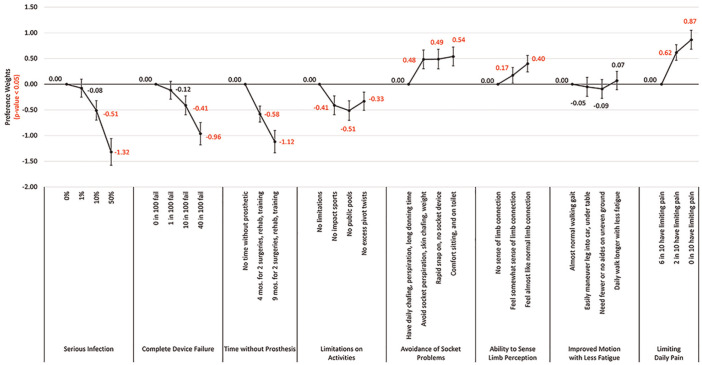 Figure 1
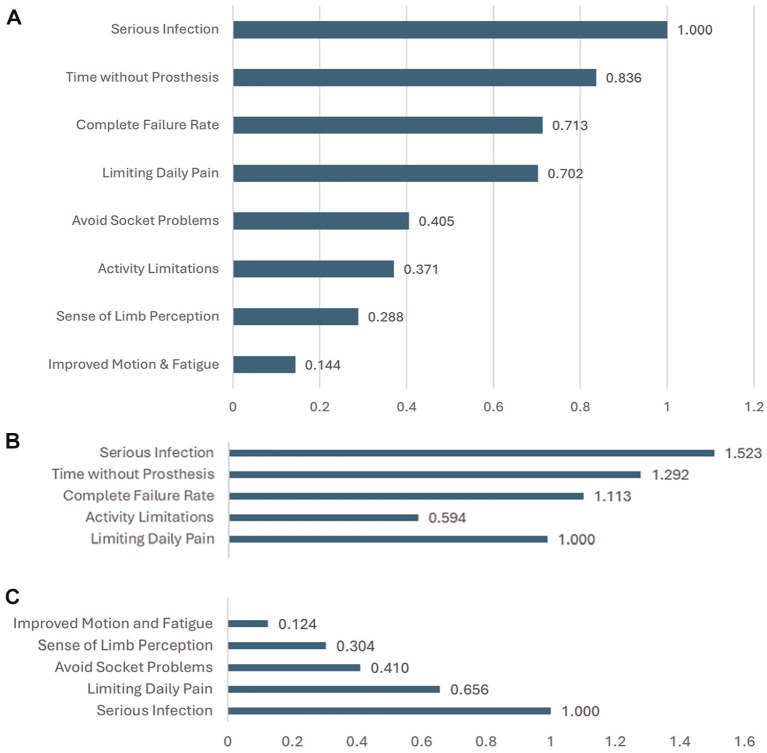 Figure 2
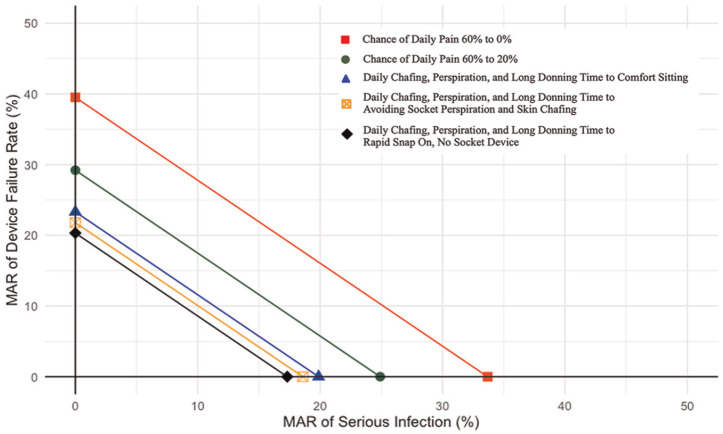 Figure 3
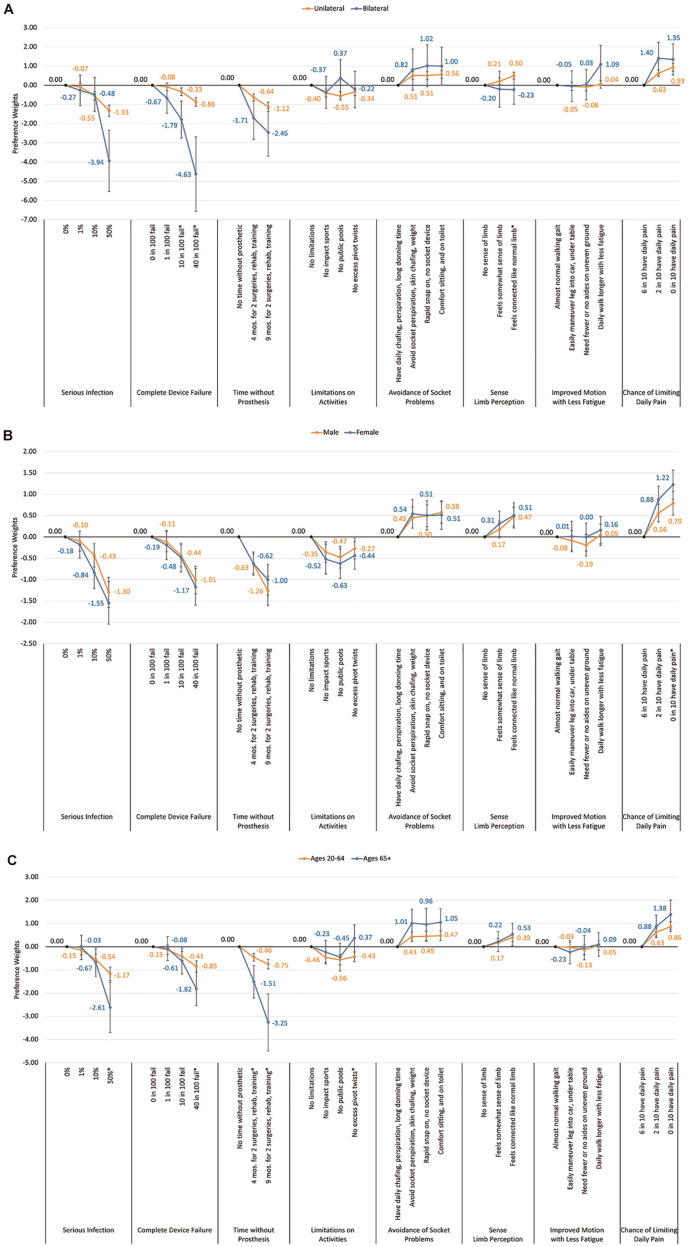 Figure 4
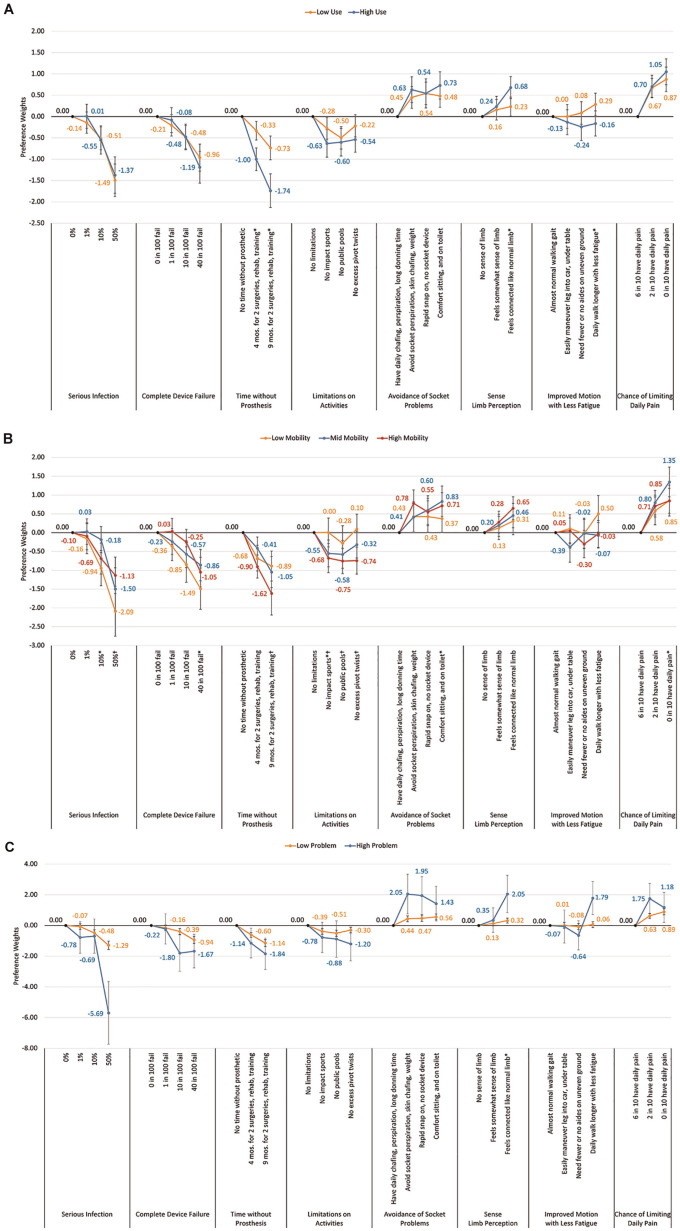 Figure 5
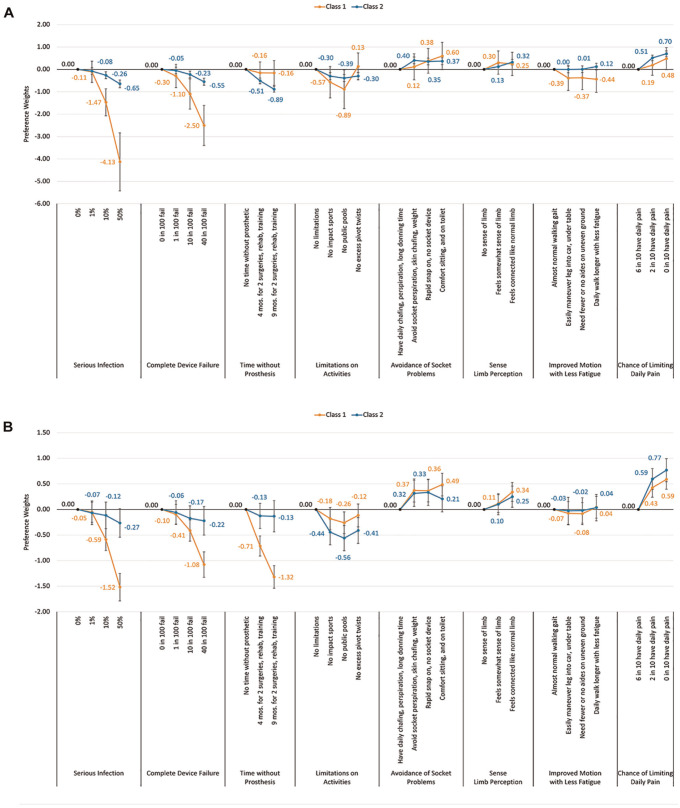 Figure 6
 Figure 7
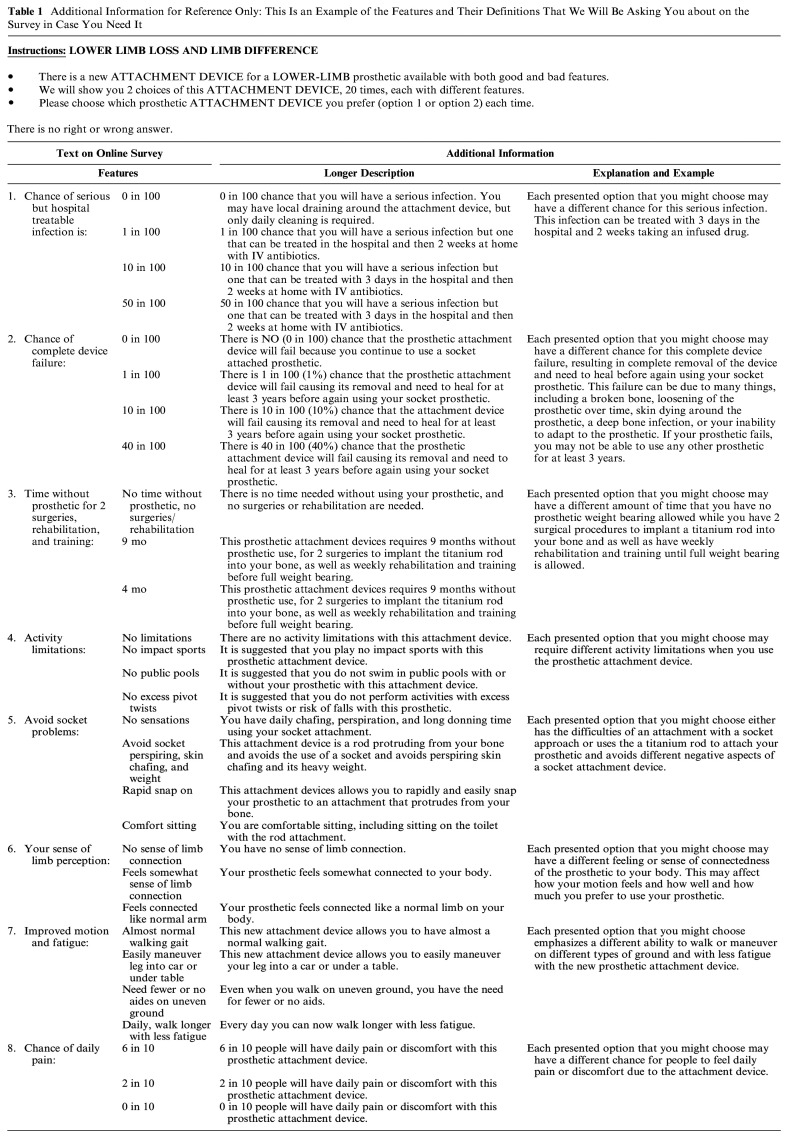 Figure 8
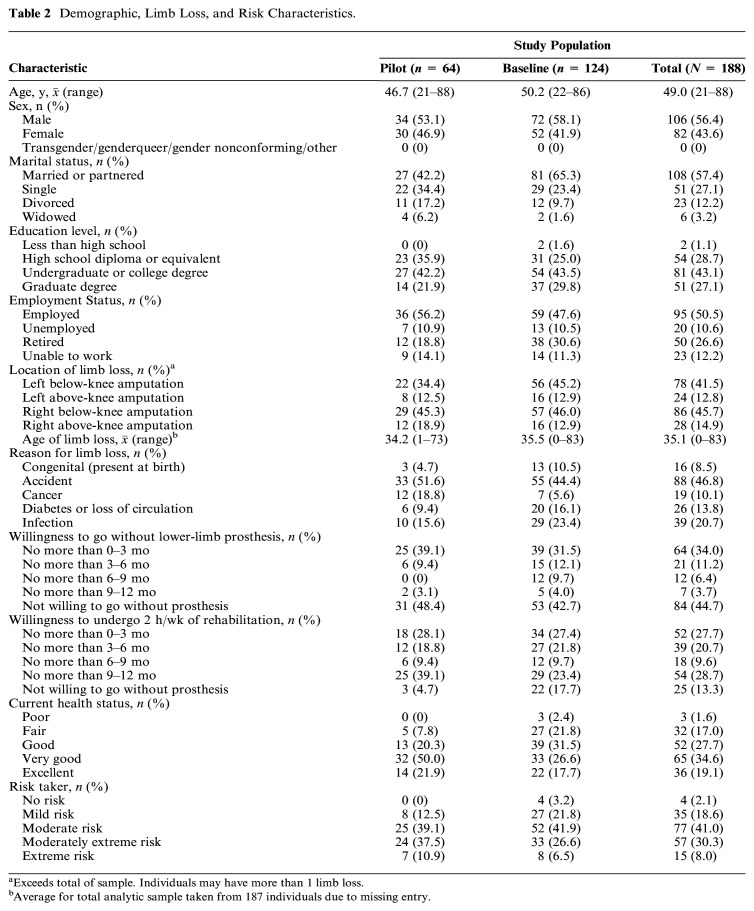 Figure 9
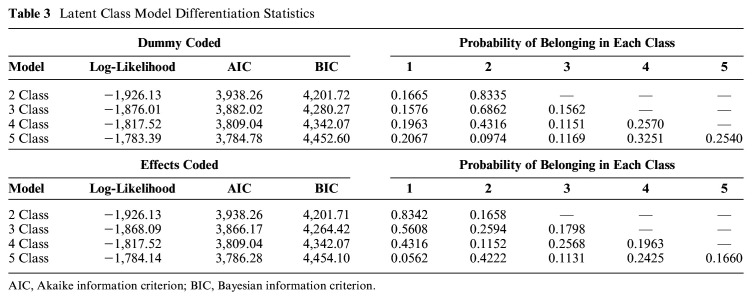 Figure 10
Peer Reviews
No public reviews on file for this paper yet. If you reviewed it on a platform where reviews are public (OpenReview, ICLR, NeurIPS, ICML), you can paste yours below so the community can read it here.
Videos
No videos yet. Explain this paper in a talk, walkthrough, or lecture? Add one.
Taxonomy
TopicsHealth Systems, Economic Evaluations, Quality of Life · Patient-Provider Communication in Healthcare · Economic and Environmental Valuation