Effectiveness and acceptability of two insertable device models for non-surgical management of obstetric fistula: protocol for a hybrid type I randomized crossover trial
Nessa Ryan, Gabriel Y. K. Ganyaglo, Joonhee Park, Tracy Kuo Lin, Joanna Pozen, Avni Mittal, Alison M. El Ayadi

TL;DR
This study tests two non-surgical devices for managing urinary incontinence caused by obstetric fistula to see if they are effective and acceptable.
Contribution
The study introduces a randomized crossover trial to evaluate novel insertable devices for managing fistula-related incontinence.
Findings
The trial will compare two device models (cup and cup+) against no intervention for managing urinary leakage.
Effectiveness will be measured through urinary leakage and quality of life assessments over time.
Acceptability will be evaluated via surveys and interviews with participants and implementers.
Abstract
Obstetric fistula is a traumatic and stigmatized maternal morbidity often resulting in severe urinary and fecal incontinence. Women with fistula face multi-level barriers to surgical repair culminating in delays. Unfortunately, no acceptable temporizing measures to contain incontinence of urine exists. An insertable vaginal cup, alone or connected to a leg bag, has potential for improving incontinence management for women awaiting surgery or those whom surgery was unsuccessful, but effectiveness and acceptability are unknown. We describe a four-year clinical trial and nested qualitative study to examine the effectiveness and acceptability of an insertable vaginal cup to manage fistula urinary incontinence and understand fistula management costs. Two intervention models will be compared to a control: (1) vaginal cup (‘cup’), and (2) vaginal cup attached via tubing to a leg-secured urine…
Genes, proteins, chemicals, diseases, species, mutations and cell lines named across the full text — each resolved to its canonical identifier and authoritative record.
Click any figure to enlarge with its caption.
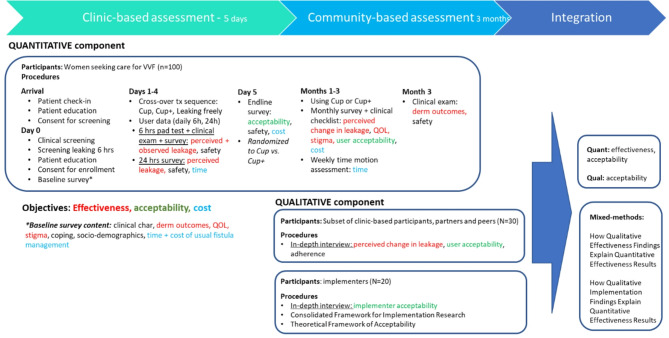 Figure 1
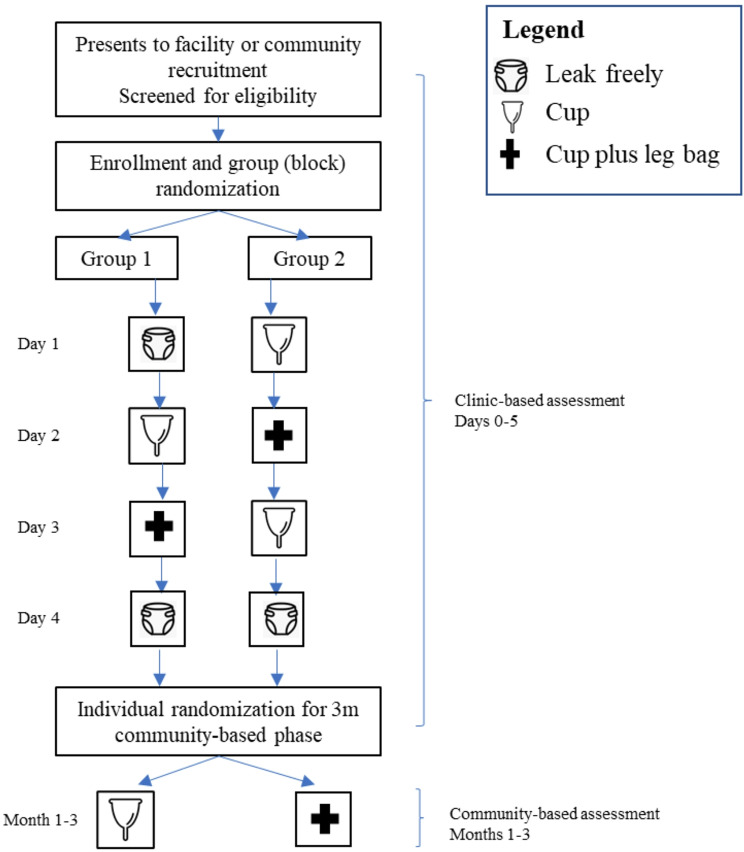 Figure 2
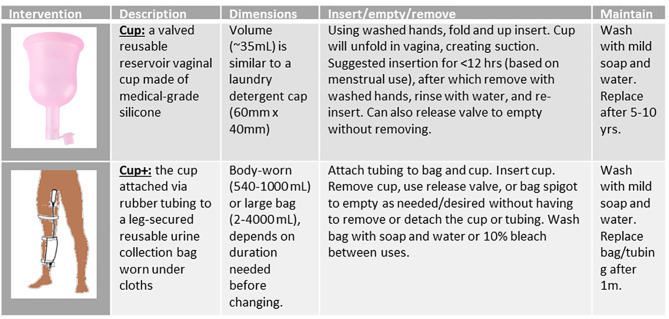 Figure 3
Peer Reviews
No public reviews on file for this paper yet. If you reviewed it on a platform where reviews are public (OpenReview, ICLR, NeurIPS, ICML), you can paste yours below so the community can read it here.
Videos
No videos yet. Explain this paper in a talk, walkthrough, or lecture? Add one.
Taxonomy
TopicsUreteral procedures and complications · Pelvic floor disorders treatments · Urological Disorders and Treatments