Improving genetics equity: identifying women eligible for genetic care services using mammography clinics in underserved areas as screening hubs
Darya Kizub, Rachel Bluebond, Sierra Green, Jessica Duckworth, Sreejesh Shanker, Autumn Vara, Banu Arun

TL;DR
This study used mammography clinics in underserved areas to identify women eligible for genetic testing for hereditary breast and ovarian cancer, finding that support and language resources helped overcome some barriers.
Contribution
The study introduces a novel approach to increase genetic testing access in underserved communities through targeted screening and multilingual support.
Findings
30.1% of participants were uninsured, and 150 (30%) were identified as eligible for genetic testing.
Only 9.9% of eligible women completed genetic testing, with no significant differences by Hispanic ethnicity, income, or insurance status.
One pathogenic variant in NF1 and two variants of uncertain significance were identified among those who completed testing.
Abstract
Fewer than 20% of underserved individuals undergo guideline-concordant hereditary breast and ovarian cancer (HBOC) genetic testing (GT). Our study aimed to determine the proportion of women eligible for HBOC GT using a cancer genetics risk assessment (CGRA) tool at breast cancer (BC) screening clinics in underserved communities and to describe the program’s impact. Participants were women who presented for BC screening at The Rose clinics, serving low-income underserved communities in southeast Texas, and completed the CGRA. High-risk individuals received bilingual educational materials and a saliva-based GT kit. Those with a pathogenic variant (PV) or a variant of uncertain significance (VUS) received telegenetic counseling and risk reduction resources. A total of 501 women completed the CGRA, with 30.1% uninsured. 150 women were identified as eligible for GT, but only 14 (9.9%)…
Genes, proteins, chemicals, diseases, species, mutations and cell lines named across the full text — each resolved to its canonical identifier and authoritative record.
Click any figure to enlarge with its caption.
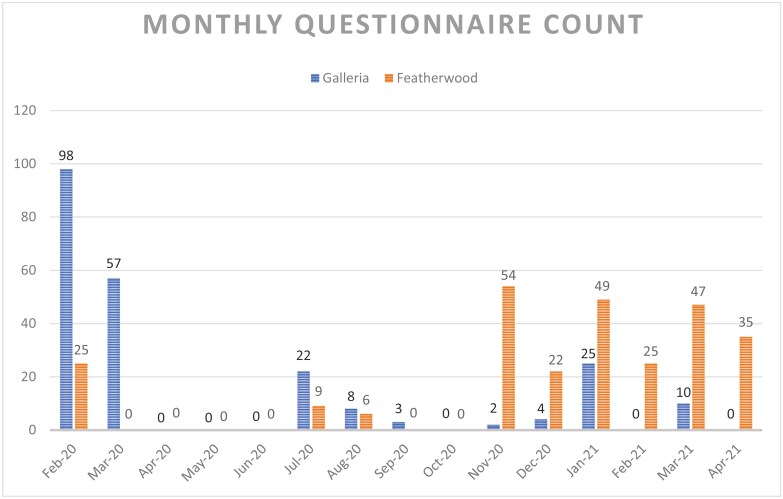 Figure 1
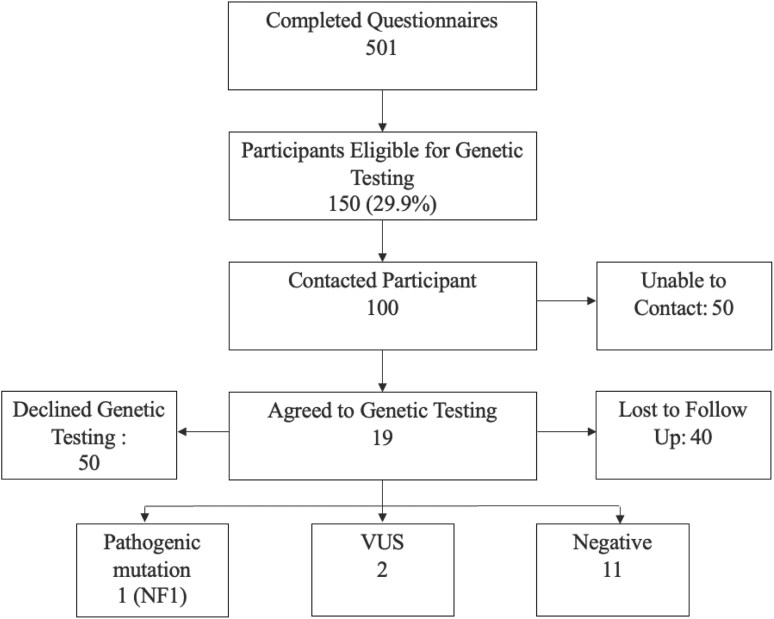 Figure 2
Peer Reviews
No public reviews on file for this paper yet. If you reviewed it on a platform where reviews are public (OpenReview, ICLR, NeurIPS, ICML), you can paste yours below so the community can read it here.
Videos
No videos yet. Explain this paper in a talk, walkthrough, or lecture? Add one.
Taxonomy
TopicsBRCA gene mutations in cancer · Global Cancer Incidence and Screening · Nutrition, Genetics, and Disease