Toward optimizing diversifying base editors for high-throughput mutational scanning studies
Carley I Schwartz, Nathan S Abell, Amy Li, Aradhana, Josh Tycko, Alisa Truong, Stephen B Montgomery, Gaelen T Hess

TL;DR
This study improves base editors for efficiently creating mutations in mammalian genomes to study their effects on cellular function.
Contribution
The study introduces DivA-BE, a new base editor with higher efficiency and distinct mutational patterns compared to existing methods.
Findings
DivA-BE achieved ∼4-fold higher editing efficiency than the CRISPR-X method.
Fusing the deaminase to the N-terminus of dCas9 created complementary C>N mutations on the target DNA strand.
DivA-BE increased mutagenesis efficiency but also led to higher indel frequencies.
Abstract
Base editors, including diversifying base editors that create C>N mutations, are potent tools for systematically installing point mutations in mammalian genomes and studying their effect on cellular function. Numerous base editor options are available for such studies, but little information exists on how the composition of the editor (deaminase, recruitment method, and fusion architecture) affects editing. To address this knowledge gap, the effect of various design features, such as deaminase recruitment and delivery method (electroporation or lentiviral transduction), on editing was assessed across ∼200 synthetic target sites. The direct fusion of a hyperactive variant of activation-induced cytidine deaminase to the N-terminus of dCas9 (DivA-BE) produced the highest editing efficiency, ∼4-fold better than the previous CRISPR-X method. Additionally, DivA-BE mutagenized the DNA strand…
Genes, proteins, chemicals, diseases, species, mutations and cell lines named across the full text — each resolved to its canonical identifier and authoritative record.
Click any figure to enlarge with its caption.
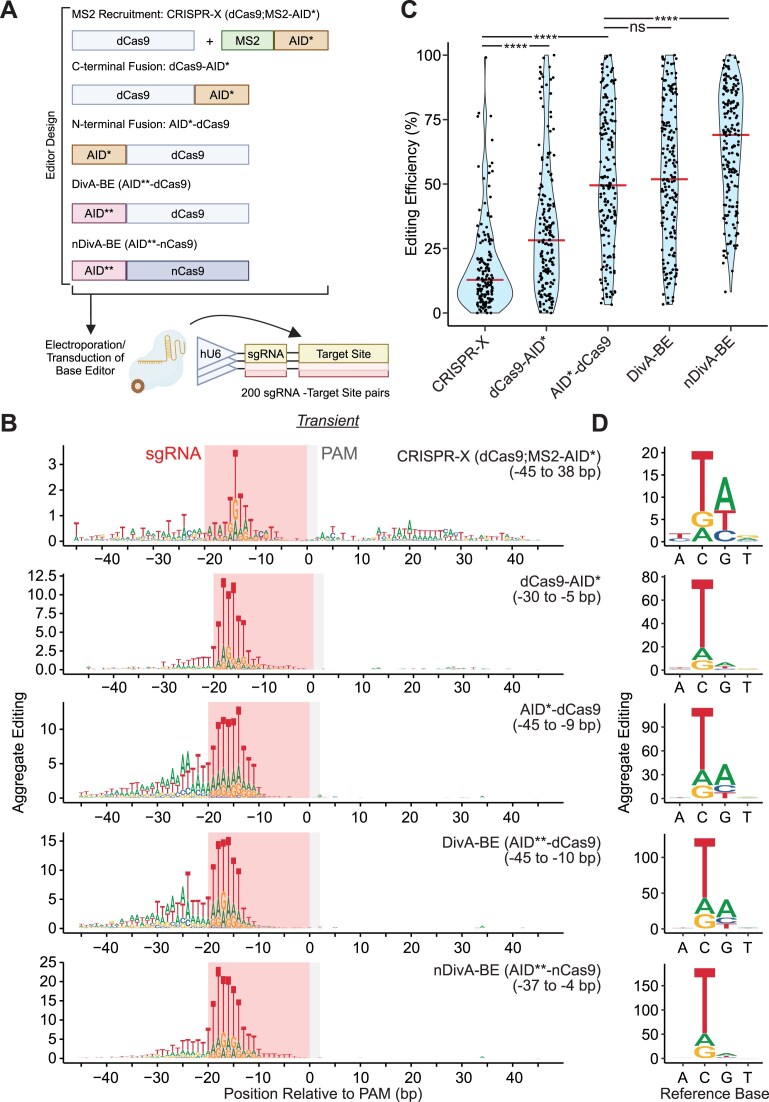 Figure 1
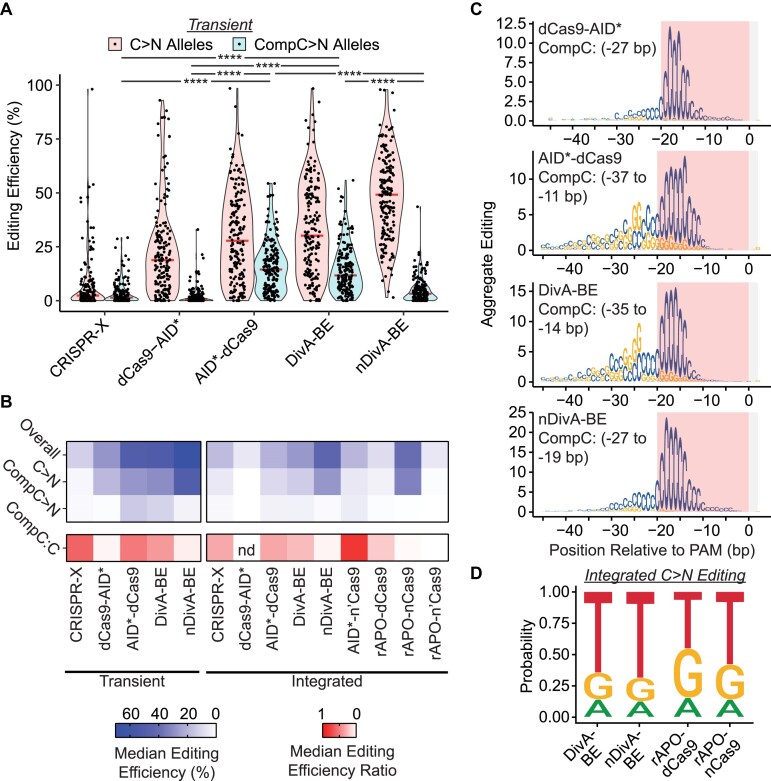 Figure 2
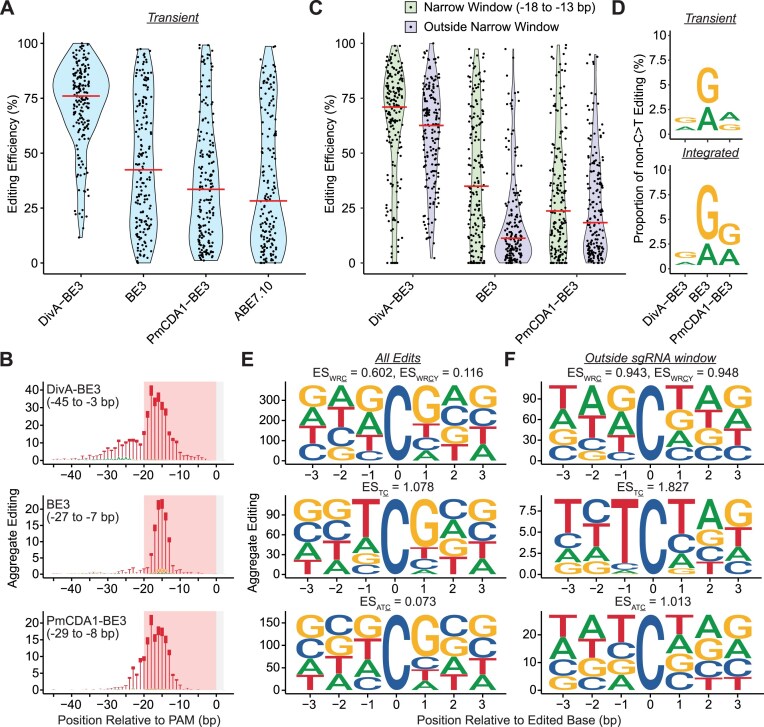 Figure 3
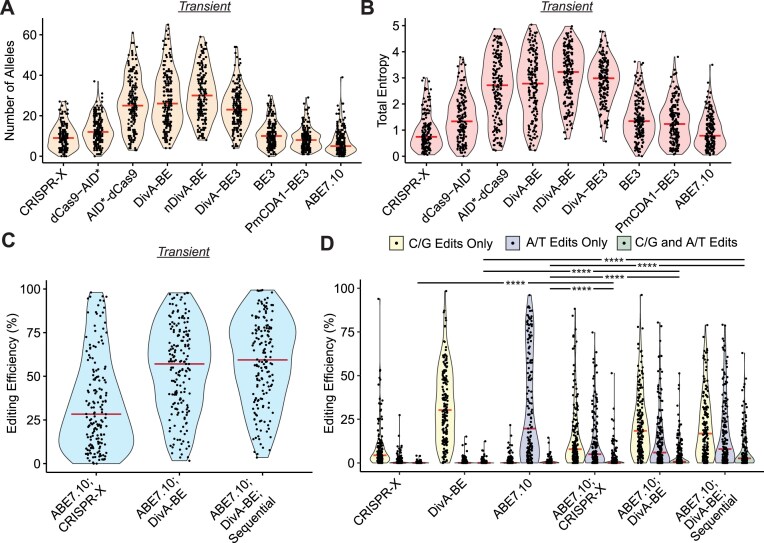 Figure 4
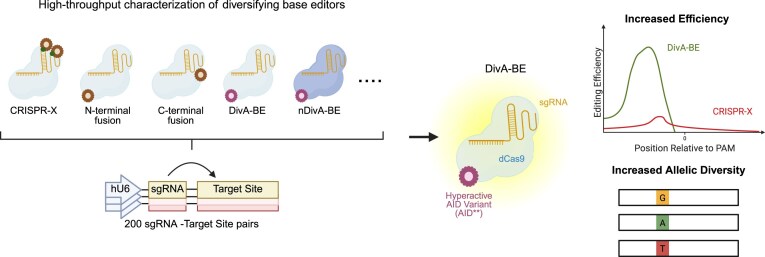 Figure 5
Peer Reviews
No public reviews on file for this paper yet. If you reviewed it on a platform where reviews are public (OpenReview, ICLR, NeurIPS, ICML), you can paste yours below so the community can read it here.
Videos
No videos yet. Explain this paper in a talk, walkthrough, or lecture? Add one.
Taxonomy
TopicsCRISPR and Genetic Engineering · Advanced biosensing and bioanalysis techniques · RNA and protein synthesis mechanisms