eNRSA: a faster and more powerful approach for nascent transcriptome analysis
Jing Wang, Hua-chang Chen, Scott W Hiebert, Quanhu Sheng, William P Tansey, Yu Shyr, Qi Liu

TL;DR
eNRSA is a faster and more versatile tool for analyzing nascent RNA data, improving the study of gene regulation and transcription dynamics.
Contribution
eNRSA introduces adaptive transcript selection, cross-species compatibility, and a 20-fold speed increase for nascent transcriptome analysis.
Findings
eNRSA supports any organism with known gene structures and complex study designs.
The tool identifies alternative transcription start/termination sites and transcription readthrough events.
eNRSA significantly reduces memory usage while increasing analysis speed by ∼20-fold.
Abstract
Nascent RNA sequencing tracks primary transcriptional events, making it crucial for studying the immediate regulatory changes of genes and enhancers in response to both endogenous and exogenous stimuli. NRSA is a widely used tool for analyzing nascent transcriptomic data, enabling quantification of transcriptional changes at proximal promoters and gene bodies, estimation of pausing indices, identifying active enhancers, and establishing enhancer–target gene relationships. To improve its functionality and broaden its applicability to diverse organisms and complex study designs, we have developed an enhanced version, eNRSA. Key advancements include adaptive selection of major transcripts, support for any organism with known gene structures, compatibility with complex study designs, and identification of alternative transcription start and termination sites, as well as transcription…
Genes, proteins, chemicals, diseases, species, mutations and cell lines named across the full text — each resolved to its canonical identifier and authoritative record.
Click any figure to enlarge with its caption.
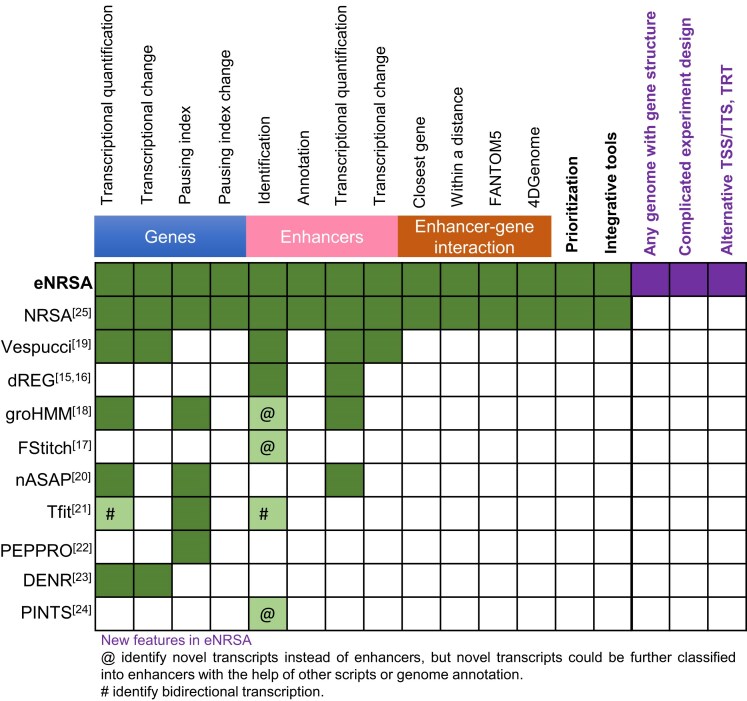 Figure 1
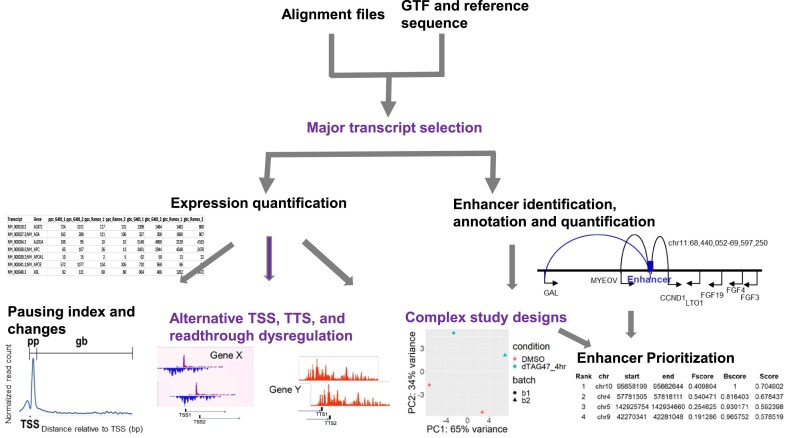 Figure 2
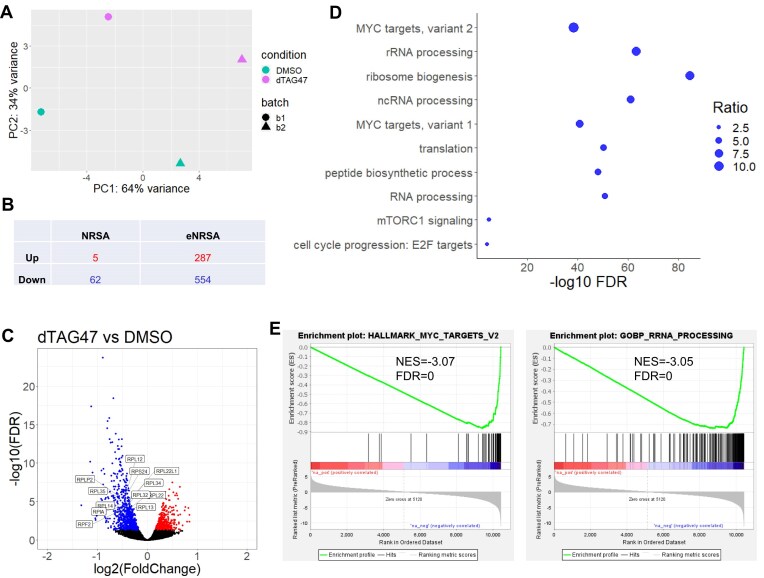 Figure 3
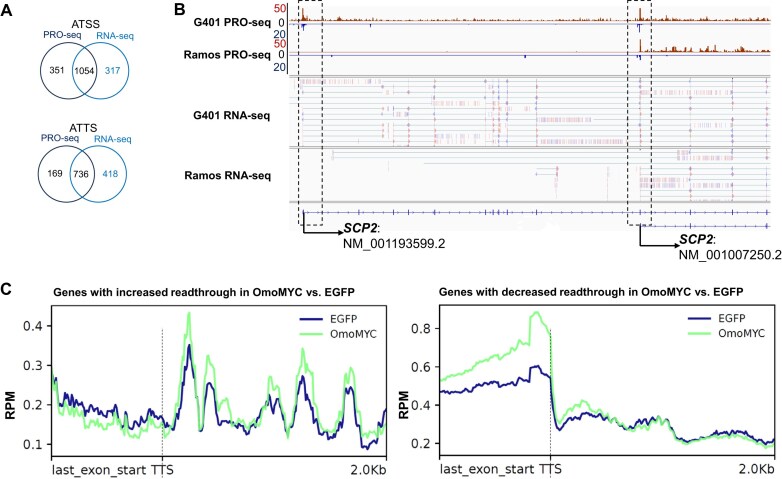 Figure 4
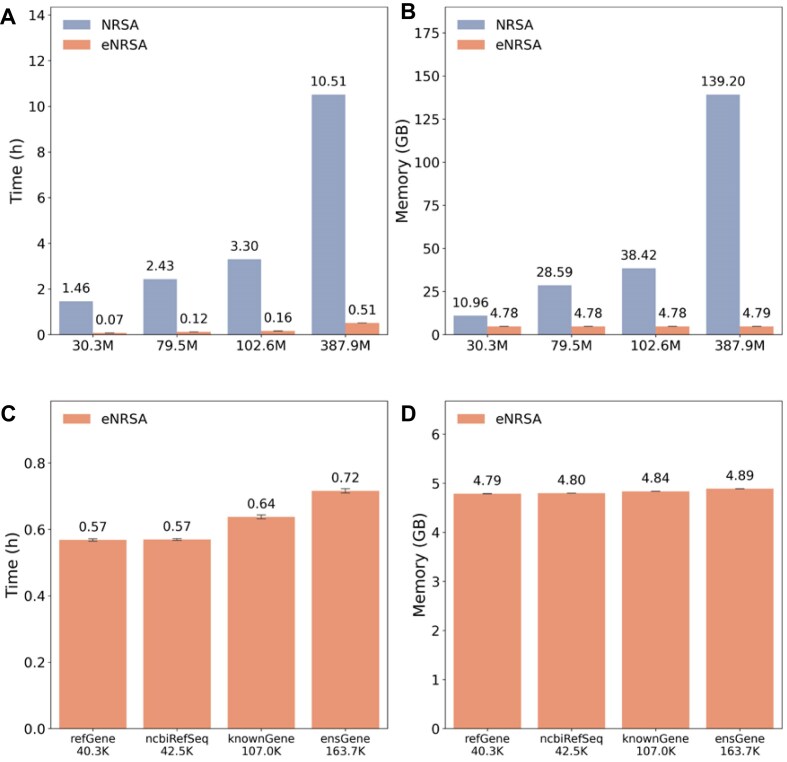 Figure 5
Peer Reviews
No public reviews on file for this paper yet. If you reviewed it on a platform where reviews are public (OpenReview, ICLR, NeurIPS, ICML), you can paste yours below so the community can read it here.
Videos
No videos yet. Explain this paper in a talk, walkthrough, or lecture? Add one.
Taxonomy
TopicsRNA and protein synthesis mechanisms · Genomics and Chromatin Dynamics · RNA modifications and cancer