Manipulating alternative end-joining alters carbon-ion beam-induced genome mutation profiles in Arabidopsis thaliana
Jing Long, Jian Zhao, Jingmin Chen, Jianing Ding, Xiao Liu, Zhe Li, Po Bian, Ting Wang, Wenjie Jin, Xihong Lu, Yifan Zhang, Libin Zhou, Yan Du

TL;DR
This study shows how manipulating DNA repair pathways in plants can change mutation profiles when exposed to heavy-ion beams.
Contribution
The study reveals how altering repair pathways affects genome mutation profiles in plants using carbon-ion beams.
Findings
LIG4-deficient plants showed higher sensitivity to carbon-ion beams and more severe InDels.
POLQ-deficient plants exhibited moderate mutation changes with increased single-base InDels.
Loss-of-function in LIG4 and POLQ led to more high-impact mutations at lower doses.
Abstract
DNA double-strand breaks (DSBs) repair via POLQ-mediated alternative end-joining (Alt-EJ) is error-prone and mutagenic. However, Alt-EJ is often inhibited by classical nonhomologous end-joining (C-NHEJ) or homologous recombination, the precise impact of Alt-EJ on plant genome instability remains unclear. Here, we employed carbon-ion beam (CIB) which induce complex DSBs to bias cellular repair strategies toward Alt-EJ; additionally, a specific genetic background of C-NHEJ deficiency (lig4-4) Arabidopsis thaliana line and the POLQ-deficient (teb-3 and teb-8) were combined to further amplify the mutagenic effects of CIB mediated by Alt-EJ. The lig4-4 exhibited higher sensitivity to CIB than POLQ-deficient lines. teb-8 exhibited constitutive DNA damage response (DDR), whereas DDR in lig4-4 was strictly induced by CIB. At genome scale, lig4-4 showed substantial changes in the insertion and…
Genes, proteins, chemicals, diseases, species, mutations and cell lines named across the full text — each resolved to its canonical identifier and authoritative record.
Click any figure to enlarge with its caption.
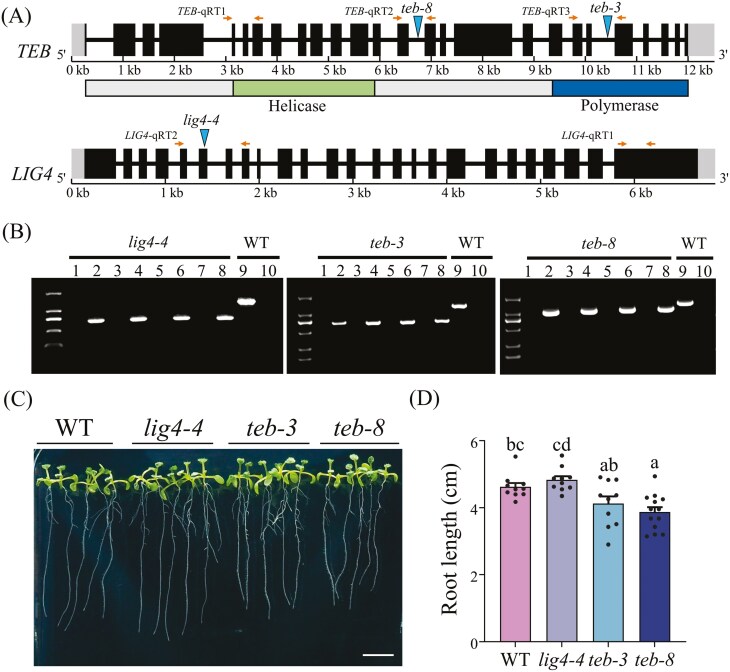 Figure 1
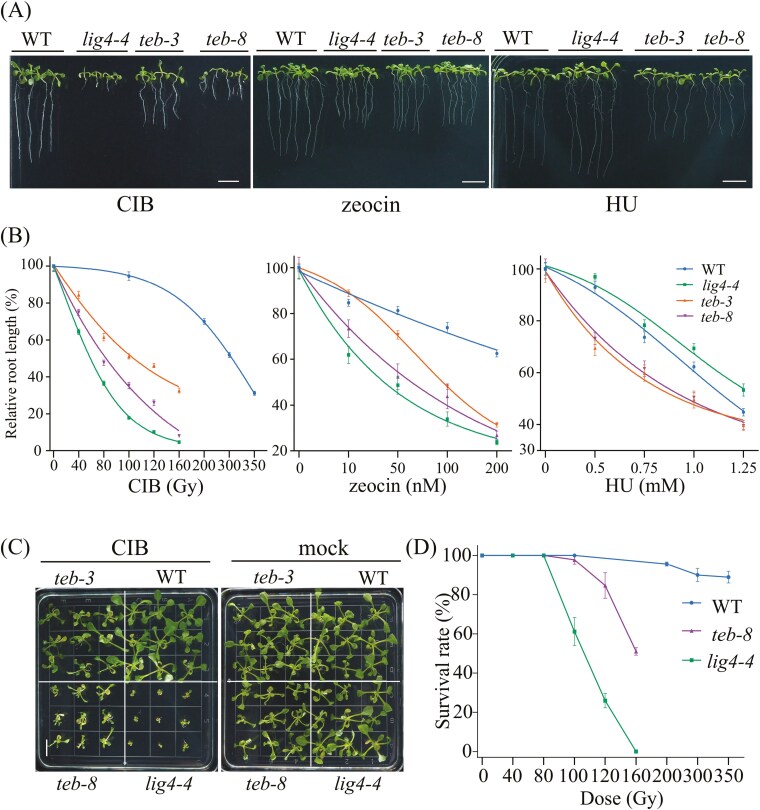 Figure 2
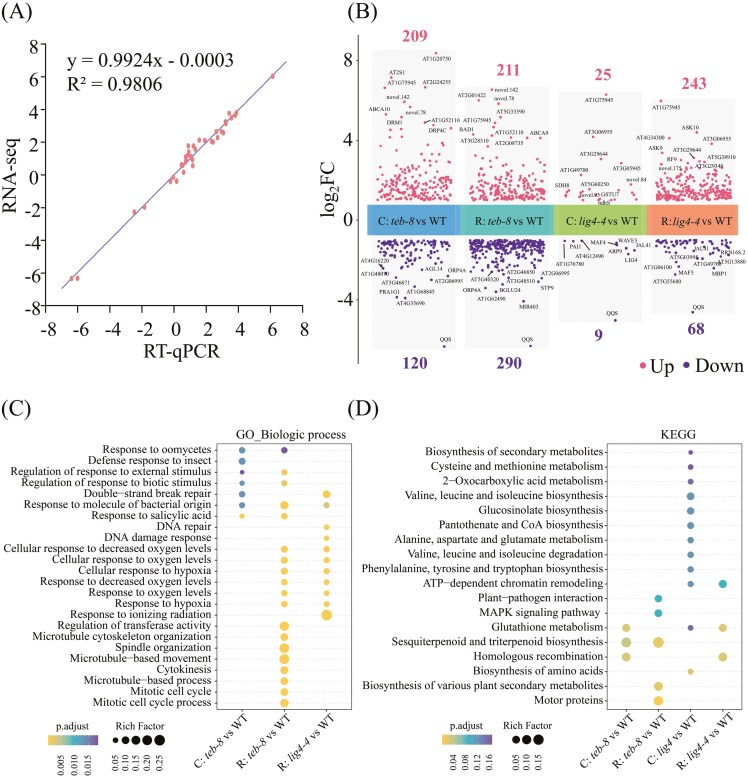 Figure 3
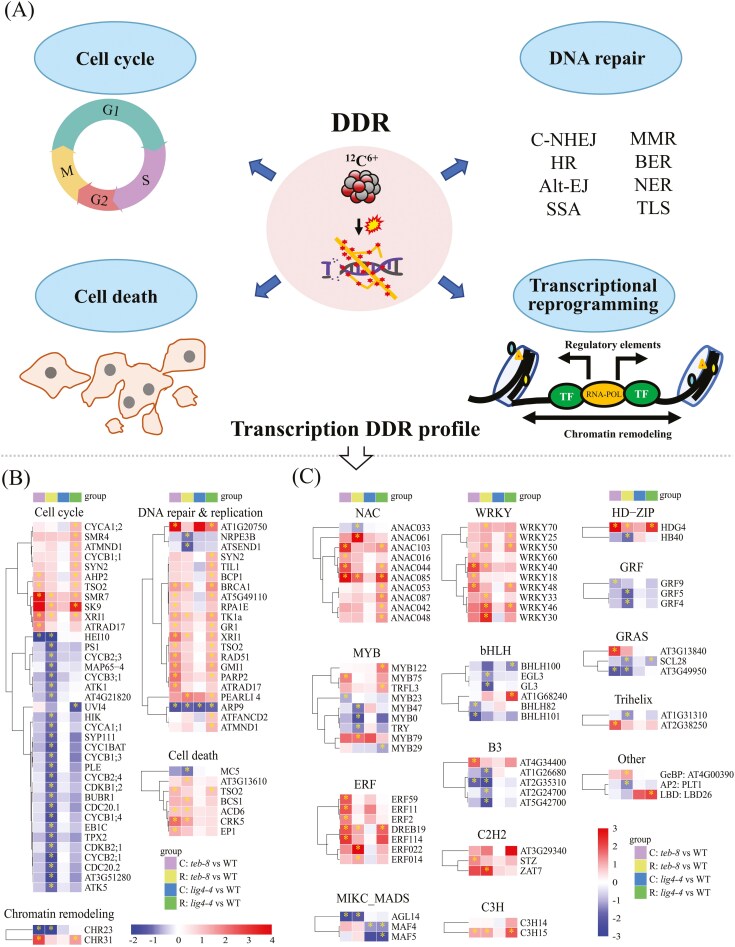 Figure 4
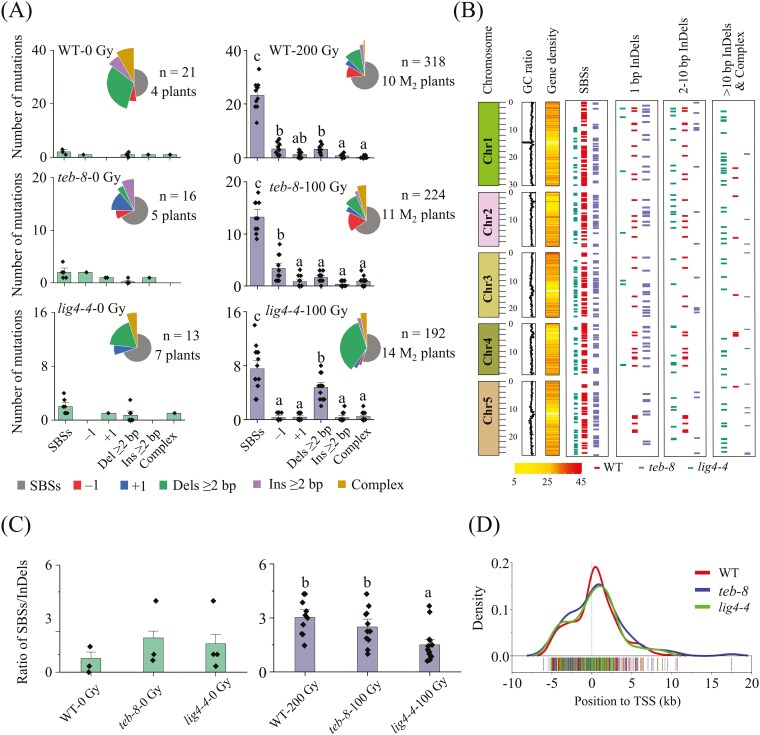 Figure 5
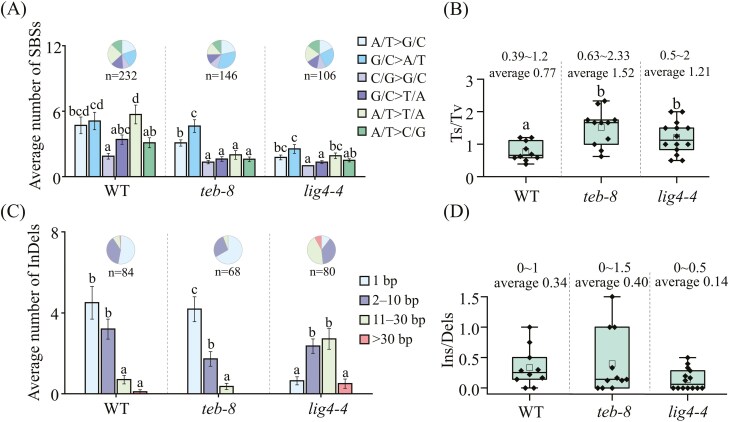 Figure 6
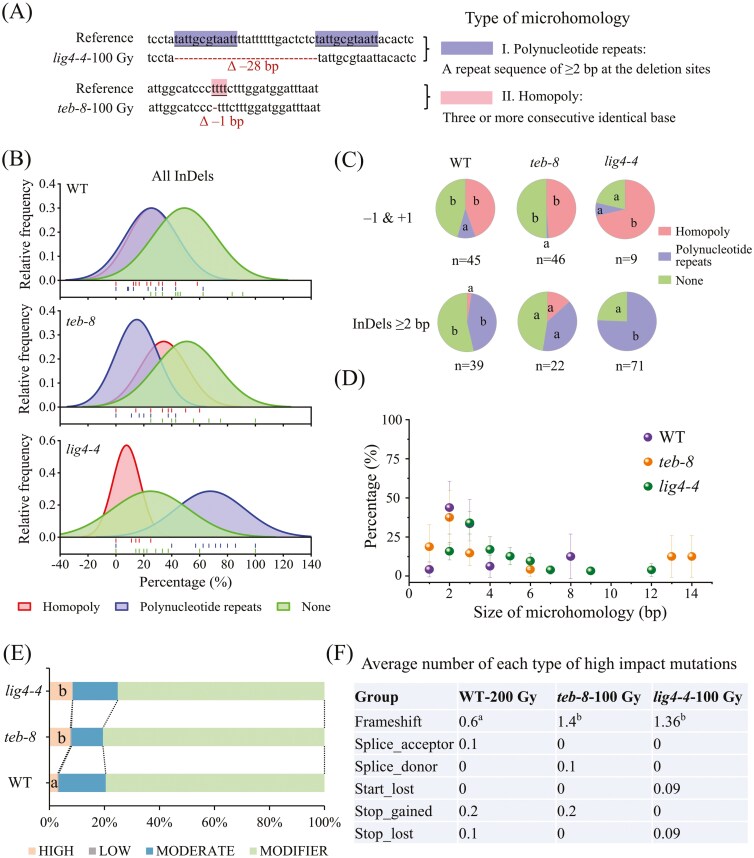 Figure 7
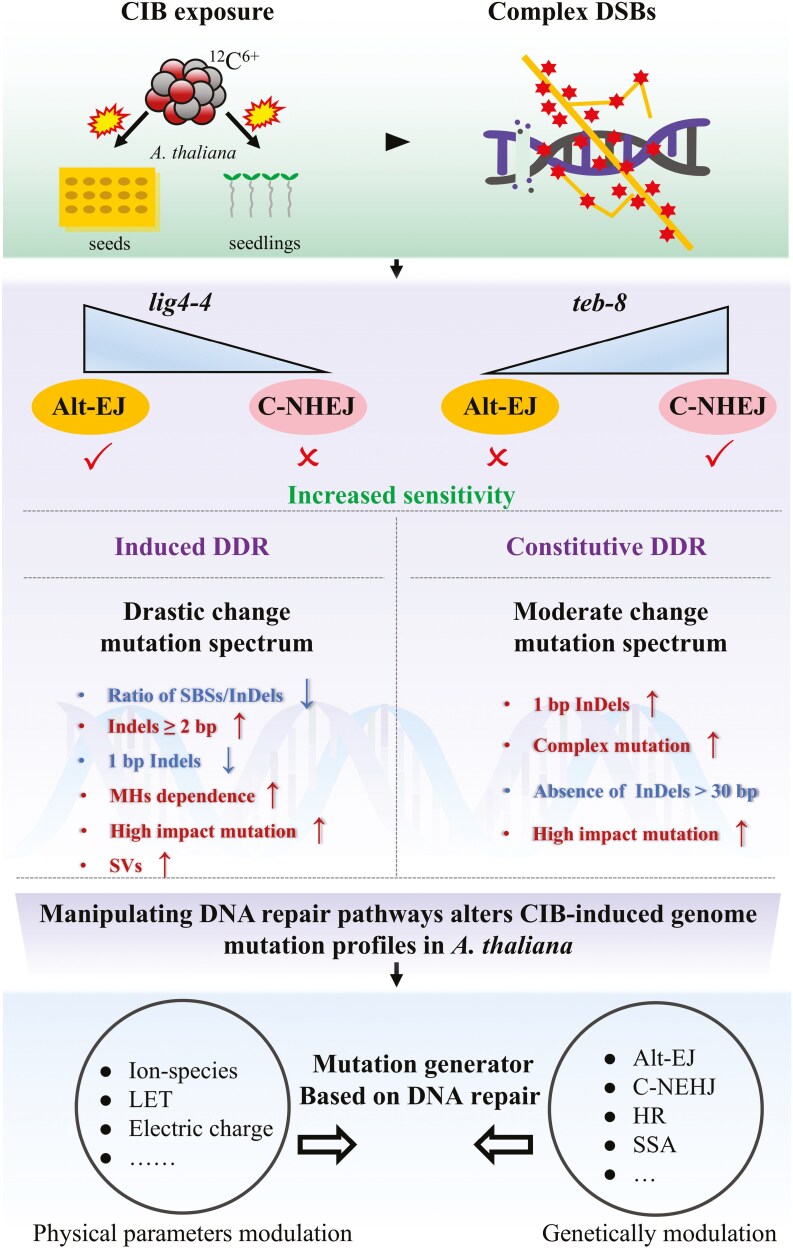 Figure 8
Peer Reviews
No public reviews on file for this paper yet. If you reviewed it on a platform where reviews are public (OpenReview, ICLR, NeurIPS, ICML), you can paste yours below so the community can read it here.
Videos
No videos yet. Explain this paper in a talk, walkthrough, or lecture? Add one.
Taxonomy
TopicsPlant Genetic and Mutation Studies · DNA Repair Mechanisms · Plant tissue culture and regeneration