Impact of mirikizumab treatment on fatigue in patients with moderately to severely active Crohn’s disease: results from the phase 3 VIVID-1 study
Miguel Regueiro, Monika Fischer, Peter Bossuyt, Marijana Protic, Kristina Traxler, Guanglei Yu, Huaiyu Zang, Aisha Vadhariya, Tadakazu Hisamatsu, Pascal Juillerat, Alessandro Armuzzi, Javier P Gisbert, Alissa Walsh

TL;DR
This study shows that mirikizumab improves fatigue in Crohn’s disease patients more than placebo, with improvements linked to better quality of life and clinical outcomes.
Contribution
The study is the first to demonstrate mirikizumab's impact on fatigue in Crohn’s disease patients and its correlation with clinical outcomes.
Findings
Mirikizumab-treated patients showed higher rates of fatigue improvement compared to placebo at Weeks 12 and 52.
Improvements in fatigue were strongly associated with better quality of life and patient-reported outcomes.
Baseline fatigue severity was strongly linked to depressive symptoms in patients.
Abstract
Fatigue is a debilitating multifactorial symptom experienced by patients with Crohn’s disease (CD). Mirikizumab, an anti-interleukin-23p19 antibody, demonstrated significant efficacy and safety in the patients with moderately to severely active CD. This analysis investigated the impact of mirikizumab on fatigue and the association between changes in clinical, endoscopic, and patient-reported outcomes with improvement in fatigue from baseline in the Phase 3 VIVID-1 study. Adult patients with moderately to severely active CD that failed at least 1 biologic agent or conventional therapy were randomized to receive mirikizumab or placebo. Fatigue was assessed via the validated Functional Assessment of Chronic Illness Therapy-Fatigue questionnaire. Fatigue associations with patient-reported outcomes, endoscopic, and clinical measures were assessed via Pearson correlation analysis. At Week…
Genes, proteins, chemicals, diseases, species, mutations and cell lines named across the full text — each resolved to its canonical identifier and authoritative record.
Click any figure to enlarge with its caption.
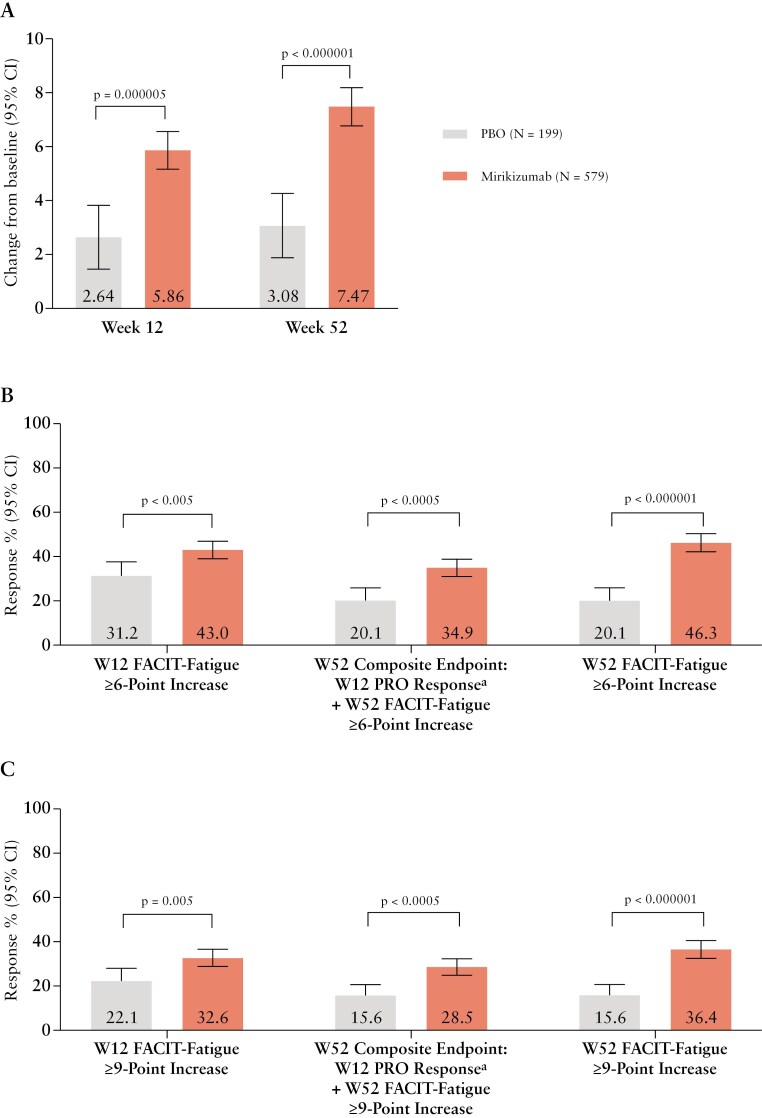 Figure 1
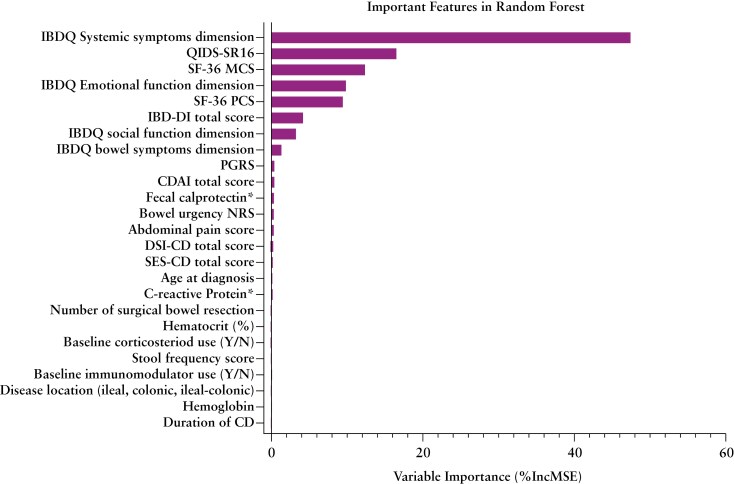 Figure 2
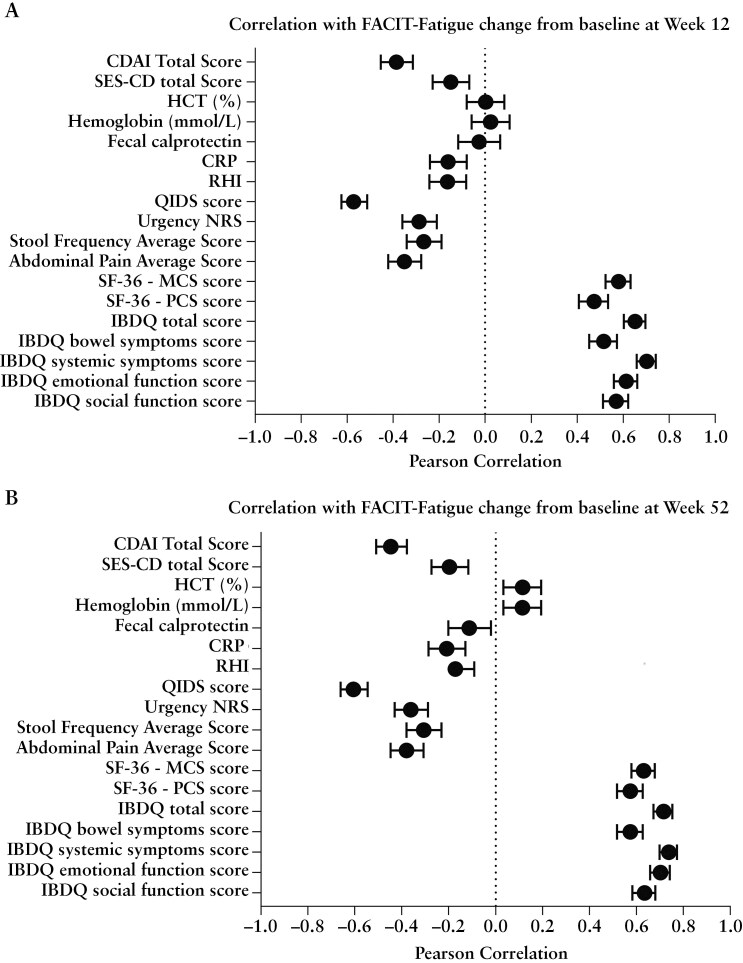 Figure 3
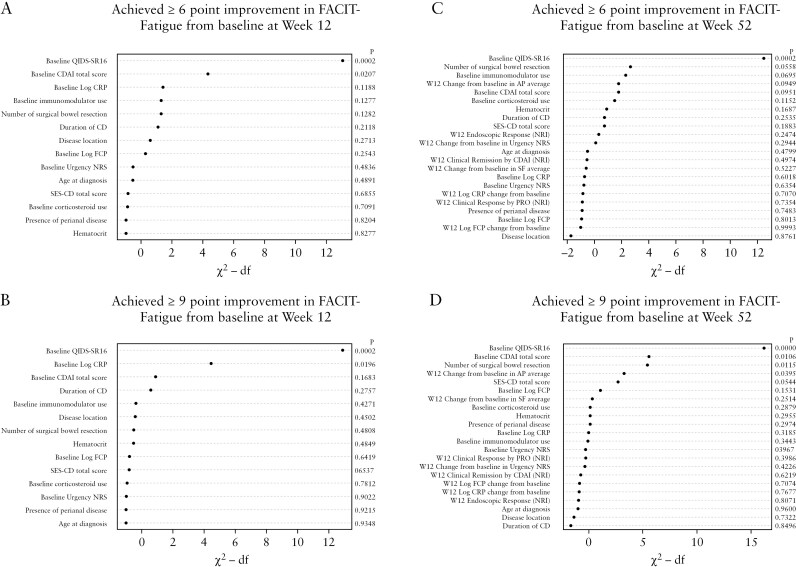 Figure 4
Peer Reviews
No public reviews on file for this paper yet. If you reviewed it on a platform where reviews are public (OpenReview, ICLR, NeurIPS, ICML), you can paste yours below so the community can read it here.
Videos
No videos yet. Explain this paper in a talk, walkthrough, or lecture? Add one.
Taxonomy
TopicsInflammatory Bowel Disease · Microscopic Colitis · Celiac Disease Research and Management