Probiotic potential of Phocaeicola coprocola in modulating learning and memory behaviors in the honeybee model
Mengqi Xu, Xiaohan Zhang, Xi Luo, Guanzhou Zhou, Nana Zhang, Xiaoyan Chi, Rongrong Ren, Lihua Peng, Gang Sun, Yunsheng Yang

TL;DR
This study explores how a gut bacterium, Phocaeicola coprocola, may improve learning and memory in honeybees, suggesting its potential as a probiotic for cognitive health.
Contribution
The study introduces the honeybee as a model for the microbiota–gut–brain axis and identifies P. coprocola as a probiotic with cognitive benefits.
Findings
P. coprocola supplementation improved cognitive performance in honeybees, with a 74.13% learning success rate compared to 50.85% in controls.
The treatment increased gut microbial diversity and altered lipid metabolism, particularly in glycerophospholipid pathways.
Protective lipid molecules were linked to specific gut bacteria like Gilliamella apicola and Bifidobacterium asteroides.
Abstract
Gut microbial therapy has emerged as a prominent research topic for brain function and disorders. The depletion of Phocaeicola coprocola has been reported in various brain-related conditions, suggesting its possible neuroprotective and cognitive benefits. However, its functional roles and underlying mechanisms remain poorly understood. We evaluated the effects of P. coprocola on cognitive performance using the honeybee (Apis mellifera) as a novel model for the microbiota–gut–brain axis. Honeybees with a standardized gut microbiota served as the control group, while those supplemented with P. coprocola comprised the treatment group. Olfactory learning and memory were assessed using classical conditioning assays. Gut microbial composition was analyzed using full-length 16S rRNA gene sequencing based on PacBio SMRT technology, and metabolic profiling was conducted using untargeted…
Genes, proteins, chemicals, diseases, species, mutations and cell lines named across the full text — each resolved to its canonical identifier and authoritative record.
Click any figure to enlarge with its caption.
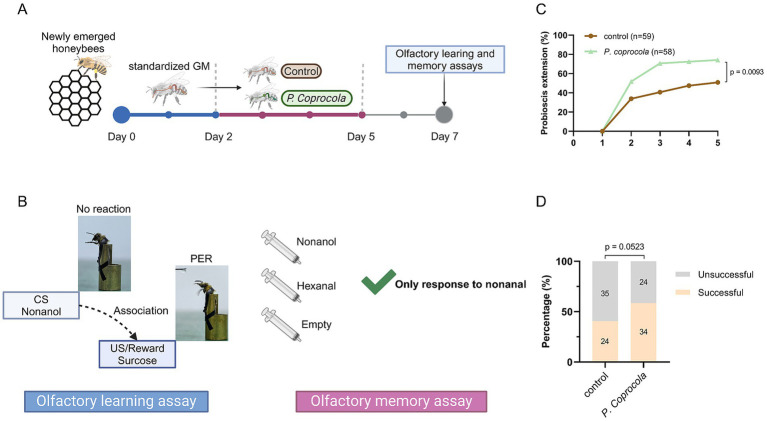 Figure 1
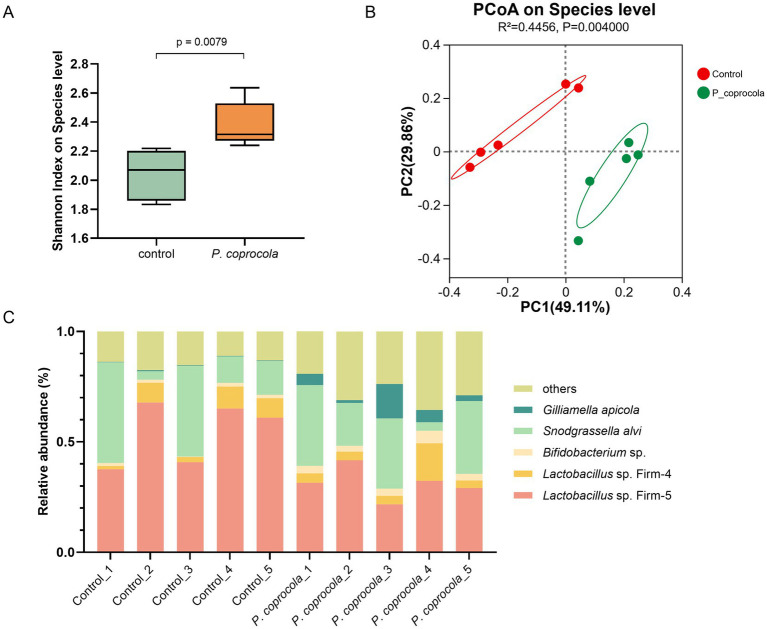 Figure 2
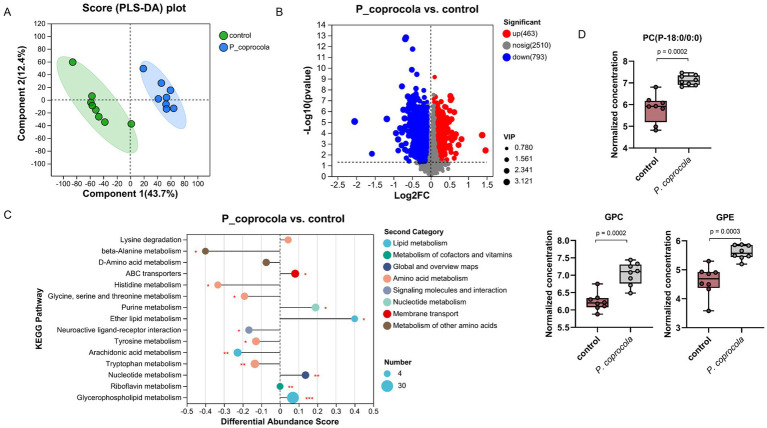 Figure 3
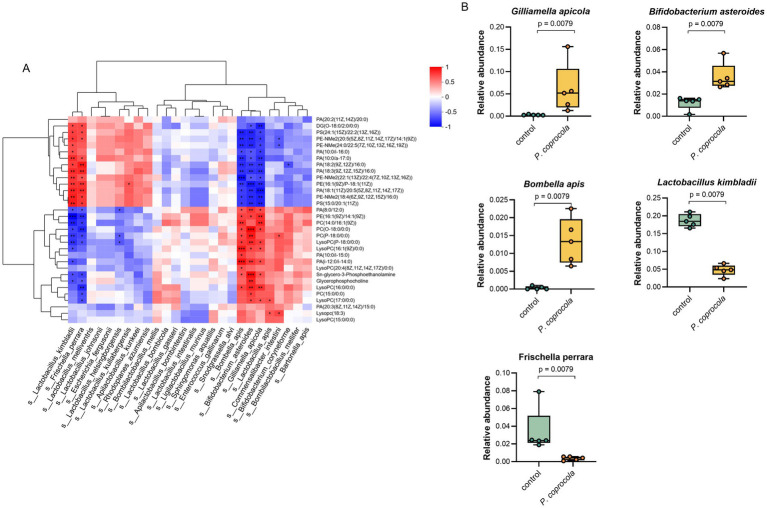 Figure 4
Peer Reviews
No public reviews on file for this paper yet. If you reviewed it on a platform where reviews are public (OpenReview, ICLR, NeurIPS, ICML), you can paste yours below so the community can read it here.
Videos
No videos yet. Explain this paper in a talk, walkthrough, or lecture? Add one.
Taxonomy
TopicsGut microbiota and health · Probiotics and Fermented Foods · Complementary and Alternative Medicine Studies