Stochastic and deterministic processes in Asymmetric Tsetlin Machine
Negar Elmisadr, Mohamed-Bachir Belaid, Anis Yazidi

TL;DR
This paper introduces new versions of the Tsetlin Machine that use randomness and asymmetry to improve decision-making and performance on complex datasets.
Contribution
The paper introduces the Asymmetric Probabilistic Tsetlin Machine and the Asymmetric Tsetlin Machine with stochastic and deterministic processes.
Findings
The Asymmetric Tsetlin Machine (AT) outperforms traditional models on complex datasets.
Both AT and APT show competitive performance compared to classical Tsetlin machines and traditional ML algorithms.
The decaying normal distribution function enhances adaptability during convergence.
Abstract
This paper introduces a new approach to enhance the decision-making capabilities of the Tsetlin Machine (TM) through the Stochastic Point Location (SPL) algorithm and the Asymmetric Steps technique. We incorporate stochasticity and asymmetry into the TM's process, along with a decaying normal distribution function that improves adaptability as it converges toward zero over time. We present two methods: the Asymmetric Probabilistic Tsetlin (APT) Machine, influenced by random events, and the Asymmetric Tsetlin (AT) Machine, which transitions from probabilistic to deterministic states. We evaluate these methods against traditional machine learning algorithms and classical Tsetlin (CT) machines across various benchmark datasets. Both AT and APT demonstrate competitive performance, with the AT model notably excelling, especially in complex datasets.
Genes, proteins, chemicals, diseases, species, mutations and cell lines named across the full text — each resolved to its canonical identifier and authoritative record.
Click any figure to enlarge with its caption.
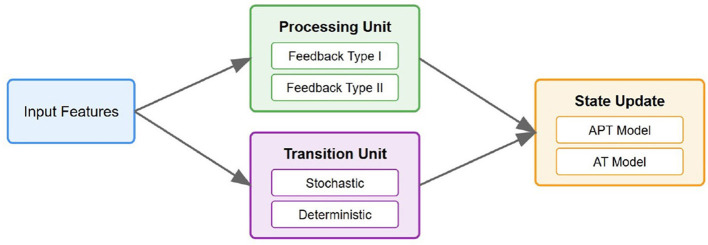 Figure 1
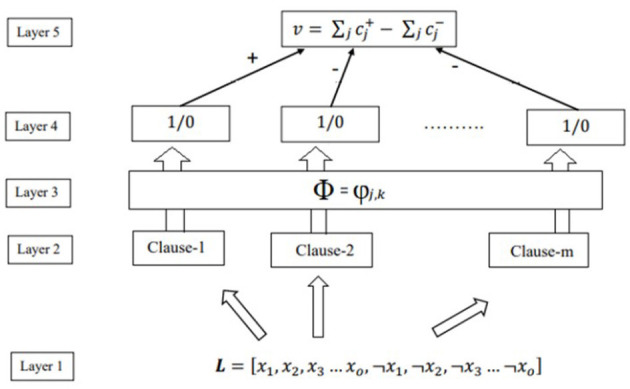 Figure 2
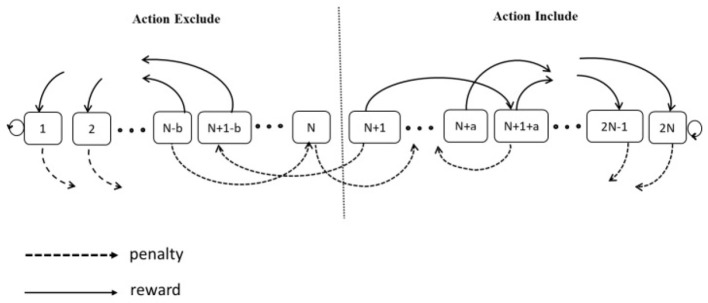 Figure 3
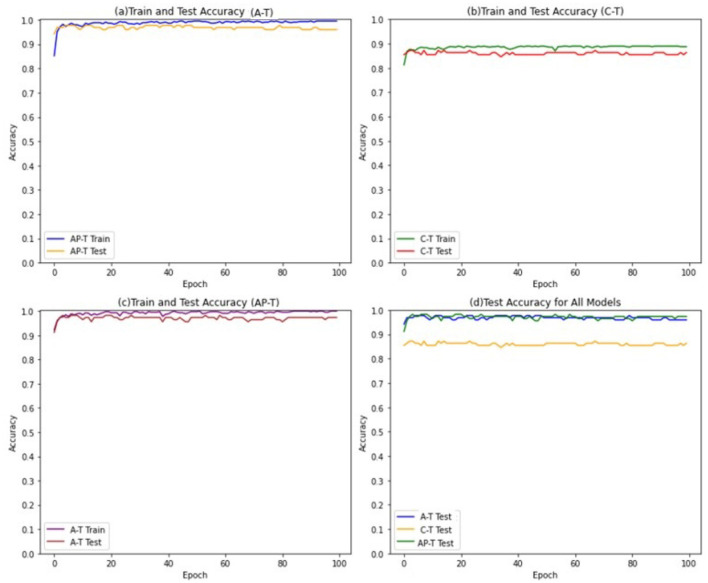 Figure 4
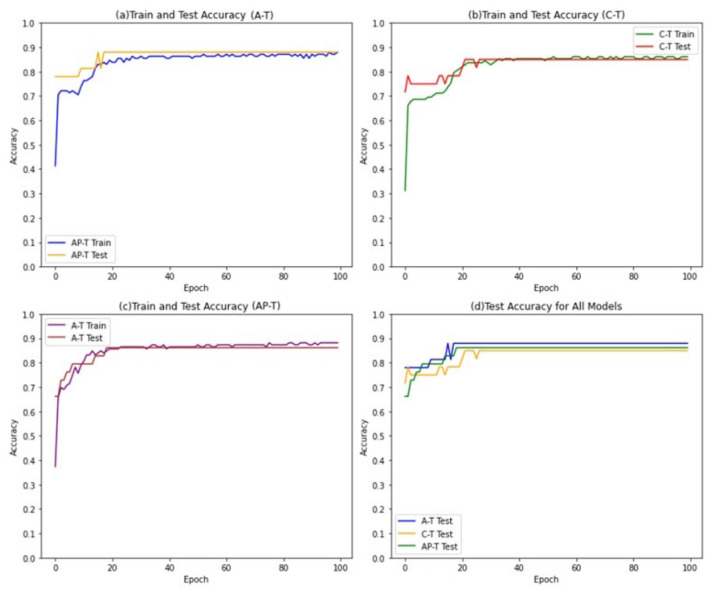 Figure 5
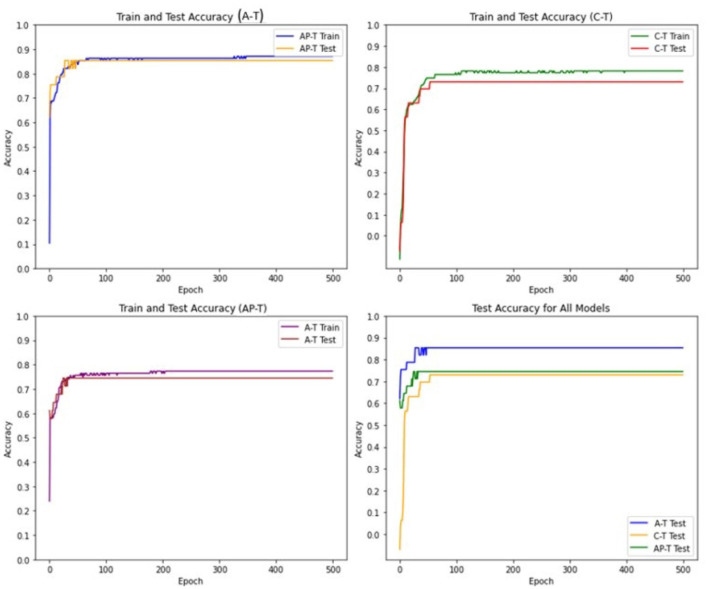 Figure 6
Peer Reviews
No public reviews on file for this paper yet. If you reviewed it on a platform where reviews are public (OpenReview, ICLR, NeurIPS, ICML), you can paste yours below so the community can read it here.
Videos
No videos yet. Explain this paper in a talk, walkthrough, or lecture? Add one.
Taxonomy
TopicsMachine Learning and Algorithms · Computability, Logic, AI Algorithms · Evolutionary Algorithms and Applications