An α-1,3-fucosyltransferase influences thermal nocifensive escape behaviors in Drosophila larvae
Shannon Ballard, Lauren Holt, Elizabeth Stant, Ashley Arthur Moore, Luisa Zavala, Troy Shirangi

TL;DR
A gene encoding an α-1,3-fucosyltransferase affects how fruit fly larvae respond to painful heat.
Contribution
The study identifies a specific gene linked to thermal pain response in fruit fly larvae.
Findings
A mutation in the FucTA gene alters thermal escape behaviors in Drosophila larvae.
Fucosylation appears to be important for thermal nociception in larvae.
Abstract
When exposed to noxious thermal or mechanical stimuli, Drosophila melanogaster larvae will attempt to escape by performing a stereotypical nocifensive rolling behavior. Here, we report the identification of a mutation in Drosophila that specifically alters the thermal nocifensive escape behaviors of larvae. We provide genetic, molecular, and histological evidence that this mutation maps to the FucTA gene, which encodes an α−1,3-fucosyltransferase. Our results suggest that fucosylation is important for the thermal nociception rolling behavior of Drosophila larvae.
Genes, proteins, chemicals, diseases, species, mutations and cell lines named across the full text — each resolved to its canonical identifier and authoritative record.
Click any figure to enlarge with its caption.
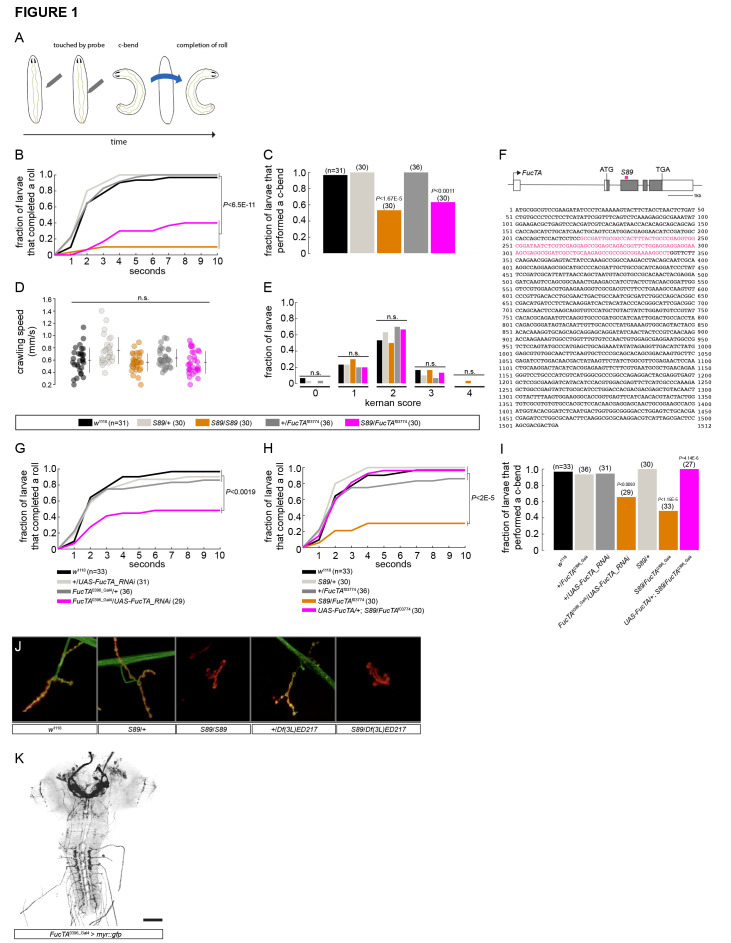 Figure 1
Peer Reviews
No public reviews on file for this paper yet. If you reviewed it on a platform where reviews are public (OpenReview, ICLR, NeurIPS, ICML), you can paste yours below so the community can read it here.
Videos
No videos yet. Explain this paper in a talk, walkthrough, or lecture? Add one.
Taxonomy
TopicsPlant biochemistry and biosynthesis · Neurobiology and Insect Physiology Research · Biochemical and biochemical processes