Diet of Critically Endangered Black‐Eyed Bent‐Toed Gecko, Cyrtodactylus nigriocularis, Nguyen, Orlov & Darevsky, 2006 From Vietnam
Hanh Thi Ngo, Minh Duc Le, Trang Thu Hoang, Ha Hoang Nguyen, Huy Quoc Nguyen, Quyen Hanh Do, Hanh Minh Vu Nguyen, Truong Quang Nguyen, Thomas Ziegler, Minh Le, Anh Van Pham

TL;DR
This study identifies the diet of a critically endangered gecko in Vietnam, revealing key prey types and differences in diet between sexes and age groups.
Contribution
The study provides the first detailed diet analysis of Cyrtodactylus nigriocularis, a Critically Endangered species with previously unknown natural history.
Findings
Spiders (Araneae) were the most important prey group, contributing 24.33% of the IRI.
Diet composition varied significantly between sexes and age groups of the gecko.
Spiders were found to be important prey across all demographic groups despite other dietary variations.
Abstract
The Black‐eyed Bent‐toed Gecko, Cyrtodactylus nigriocularis , a species endemic to Ba Den Mountain Cultural and Historical Complex, Tay Ninh Province, Vietnam, has been classified as Critically Endangered in the IUCN Red List since 2018. However, knowledge of its natural history is virtually non‐existent. To fill this gap, the diet of the gecko was studied by stomach flushing. We identified a total of 22 prey categories with 407 items in the stomachs of C. nigriocularis . The most important (IRI) groups among its prey were Araneae (24.33%), followed by Opiliones (16.59%), Achatinidae (10.67%), Blattidae (8.77%), Scolopendridae (7.59%), and Acrididae (4.20%), similar to food items consumed by tropical geckos as reported in previous studies. There was no relationship between body mass and mouth width of the species and length/volume of prey consumed, but there were significant…
Genes, proteins, chemicals, diseases, species, mutations and cell lines named across the full text — each resolved to its canonical identifier and authoritative record.
Click any figure to enlarge with its caption.
 Figure 1
 Figure 2
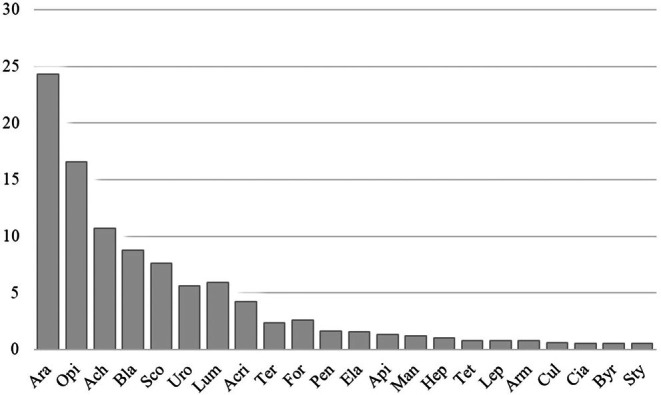 Figure 3
 Figure 4
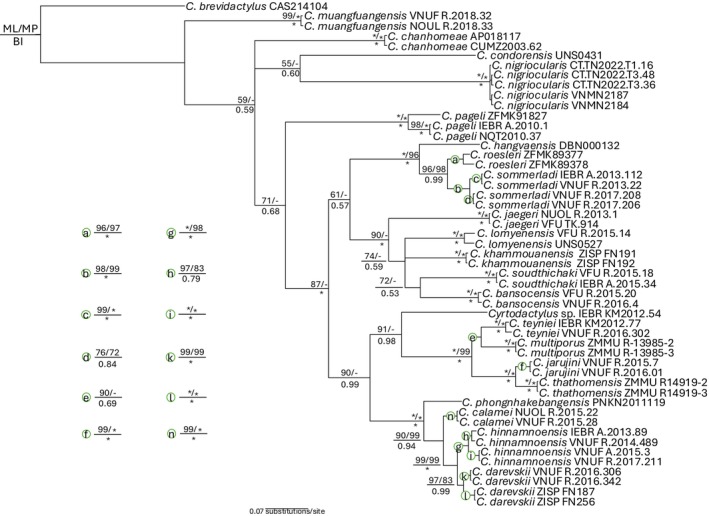 Figure 5
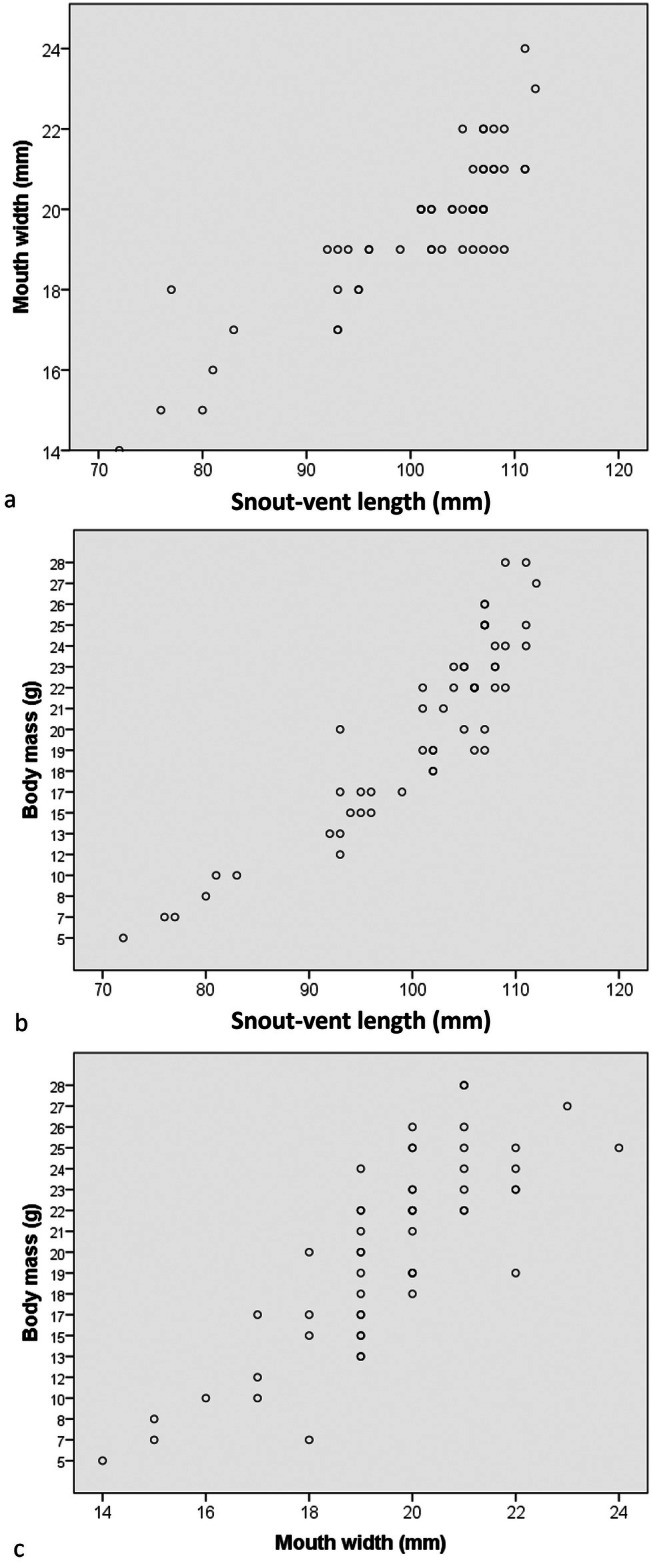 Figure 6
Peer Reviews
No public reviews on file for this paper yet. If you reviewed it on a platform where reviews are public (OpenReview, ICLR, NeurIPS, ICML), you can paste yours below so the community can read it here.
Videos
No videos yet. Explain this paper in a talk, walkthrough, or lecture? Add one.
Taxonomy
TopicsAmphibian and Reptile Biology · Species Distribution and Climate Change · Animal Behavior and Reproduction