Hypomethylation‐Triggered SERPINE1 (Serpin Family E Member 1) Exacerbates Polycystic Ovary Syndrome with Hyperandrogenism Induced by Circadian Disruption
Xueying Geng, Weiwei Chu, Shang Li, Xiying Zhou, Dongshuang Wang, Junyu Zhai, Yun Sun, Zi‐Jiang Chen, Yanzhi Du

TL;DR
This study shows that reduced DNA methylation of SERPINE1, triggered by disrupted circadian rhythms, leads to increased androgen levels in a rat model of PCOS, and that inhibiting SERPINE1 can reduce these effects.
Contribution
The study identifies SERPINE1 as a novel hypomethylated gene linked to hyperandrogenism in PCOS and demonstrates its potential as a therapeutic target.
Findings
SERPINE1 is hypomethylated and upregulated in rats exposed to continuous darkness, correlating with elevated androgen levels.
SERPINE1 inhibition with tiplaxtinin reduces reproductive and metabolic abnormalities in PCOS rat models.
SERPINE1 suppression activates the PI3K/AKT pathway, enhancing androgen conversion via CYP19A1.
Abstract
Polycystic ovary syndrome (PCOS), a prevalent cause of female infertility, arises from complex interactions between genetic and environmental factors, with hyperandrogenism serving as a core pathological feature. While growing evidence links circadian disruptions to the development of hyperandrogenism in PCOS, the underlying mechanism remains unclear. In this study, we employed DNA methylation profiling and RNA sequencing of ovarian granulosa cells from rats exposed to 8‐week darkness, and identified serpin family E member 1 (SERPINE1) as a key player. SERPINE1 was significantly hypomethylated and upregulated in the dark group, correlating with elevated androgen levels. Mechanistically, using CRISPR–dCas9‐based targeted methylation, we found that CpG hypomethylation near the SERPINE1 transcription start site drove its overexpression. Functional assays revealed that SERPINE1 suppression…
Genes, proteins, chemicals, diseases, species, mutations and cell lines named across the full text — each resolved to its canonical identifier and authoritative record.
Click any figure to enlarge with its caption.
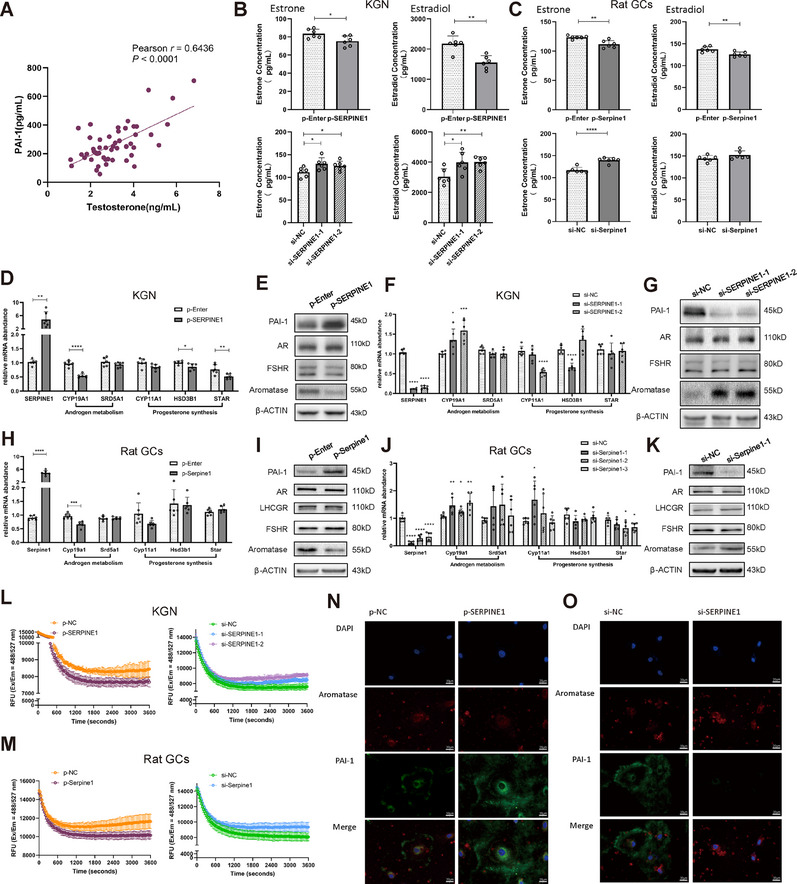 Figure 1
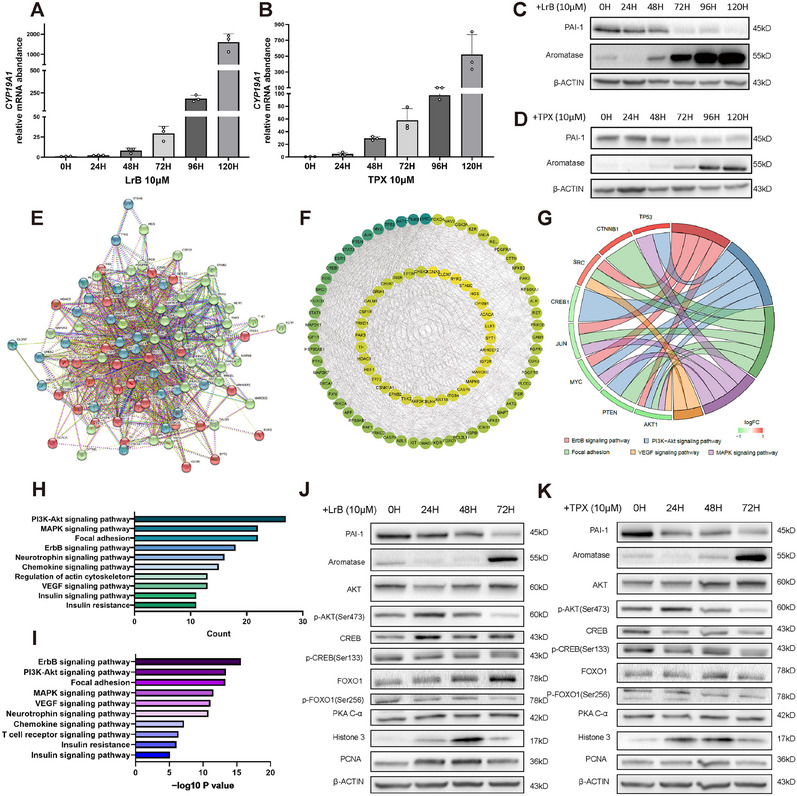 Figure 2
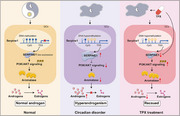 Figure 3
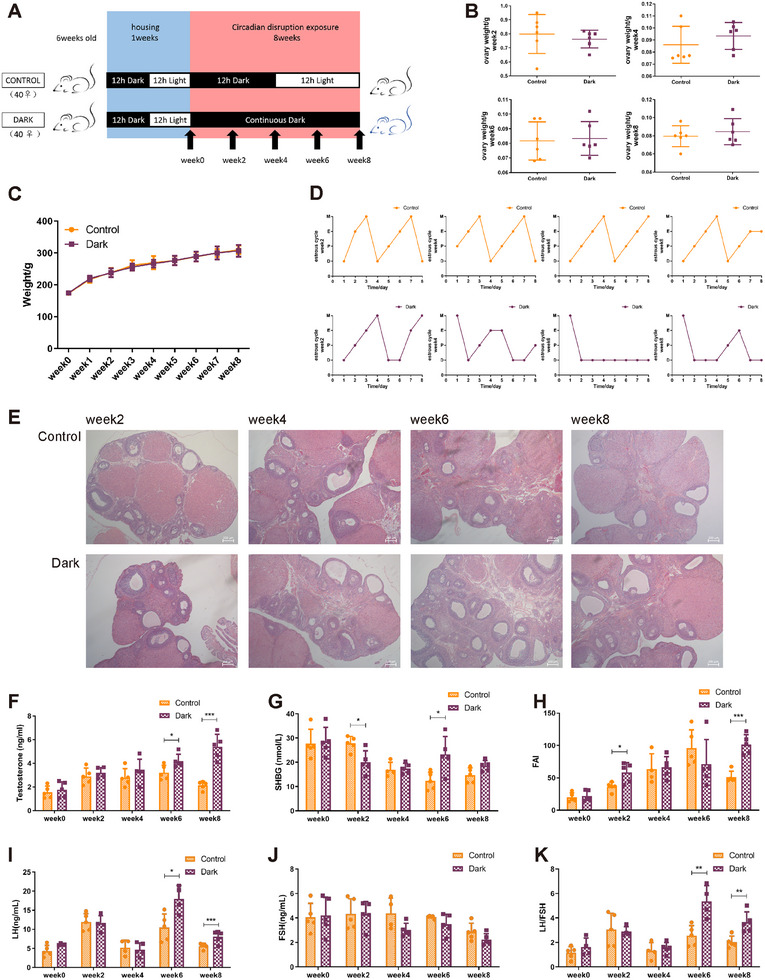 Figure 4
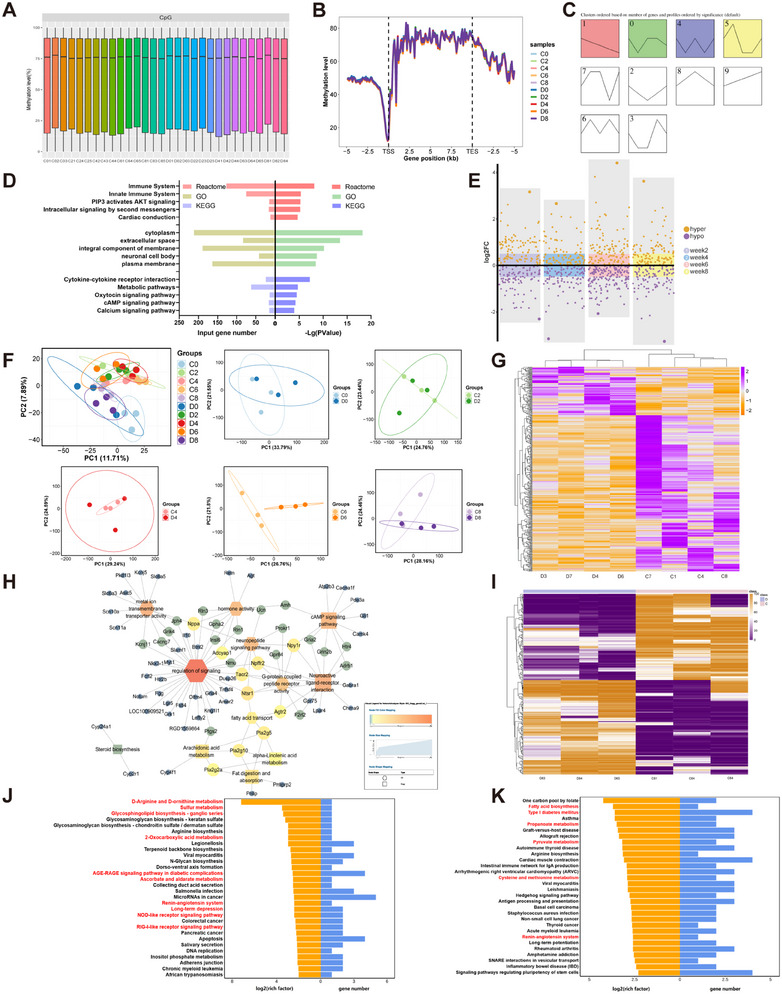 Figure 5
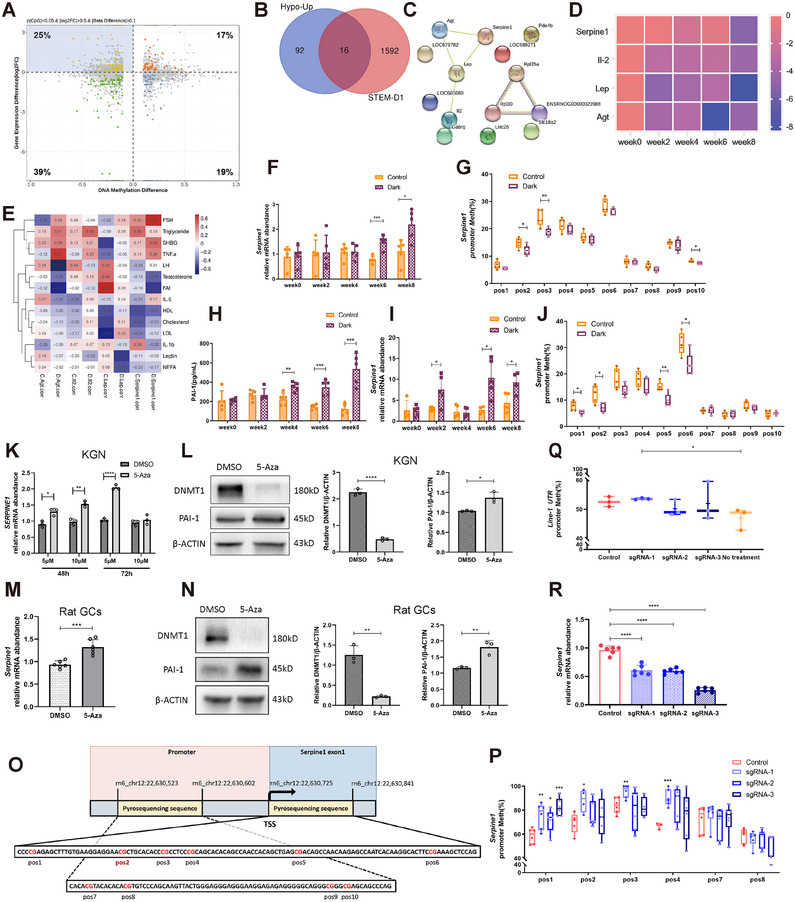 Figure 6
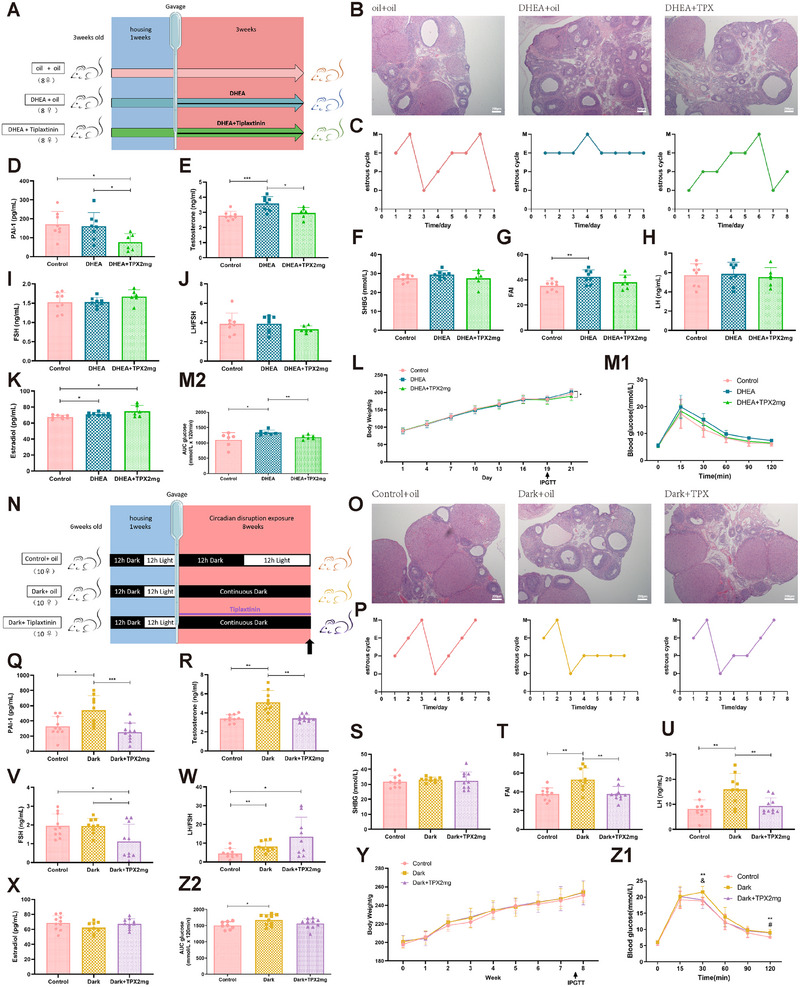 Figure 7
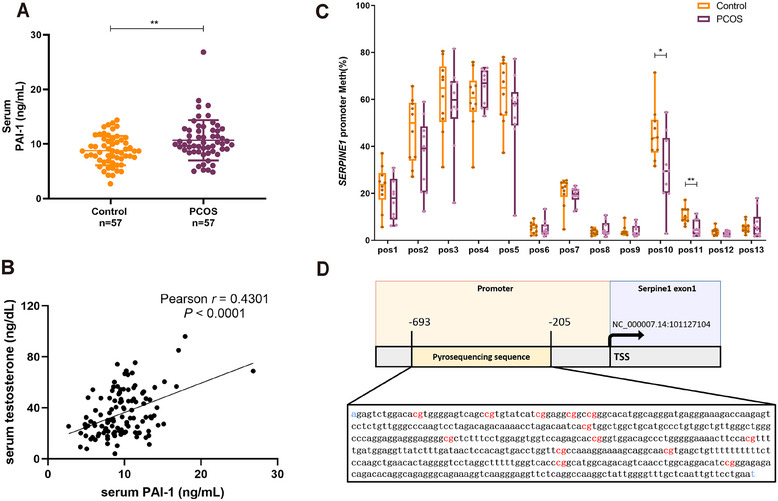 Figure 8
Peer Reviews
No public reviews on file for this paper yet. If you reviewed it on a platform where reviews are public (OpenReview, ICLR, NeurIPS, ICML), you can paste yours below so the community can read it here.
Videos
No videos yet. Explain this paper in a talk, walkthrough, or lecture? Add one.
Taxonomy
TopicsOvarian function and disorders · Reproductive Biology and Fertility · Sperm and Testicular Function