Age Structure, Growth, and Survival Rates of an Insular Population of Hemidactylus turcicus
Abdullah Altunışık, Didem Kurtul, Çiğdem Gül, Begüm Boran, Murat Tosunoğlu

TL;DR
This study explores the life history of Mediterranean house geckos on the island of Bozcaada, revealing their age structure, growth, and survival in an isolated environment.
Contribution
The study provides the first detailed demographic and morphometric baseline for an insular population of Hemidactylus turcicus in Türkiye.
Findings
Males and females had maximum longevities of 7 and 6 years, with average ages of 4.26 and 3.91 years, respectively.
Growth rates were 3.10 mm/year for males and 3.58 mm/year for females, modeled using the von Bertalanffy equation.
The population showed subtle sexual dimorphism and stable survival rates, indicating adaptation to insular conditions.
Abstract
The Mediterranean house gecko, Hemidactylus turcicus (Linnaeus, 1758), a widespread nocturnal lizard, exhibits diverse life‐history traits, yet its insular populations in Türkiye are underexplored. This study examines how Bozcaada's insular environment shapes the age structure, body size, growth rates, and sexual dimorphism of H. turcicus , providing a detailed demographic and morphometric baseline. We sampled 30 individuals (19 males, 11 females) from Bozcaada, Çanakkale, Türkiye, measuring snout‐vent length (SVL), body mass, and additional traits (head length, width, height, forearm, and hind leg length). Age was determined via skeletochronology, counting phalangeal Lines of Arrested Growth (LAGs). Results show a maximum longevity of 7 years for males (mean: 4.26 ± 0.33) and 6 years for females (mean: 3.91 ± 0.41). SVL averaged 45.19 ± 1.59 mm for males and 43.51 ± 2.33 mm for…
Genes, proteins, chemicals, diseases, species, mutations and cell lines named across the full text — each resolved to its canonical identifier and authoritative record.
Click any figure to enlarge with its caption.
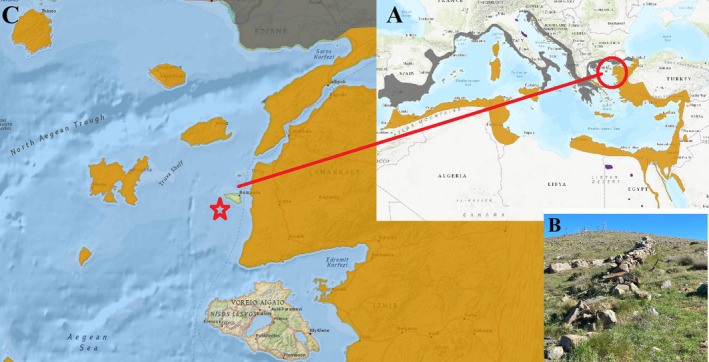 Figure 1
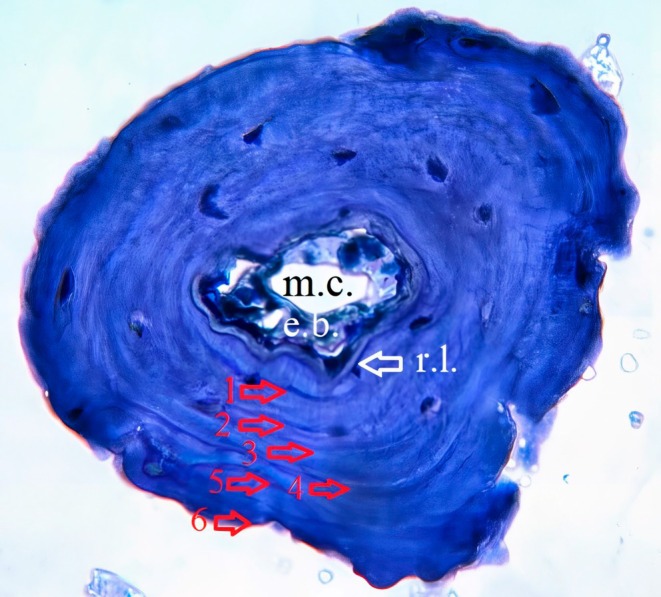 Figure 2
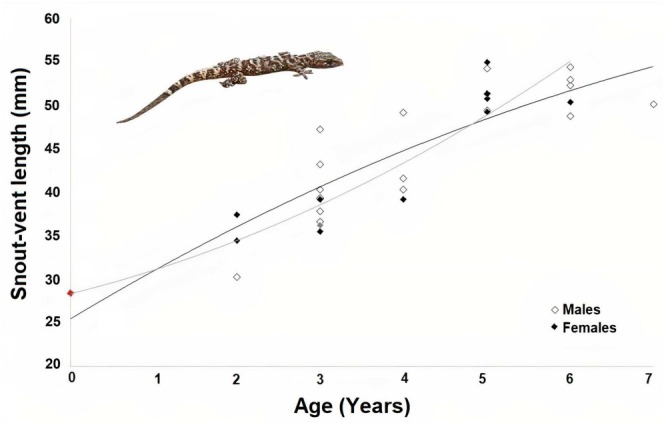 Figure 3
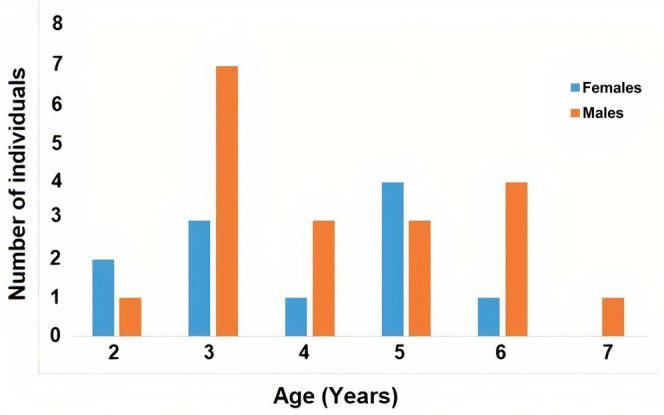 Figure 4
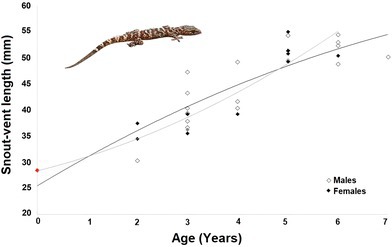 Figure 5
Peer Reviews
No public reviews on file for this paper yet. If you reviewed it on a platform where reviews are public (OpenReview, ICLR, NeurIPS, ICML), you can paste yours below so the community can read it here.
Videos
No videos yet. Explain this paper in a talk, walkthrough, or lecture? Add one.
Taxonomy
TopicsAmphibian and Reptile Biology · Insect and Arachnid Ecology and Behavior · Animal Behavior and Reproduction