Frontal and Parietal Activities Associated With Different Inhibitory Processes in a Stroop‐Matching/Stop‐Signal Task: A Channel‐Wise fNIRS Study
Armando dos Santos Afonso Junior, Walter Machado‐Pinheiro, Luiz Renato Rodrigues Carreiro

TL;DR
This study used brain imaging to show how different parts of the brain handle various types of cognitive inhibition during a complex task.
Contribution
The study demonstrates that distinct inhibitory processes recruit specific frontal and parietal brain regions using a combined Stroop-matching/stop-signal task.
Findings
The left inferior frontal cortex and intraparietal sulcus are involved in interference control.
The right inferior frontal cortex is associated with suppressing ongoing responses.
Interactions between inhibitory processes lead to deactivation in frontal and parietal areas.
Abstract
Inhibition is an important component of cognitive control that encompasses multiple processes, such as interference control, inhibition of prepotent responses and suppression of ongoing responses. Frontal and temporoparietal regions of the cortex are implicated differently in inhibitory functions. The Stroop‐matching/stop‐signal task is a recent task that uses Stroop stimuli and stop‐signals to create conditions that allow the investigation of the three forms of inhibition aforementioned. The task provides a way to distinguish the effect of these inhibitions as well as their interactions using a single task. The present study used functional near‐infrared spectroscopy (fNIRS) to assess frontal and temporoparietal activations during the Stroop‐matching/stop‐signal task. The main objective was to investigate which cortical regions each inhibitory function would recruit during this task.…
Genes, proteins, chemicals, diseases, species, mutations and cell lines named across the full text — each resolved to its canonical identifier and authoritative record.
Click any figure to enlarge with its caption.
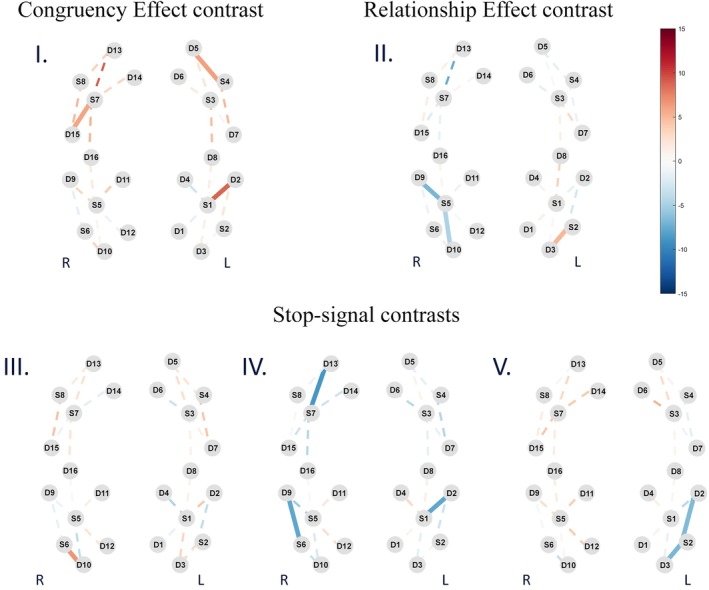 Figure 1
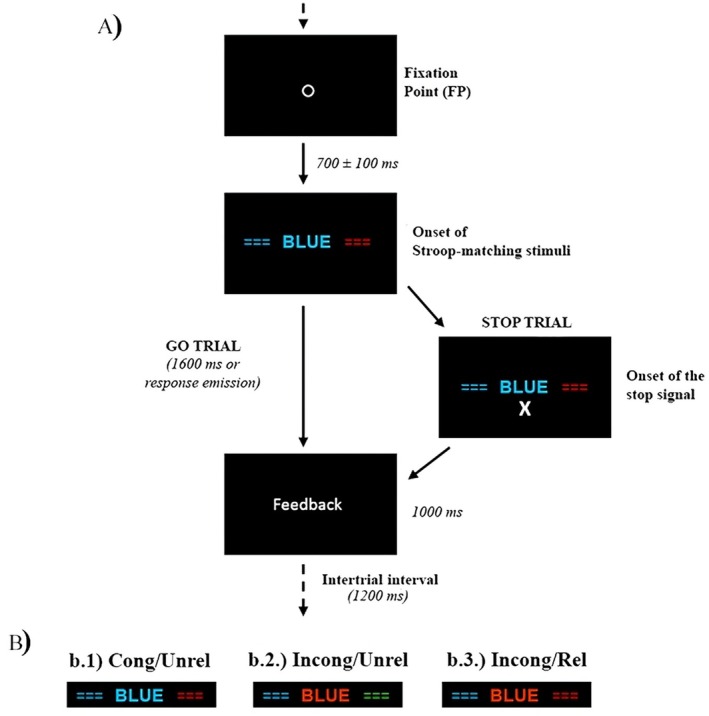 Figure 2
 Figure 3
Peer Reviews
No public reviews on file for this paper yet. If you reviewed it on a platform where reviews are public (OpenReview, ICLR, NeurIPS, ICML), you can paste yours below so the community can read it here.
Videos
No videos yet. Explain this paper in a talk, walkthrough, or lecture? Add one.
Taxonomy
TopicsOptical Imaging and Spectroscopy Techniques · Neural and Behavioral Psychology Studies · EEG and Brain-Computer Interfaces