Noninferiority Study Comparing the Efficacy and Safety of a New Hyaluronic Acid (HA) Filler Containing Lidocaine With an Existing HA Filler for the Treatment of Nasolabial Fold Wrinkles: A Randomized, Double‐Blind, Split‐Face Trial
Ji Young Cho, Seung Hyeon Kim, Hyesoo Cho, Yoonjae Park, Hee Joo Yang, Jee Soo An, Chong Hyun Won, Jong Hun Lee

TL;DR
A new hyaluronic acid filler with lidocaine was found to be as effective and safe as an existing filler for treating nasolabial fold wrinkles over 48 weeks.
Contribution
Demonstrated non-inferiority of a new HA filler with lidocaine compared to an existing HA filler in a 48-week clinical trial.
Findings
WSRS scores at 24 and 48 weeks showed no significant difference between the new and existing fillers.
GAIS scores at all follow-ups showed no significant differences between the two groups.
Pain and swelling were common but not statistically significant compared to the control group.
Abstract
The aesthetic use of hyaluronic acid (HA) has led to the development of various commercial HA fillers. Crosslinked HA dermal fillers are commonly used to treat facial wrinkles. This study demonstrated the non‐inferiority of the newly developed hyaluronic acid filler by comparing its efficacy and safety to that of the existing hyaluronic acid filler. This 48‐week study was designed as a randomized, double‐blind, split‐face trial. Subjects who met the inclusion and exclusion criteria had a total of four follow‐up visits after receiving a dermal filler in the nasolabial folds. Efficacy was assessed using the Wrinkle Severity Rating Score (WSRS) and the Global Aesthetic Improvement Scale (GAIS). Safety was determined through the evaluation of laboratory tests, monitoring adverse events, and verifying vital signs. WSRS measured at week 24 of the follow‐up visit showed no statistically…
Genes, proteins, chemicals, diseases, species, mutations and cell lines named across the full text — each resolved to its canonical identifier and authoritative record.
Click any figure to enlarge with its caption.
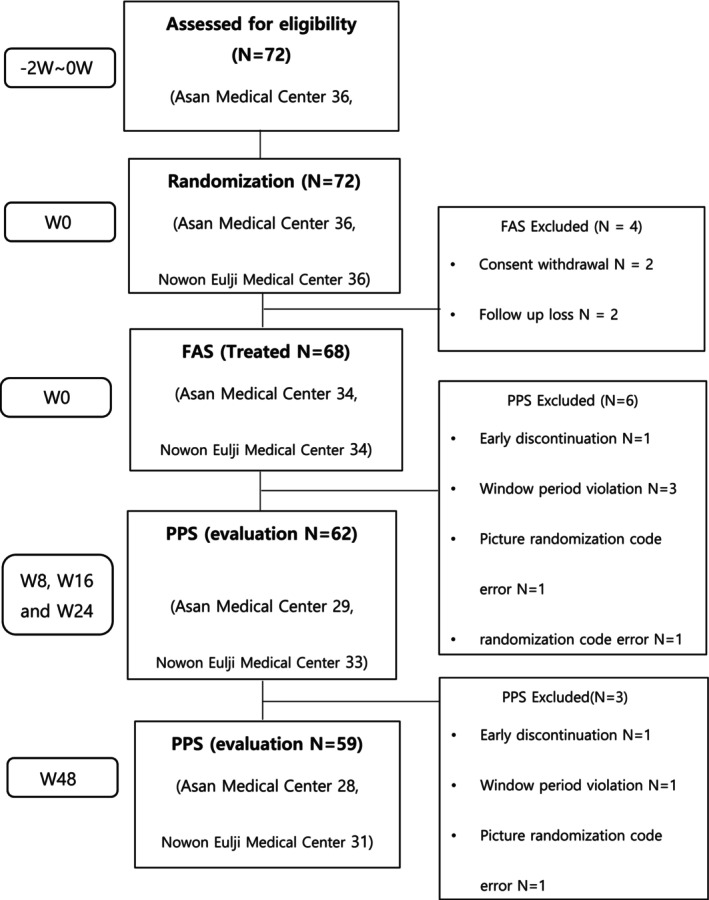 Figure 1
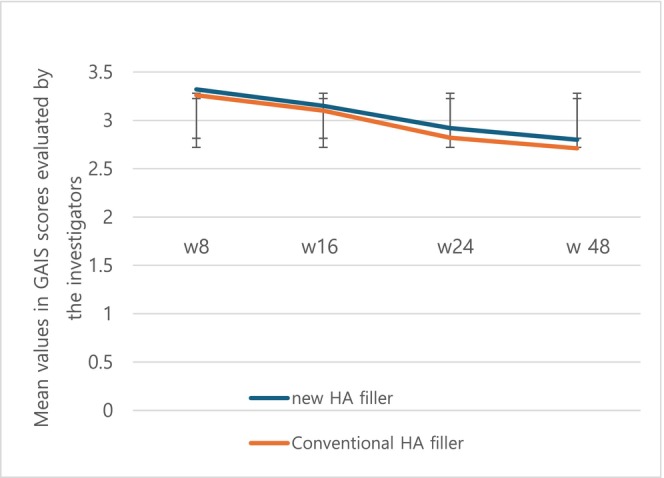 Figure 2
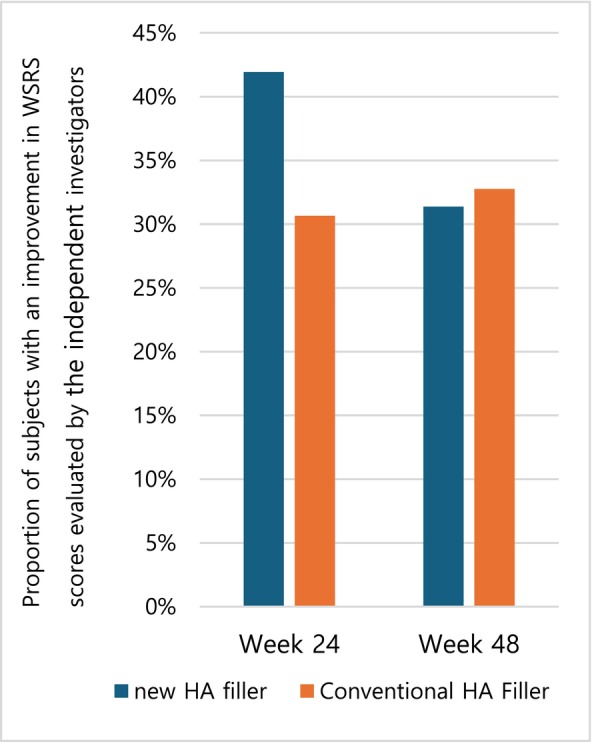 Figure 3
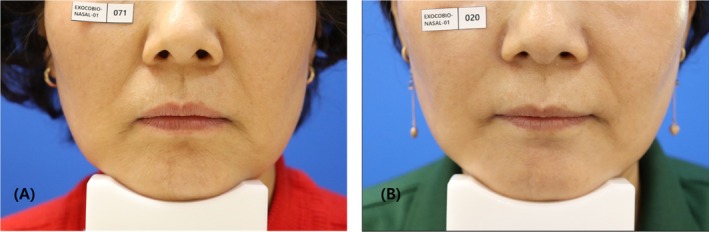 Figure 4
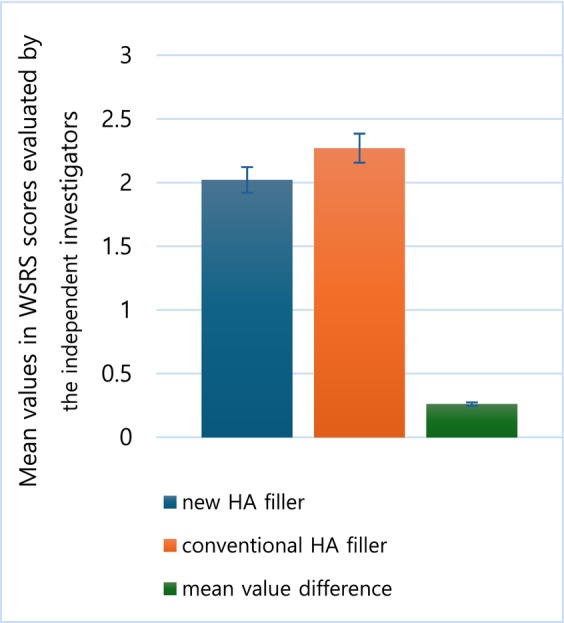 Figure 5
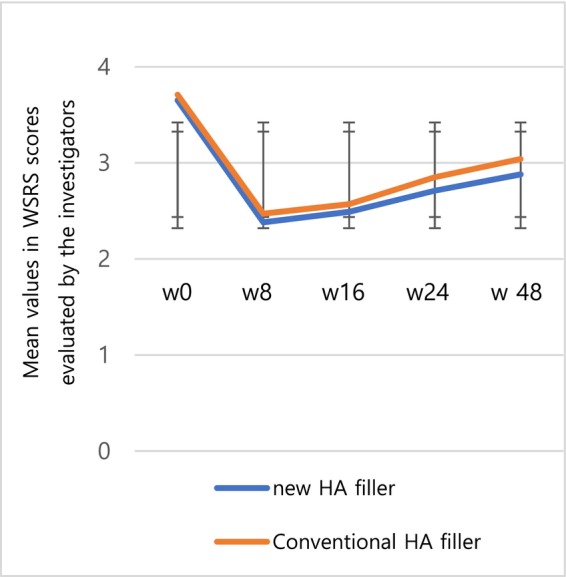 Figure 6
Peer Reviews
No public reviews on file for this paper yet. If you reviewed it on a platform where reviews are public (OpenReview, ICLR, NeurIPS, ICML), you can paste yours below so the community can read it here.
Videos
No videos yet. Explain this paper in a talk, walkthrough, or lecture? Add one.
Taxonomy
TopicsFacial Rejuvenation and Surgery Techniques · Dermatologic Treatments and Research · Hair Growth and Disorders