Shelf acetabuloplasty is associated with longer survival of the total hip arthroplasty in patients with late-detected hip dislocation: a cohort study of 70 hips with a modified Spitzy shelf procedure
Terje TERJESEN, Stefan HUHNSTOCK

TL;DR
A modified acetabular shelf procedure in patients with hip dysplasia is linked to longer-lasting hip replacements, even though it doesn't delay the need for surgery.
Contribution
The study shows that acetabular shelf surgery improves total hip arthroplasty survival without affecting the timing of the surgery.
Findings
The SA group had a 20-year survival rate of 88%, significantly higher than the Dysplasia group's 68%.
Estimated survival time of THA was 29.4 years for the SA group versus 19.8 years for the Dysplasia group.
Age at THA was not significantly different between the SA and Dysplasia groups.
Abstract
Our aim was to compare age at time of total hip arthroplasty (THA) and the THA survival time in patients with late-detected developmental dislocation and dysplasia of the hip (DDH) treated with traction in childhood who had either undergone acetabular shelf operation due to persistent DDH, or no previous acetabular surgery but persistent DDH, or no previous acetabular surgery and CE angle ≥ 18°. 112 patients (97 females; 144 hips) with late-detected DDH who had undergone THA were studied. 70 hips had undergone a modified Spitzy procedure (SA group) at the age of 8–33 years. They were compared with 2 groups that had not undergone previous pelvic surgery: a “Dysplasia” group with residual (persistent) acetabular dysplasia (CE angle < 18°, 33 hips) and a “Normal” group with no residual dysplasia (37 hips). We analyzed age at THA and the survival rate (percentage of THAs not having…
Genes, proteins, chemicals, diseases, species, mutations and cell lines named across the full text — each resolved to its canonical identifier and authoritative record.
Click any figure to enlarge with its caption.
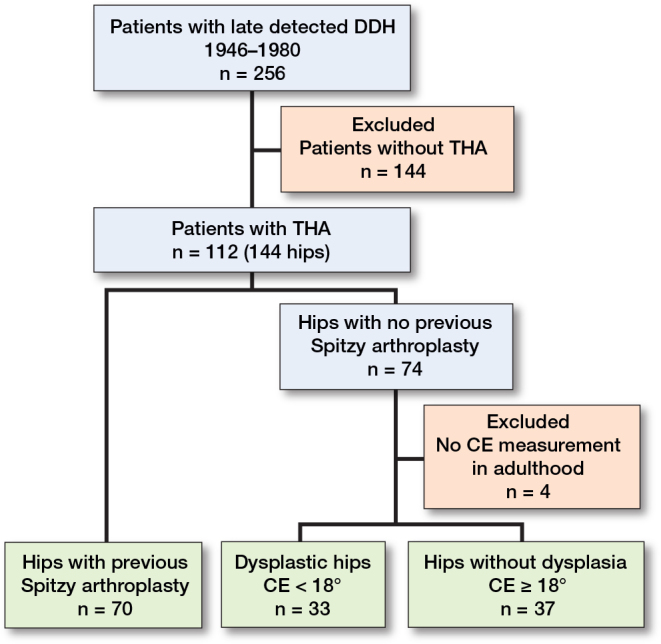 Figure 1
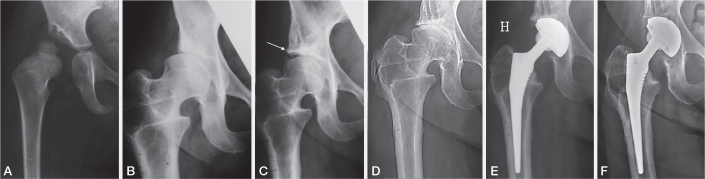 Figure 2
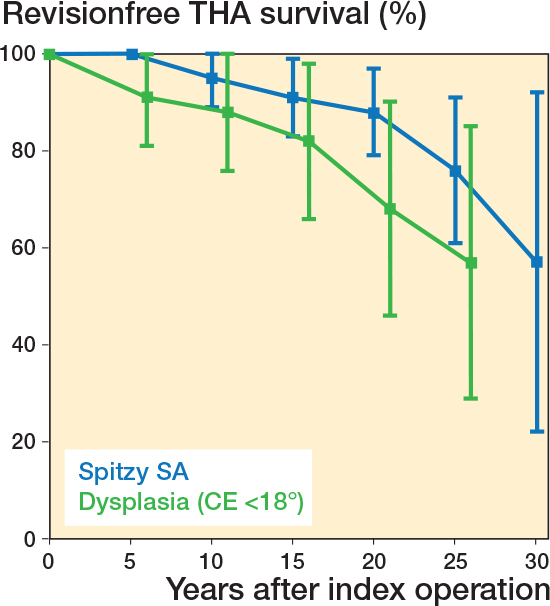 Figure 3
Peer Reviews
No public reviews on file for this paper yet. If you reviewed it on a platform where reviews are public (OpenReview, ICLR, NeurIPS, ICML), you can paste yours below so the community can read it here.
Videos
No videos yet. Explain this paper in a talk, walkthrough, or lecture? Add one.
Taxonomy
TopicsHip disorders and treatments · Orthopaedic implants and arthroplasty · Hip and Femur Fractures