Postcardiotomy extracorporeal membrane oxygenation in patients older than 70 years: Characteristics, outcomes, and variables associated with mortality
Maged Makhoul, Silvia Mariani, Bas C.T. van Bussel, Dominik Wiedemann, Diyar Saeed, Michele Di Mauro, Matteo Pozzi, Luca Botta, Udo Boeken, Robertas Samalavicius, Karl Bounader, Xiaotong Hou, Jeroen J.H. Bunge, Hergen Buscher, Leonardo Salazar, Bart Meyns, Michael A. Mazzeffi

TL;DR
Older patients on postcardiotomy ECMO have higher mortality, and factors like stroke and complications can help predict outcomes.
Contribution
Identifies specific preoperative and postoperative factors associated with mortality in older PC-ECMO patients.
Findings
In-hospital mortality was 68.8% in patients ≥70 years compared to 56.3% in younger patients.
Previous stroke and postoperative complications like bleeding and cardiac arrest were linked to higher mortality in older patients.
7-year postdischarge survival was significantly better in younger patients.
Abstract
Age is the main determinant for mortality in patients requiring postcardiotomy extracorporeal membrane oxygenation (PC-ECMO), but strategies to reverse this trend are unknown. This study investigates PC-ECMO outcomes in older patients (≥70 years) compared with younger patients (<70 years). This retrospective study included patients who required PC-ECMO between 2000 and 2020. Variables independently associated with in-hospital mortality were identified using mixed Cox proportional hazards models. The study included 2057 patients (mean age: 62.3 [first and third quartile: 19-94]; male patients: n = 1213 [59%]): 1376 (67%) were <70 years and 680 (33%) were ≥70 years old. Older patients had more preoperative comorbidities, whereas younger patients had lower cardiac function and more preoperative intubation and vasopressor use. In-hospital mortality was 56.3% (n = 775) and 68.8% (n = 468)…
Genes, proteins, chemicals, diseases, species, mutations and cell lines named across the full text — each resolved to its canonical identifier and authoritative record.
Click any figure to enlarge with its caption.
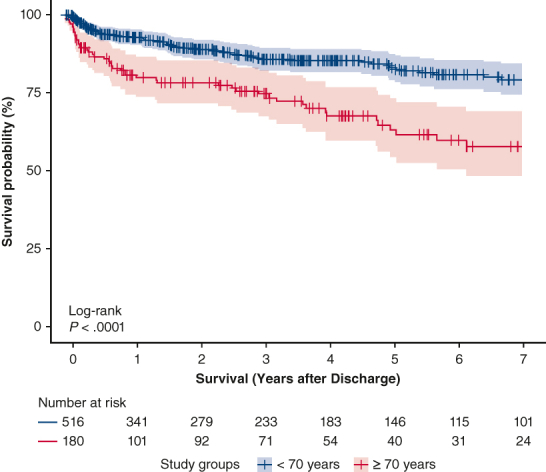 Figure 1
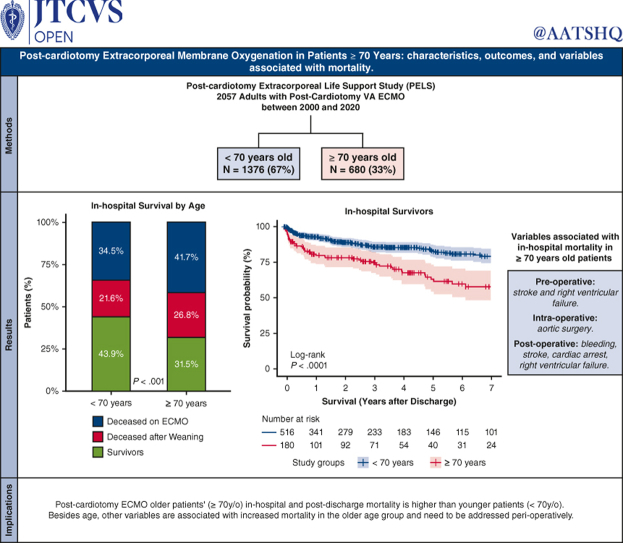 Figure 2
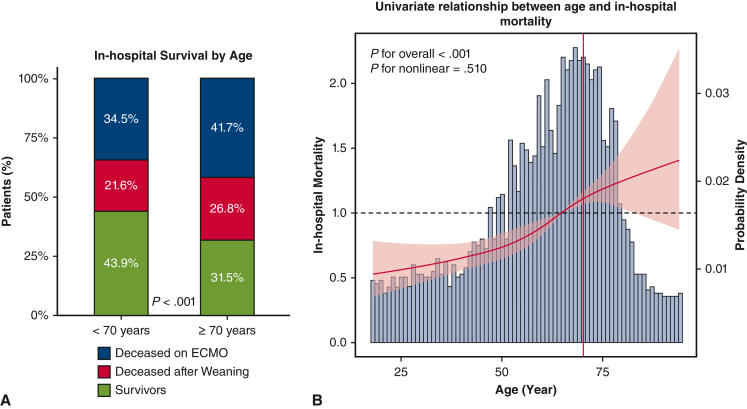 Figure 3
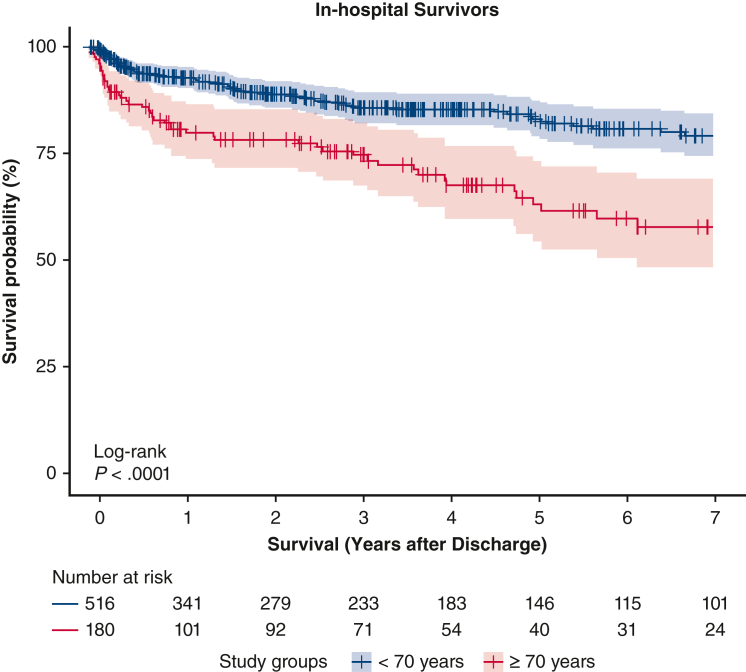 Figure 4
Peer Reviews
No public reviews on file for this paper yet. If you reviewed it on a platform where reviews are public (OpenReview, ICLR, NeurIPS, ICML), you can paste yours below so the community can read it here.
Videos
No videos yet. Explain this paper in a talk, walkthrough, or lecture? Add one.
Taxonomy
TopicsMechanical Circulatory Support Devices · Cardiac pacing and defibrillation studies · Cardiac Structural Anomalies and Repair