The Ross/Ross-Konno operation in neonates and infants: A salvage strategy and a durable repair
John M. Karamichalis, Morgan K. Moroi, Alice V. Vinogradsky, Edward Buratto, Priyanka Asrani, Diana Vargas Chaves, Andrew B. Goldstone, David Kalfa, Emile A. Bacha

TL;DR
This study shows the Ross operation is a successful treatment for severe aortic valve disease in very young children, with good midterm results.
Contribution
The paper presents a single-center experience demonstrating the feasibility and durability of the Ross operation in neonates and infants.
Findings
The Ross operation in neonates and infants showed excellent midterm outcomes with low mortality and reintervention rates.
A subset of patients who could not be discharged due to residual valve disease successfully underwent salvage Ross procedures.
Most patients had complex left-sided heart lesions and prior aortic procedures before the Ross operation.
Abstract
To review a single-center experience of the Ross operation in neonates and infants with severe aortic valve disease. Retrospective review identified patients younger than age 1 year who underwent Ross operation between 2010 and 2024. Primary outcome was cumulative incidence of death with transplant as a competing risk. Early and midterm outcomes were analyzed, including postoperative complications and reinterventions. A subgroup analysis of patients who remained hospitalized until Ross procedure was performed. Median follow-up was 5.7 years (interquartile range, 2.9-8.8. years). Twenty-nine patients (5 neonates and 24 infants) underwent the Ross operation, 24 (82.8%) of whom had a Konno procedure. Median age was 3.5 months (interquartile range, 1.1-5.7 months). Median weight was 4.9 kg (interquartile range, 3.9-6.0 kg). Five patients (27.2%) were born with isolated critical aortic…
Genes, proteins, chemicals, diseases, species, mutations and cell lines named across the full text — each resolved to its canonical identifier and authoritative record.
Click any figure to enlarge with its caption.
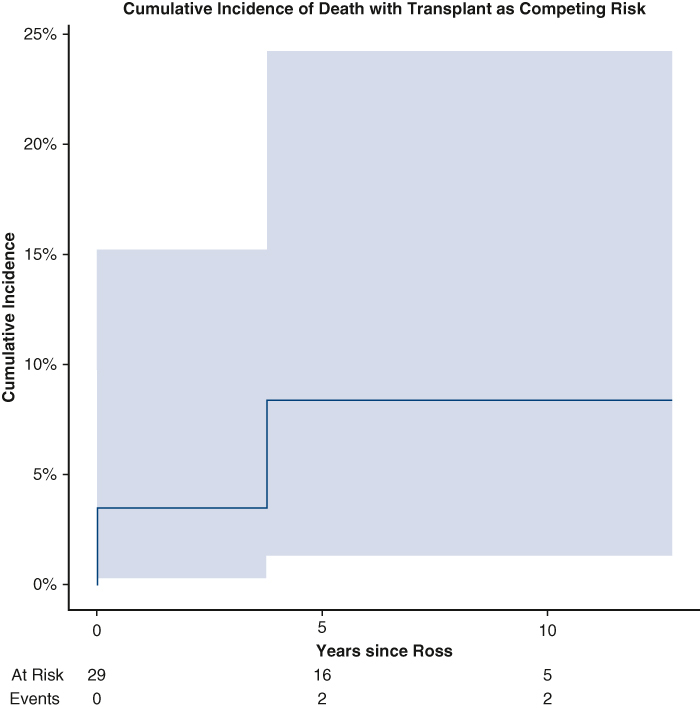 Figure 1
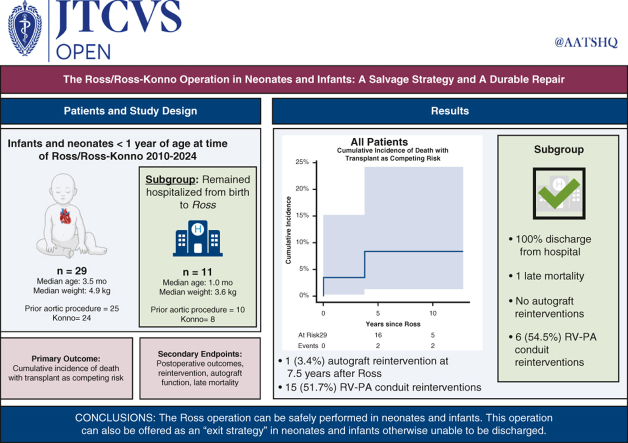 Figure 2
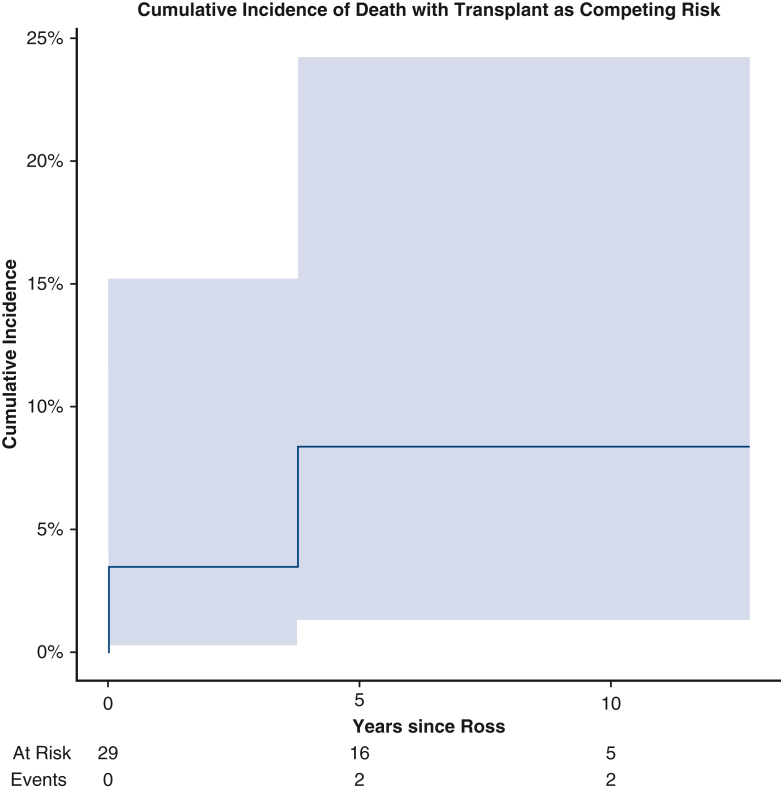 Figure 3
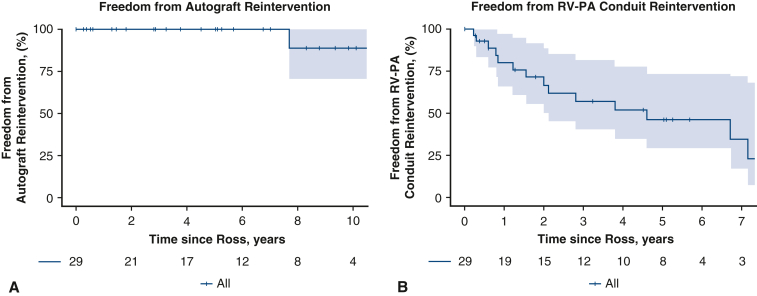 Figure 4
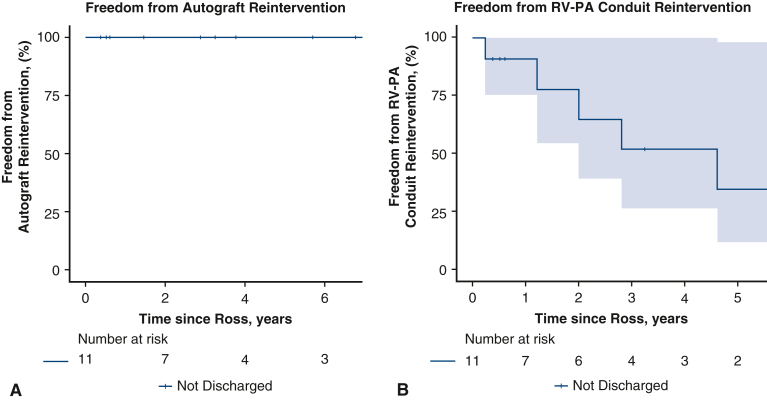 Figure 5
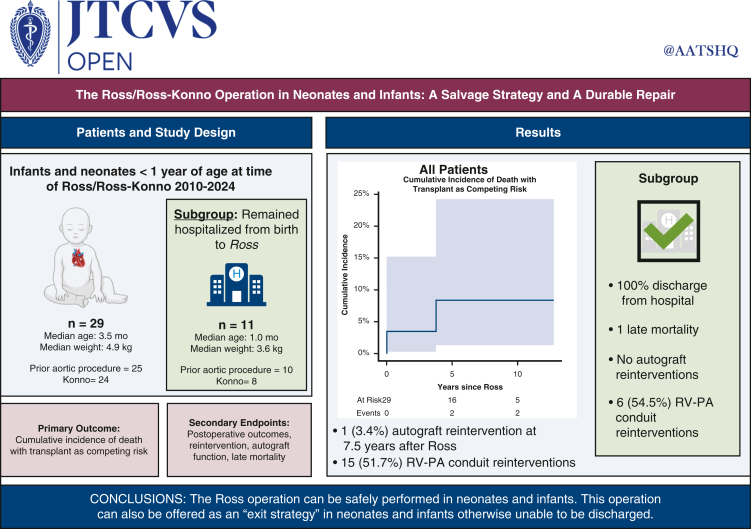 Figure 6
Peer Reviews
No public reviews on file for this paper yet. If you reviewed it on a platform where reviews are public (OpenReview, ICLR, NeurIPS, ICML), you can paste yours below so the community can read it here.
Videos
No videos yet. Explain this paper in a talk, walkthrough, or lecture? Add one.
Taxonomy
TopicsCongenital Diaphragmatic Hernia Studies · Neurogenetic and Muscular Disorders Research · Spinal Dysraphism and Malformations