A calix[4]arene-based supramolecular nanoassembly targeting cancer cells and triggering the release of nitric oxide with green light
Cristina Parisi, Loredana Ferreri, Tassia J Martins, Francesca Laneri, Samantha Sollima, Antonina Azzolina, Antonella Cusimano, Nicola D’Antona, Grazia Maria Letizia Consoli, Salvatore Sortino

TL;DR
A new nanoassembly targets cancer cells and releases nitric oxide using green light, offering a promising approach for cancer therapy.
Contribution
The design of a calix[4]arene-based nanoassembly that uses green light to trigger nitric oxide release in cancer cells.
Findings
The nanoassembly is 170 nm in diameter and water-soluble due to its amphiphilic structure.
It selectively targets cancer cells with overexpressed choline transporters and can be visualized via fluorescence.
Green light activates nitric oxide release through intra-cage electron transfer, improving biocompatibility.
Abstract
We have designed and synthesized a novel calix[4]arene derivative bearing four choline appendages as recognition targeting ligands and one amino-nitrobenzofurazan as a fluorescent labelling unit at the opposite sides of the calixarene molecular scaffold. Due to its amphiphilic character, this compound is well soluble in water, forming supramolecular assemblies that are ca. 170 nm in diameter. The nanoassembly selectively targets cancer cells that overexpress the choline transporters, and it can be visualized thanks to the fluorescent tag. The fluorogenic unit also acts as a green light harvesting center, making the nanoassembly a photo-nanoreactor able to encapsulate a hydrophobic nitric oxide (NO) photodonor, otherwise activatable with blue light, and encouraging the NO release with the more biocompatible green light probably by an intra-cage photoinduced electron transfer.
Genes, proteins, chemicals, diseases, species, mutations and cell lines named across the full text — each resolved to its canonical identifier and authoritative record.
Click any figure to enlarge with its caption.
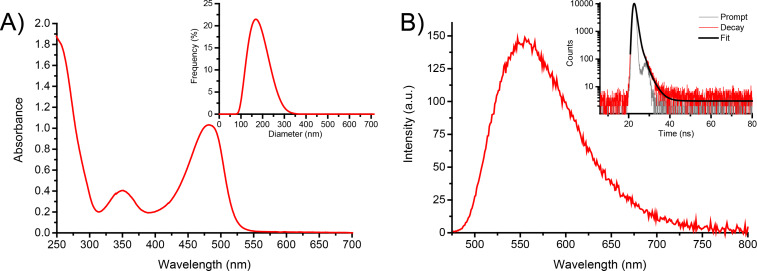 Figure 1
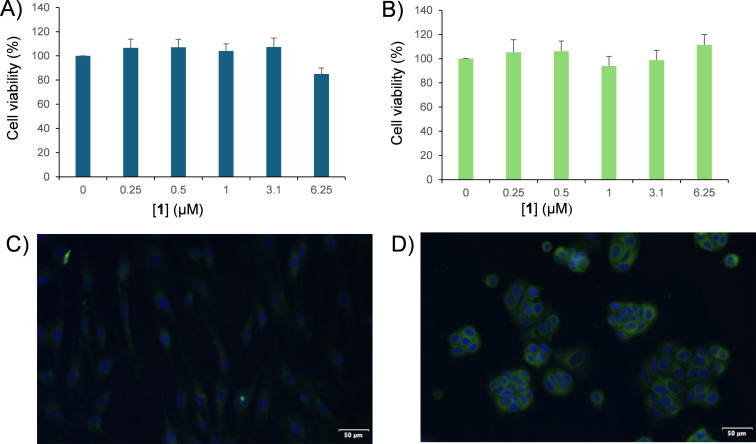 Figure 2
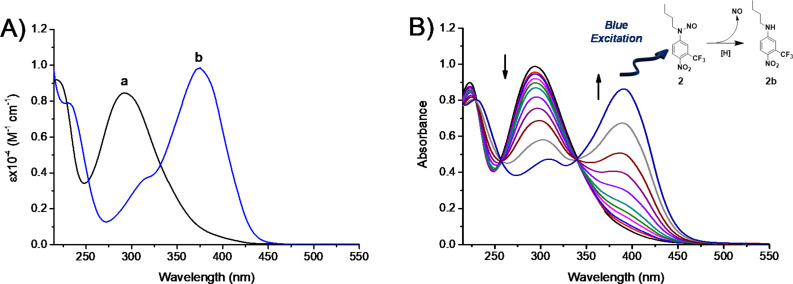 Figure 3
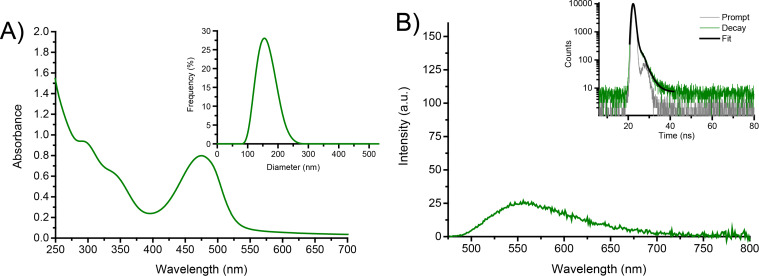 Figure 4
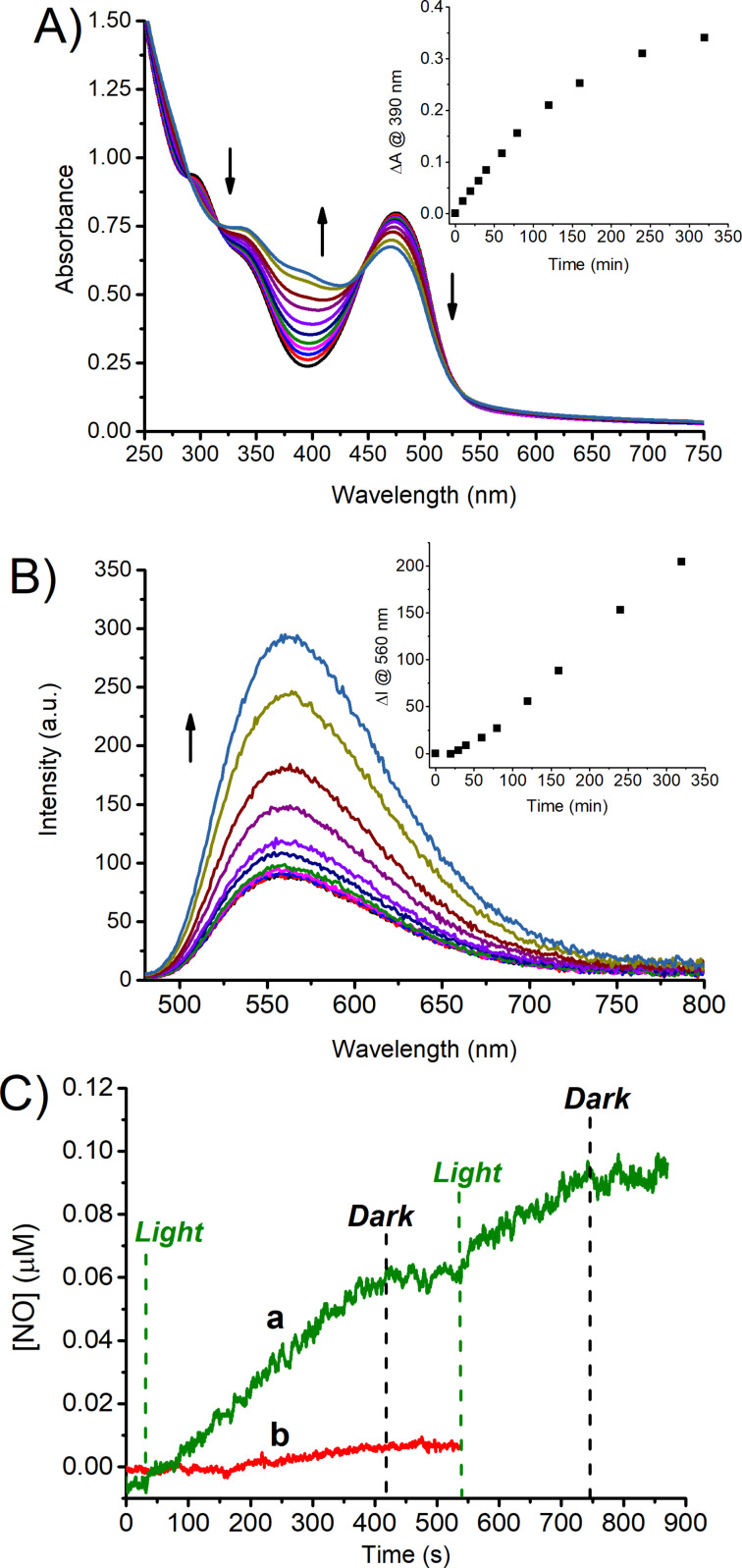 Figure 5
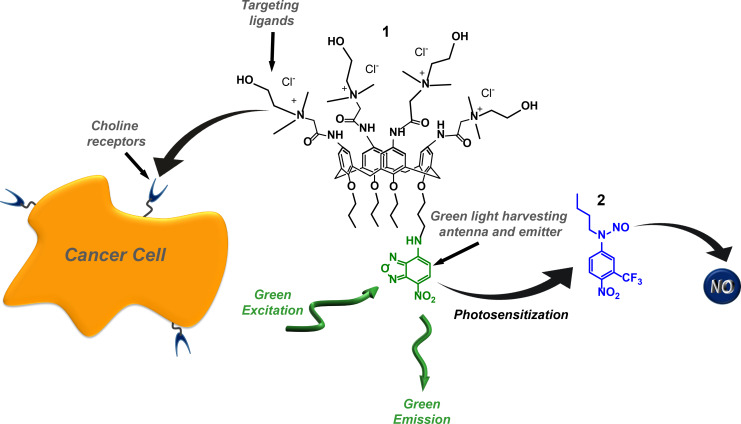 Figure 6
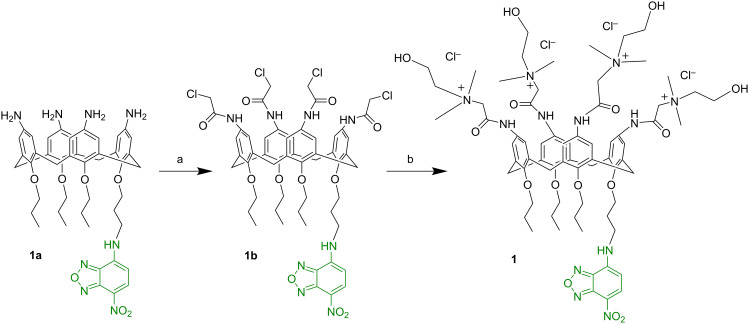 Figure 7
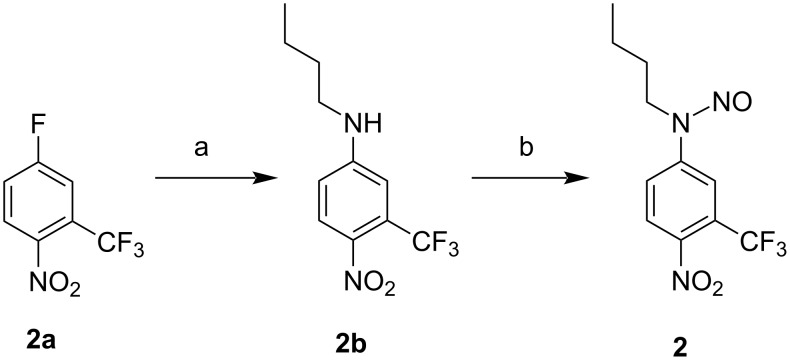 Figure 8
 Figure 9
 Figure 10
 Figure 11
 Figure 12
 Figure 13
Peer Reviews
No public reviews on file for this paper yet. If you reviewed it on a platform where reviews are public (OpenReview, ICLR, NeurIPS, ICML), you can paste yours below so the community can read it here.
Videos
No videos yet. Explain this paper in a talk, walkthrough, or lecture? Add one.
Taxonomy
TopicsPhotochromic and Fluorescence Chemistry · Nanoplatforms for cancer theranostics · Supramolecular Chemistry and Complexes