Parental mental disorders and school performance among non-immigrant and second-generation immigrant children in Sweden
Kenta Okuyama, Sara Larsson Lönn, Ardavan M. Khoshnood, Jan Sundquist, Kristina Sundquist

TL;DR
The study finds that parental mental disorders are linked to lower school performance in both non-immigrant and second-generation immigrant children in Sweden.
Contribution
This is the first study to examine the impact of parental mental disorders on school performance specifically among second-generation immigrant children.
Findings
Parental mental disorders were associated with lower school grades in both non-immigrant and second-generation immigrant children.
The effect of parental mental disorders on school grades was smaller among second-generation immigrant children compared to non-immigrant children.
School performance was generally lower among second-generation immigrant children regardless of parental mental health status.
Abstract
Immigrant children are often challenged at school. School performance is an important predictor of future socioeconomic position and mental and physical health. While studies have investigated parental mental disorders as a potential factor for poor school performance, no studies have investigated this among children with foreign-born parents, i.e., second-generation immigrant children. We aimed to examine whether parental depressive, anxiety, and personality disorders, affect school performance among non-immigrant children and second-generation immigrant children in Sweden. Multiple nationwide population register data in Sweden were used. Non-immigrant children, i.e., children born to two Swedish-born parents (n = 593,515), and second-generation immigrant children with two foreign-born parents from non-Western regions (n = 71,721) were included. School grades in the final compulsory…
Genes, proteins, chemicals, diseases, species, mutations and cell lines named across the full text — each resolved to its canonical identifier and authoritative record.
Click any figure to enlarge with its caption.
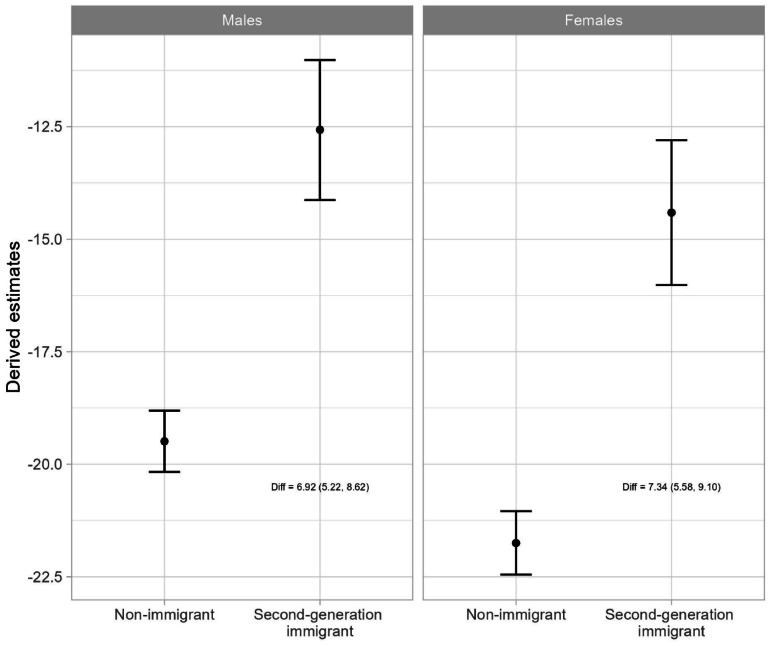 Figure 1
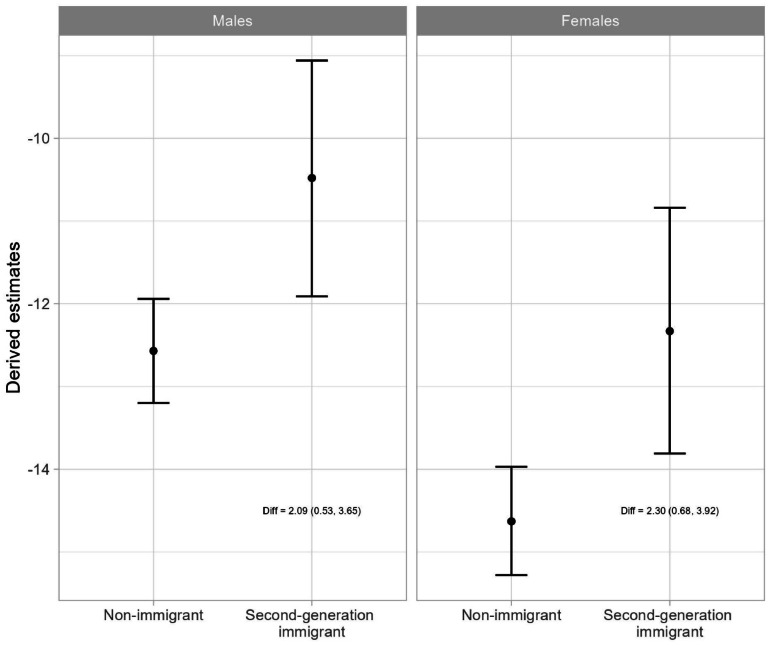 Figure 2
Peer Reviews
No public reviews on file for this paper yet. If you reviewed it on a platform where reviews are public (OpenReview, ICLR, NeurIPS, ICML), you can paste yours below so the community can read it here.
Videos
No videos yet. Explain this paper in a talk, walkthrough, or lecture? Add one.
Taxonomy
TopicsChild and Adolescent Psychosocial and Emotional Development · Early Childhood Education and Development · Family Support in Illness