An injectable 2.5% cross-linked polyacrylamide hydrogel (2.5 iPAAG) demonstrates no neurotoxicity in human induced pluripotent stem cells-derived iCell® GlutaNeurons
Peter S. Walmod, Philip Kusk, Nina Jøhnk, Ieva Ankorina-Stark, Anthony Essex

TL;DR
A hydrogel used in medical treatments was tested and found not to harm human neurons in lab experiments.
Contribution
The study shows that 2.5 iPAAG hydrogel is non-toxic to human neurons at high concentrations and long exposure times.
Findings
2.5 iPAAG had no significant effects on cell survival or death in human iCell® Glutaneurons.
The hydrogel did not affect the formation or maintenance of the neurite network.
Results suggest 2.5 iPAAG is non-neurotoxic and non-cytotoxic in vitro.
Abstract
Arthrosamid®, Arthramid®, Bulkamid®, and Mictamid® are products for the management of osteoarthritis and female urinary incontinence. All four products include the same injectable hydrogel consisting of 2.5% crosslinked polyacrylamide termed 2.5 iPAAG that is polymerized from the neurotoxic compound acrylamide. To investigate whether 2.5 iPAAG demonstrates any neurotoxic effects in vitro, human iCell® Glutaneurons were exposed to concentrations of up to 20% (w/w) 2.5 iPAAG for up to 96 h. Cells were stained and recorded by fluorescence microscopy for the subsequent estimation of cell survival, cell death, apoptosis, and the formation and maintenance of the neurite network. The negative control, Fish Gelatin, did not affect cell survival, cell death, or apoptosis, and had no or minor effects on the neurite network area. The positive controls acrylamide and A23187 caused a pronounced…
Genes, proteins, chemicals, diseases, species, mutations and cell lines named across the full text — each resolved to its canonical identifier and authoritative record.
Click any figure to enlarge with its caption.
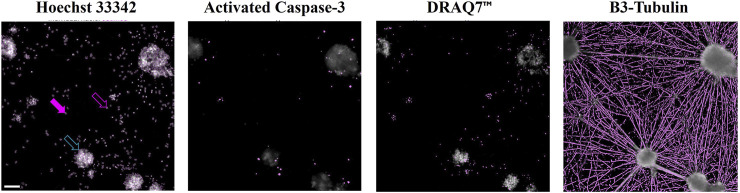 Figure 1
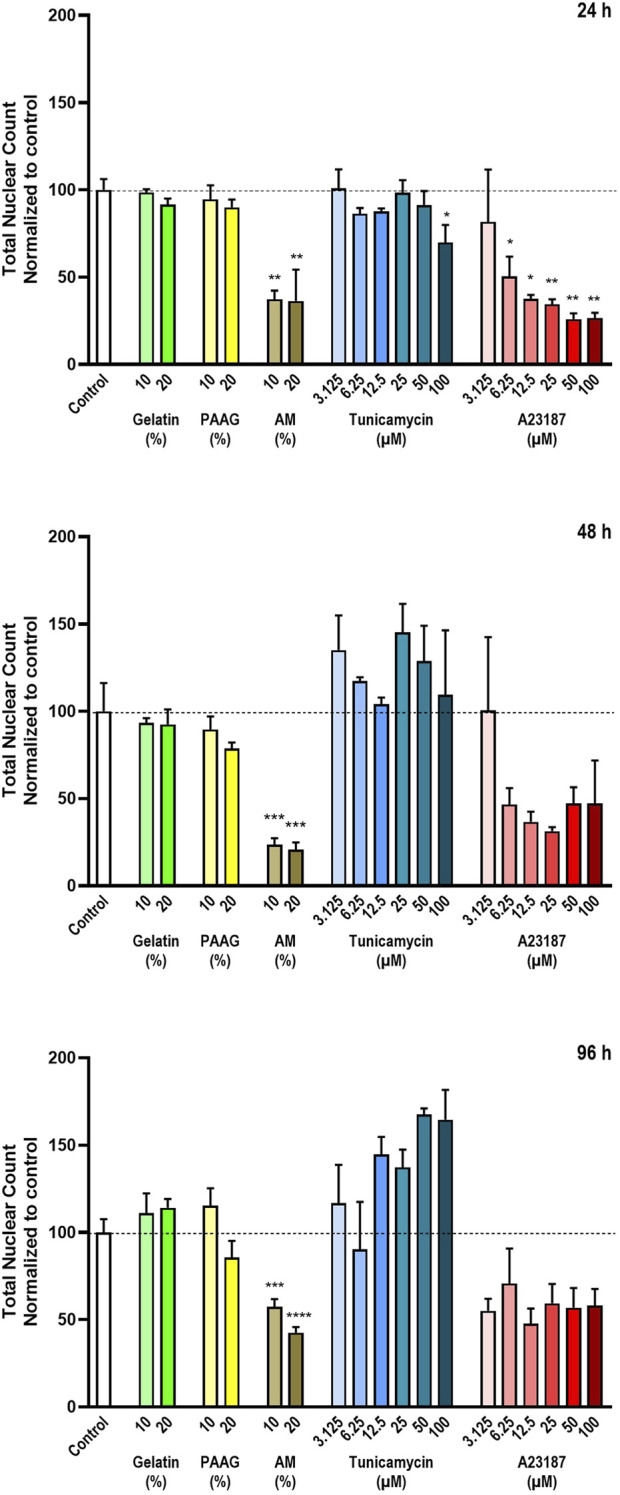 Figure 2
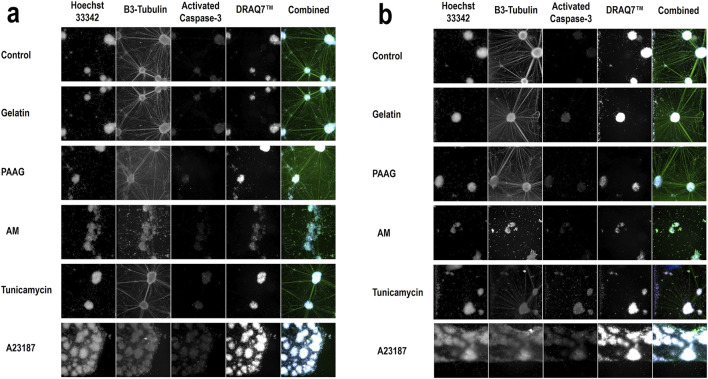 Figure 3
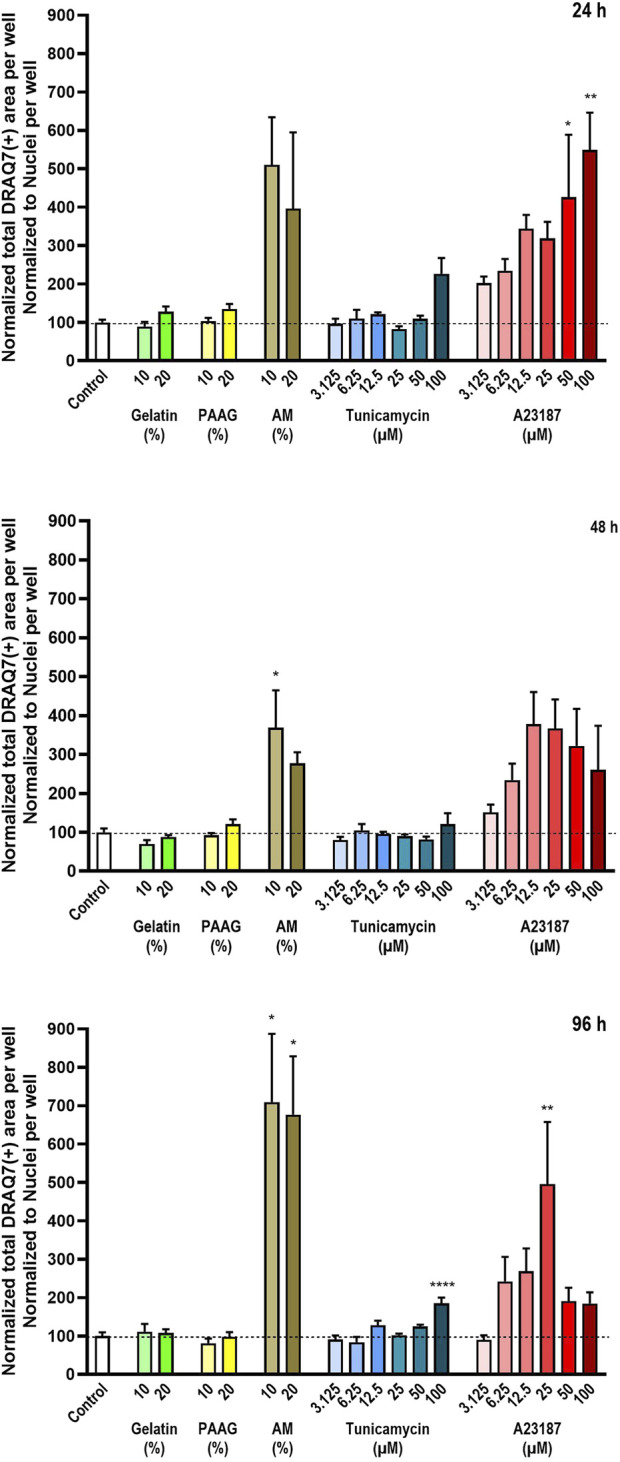 Figure 4
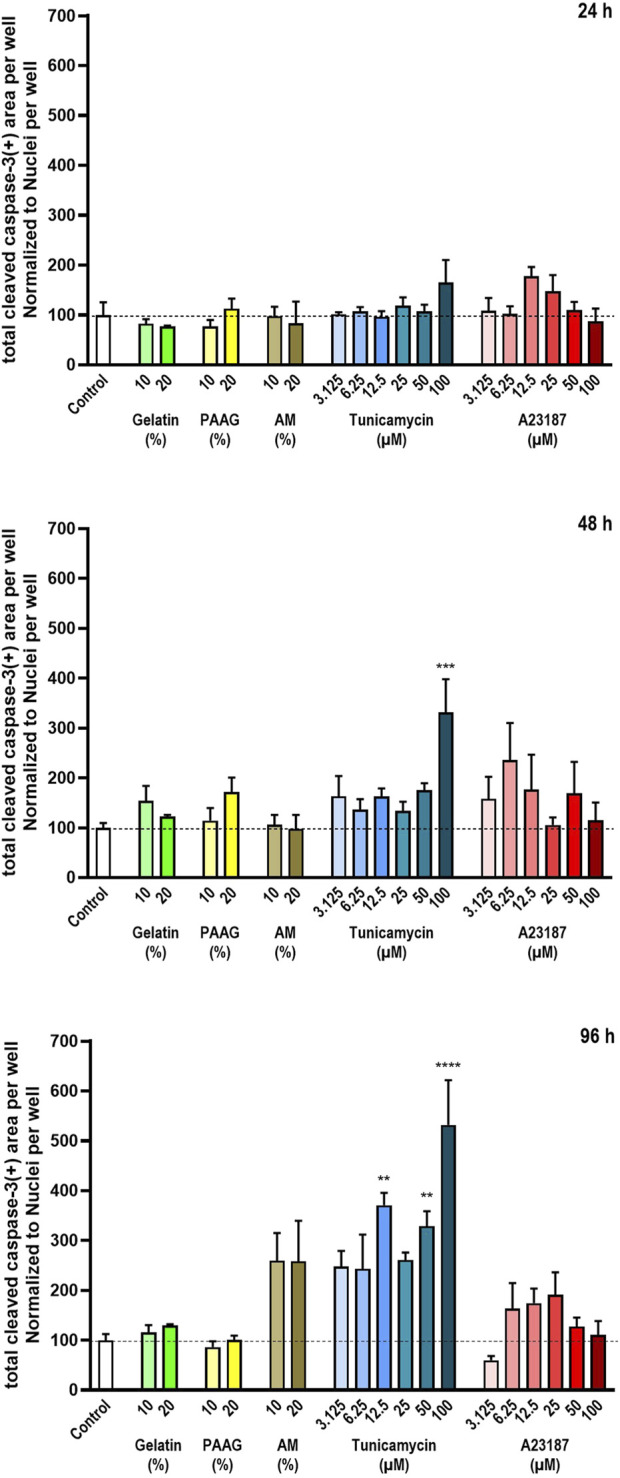 Figure 5
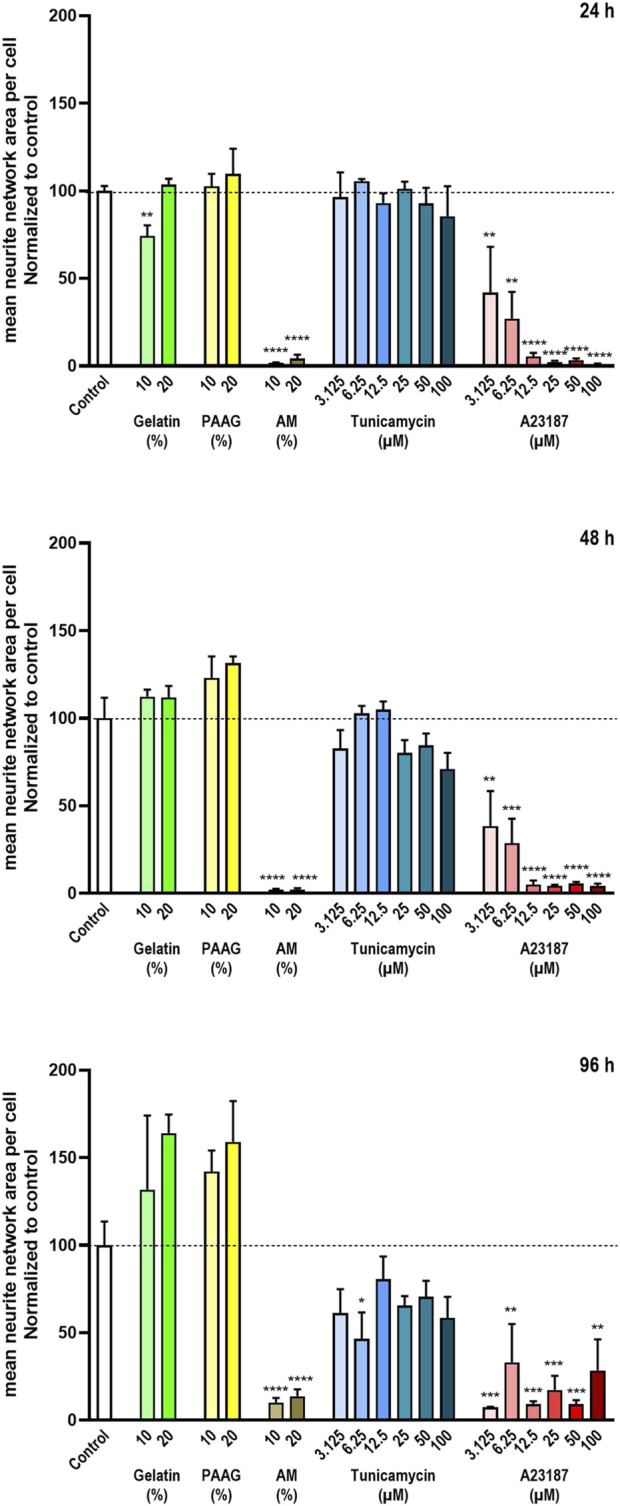 Figure 6
Peer Reviews
No public reviews on file for this paper yet. If you reviewed it on a platform where reviews are public (OpenReview, ICLR, NeurIPS, ICML), you can paste yours below so the community can read it here.
Videos
No videos yet. Explain this paper in a talk, walkthrough, or lecture? Add one.
Taxonomy
TopicsPluripotent Stem Cells Research · Tissue Engineering and Regenerative Medicine · 3D Printing in Biomedical Research