Tolerability of PSMA radioligand therapy in metastatic prostate cancer patients with baseline mild to moderate leukopenia
Moritz B. Bastian, Tilman Speicher, Arne Blickle, Caroline Burgard, Julius L. D. Bastian, Mark Bartholomä, Andrea Schaefer-Schuler, Stephan Maus, Samer Ezziddin, Florian Rosar

TL;DR
This study shows that PSMA radioligand therapy is safe for prostate cancer patients with mild to moderate leukopenia, with no significant worsening of blood cell counts.
Contribution
The study demonstrates that PSMA-RLT can be safely administered to mCRPC patients with preexisting mild to moderate leukopenia.
Findings
Leukocyte counts remained stable after each PSMA-RLT cycle without significant deterioration.
Patients with leukopenia showed no significant change in CTCAE scores after treatment.
PSMA-RLT was feasible in patients with leukopenia, challenging its exclusion as a contraindication.
Abstract
Aim of this study was to analyze the safety of prostate-specific membrane antigen radioligand therapy (PSMA-RLT) in patients with metastatic castration-resistant prostate cancer (mCRPC) with preexisting mild to moderate leukopenia (CTCAE ≥ 1). Thirty-seven mCRPC patients with preexisting leukopenia (leukocyte count < 3.8 × 10⁹/L) were included in this study. Patients received a median of 3 cycles of [177Lu]Lu-PSMA-617 (range 1–9). No significant difference in leukocyte counts was observed between baseline and follow-up after each PSMA-RLT cycle: first cycle (3.0 ± 0.5 at baseline vs. 3.4 ± 1.4 at follow up [in × 109/L], p = 0.0921), second cycle (3.1 ± 0.4 vs. 3.8 ± 1.7, p = 0. 0.0509), and third cycle (3.1 ± 0.4 vs. 3.2 ± 2.0, p = 0.2929), respectively. Similarly, baseline and end of treatment values, irrespective of the number of administered cycles, did not reveal a significant…
Genes, proteins, chemicals, diseases, species, mutations and cell lines named across the full text — each resolved to its canonical identifier and authoritative record.
Click any figure to enlarge with its caption.
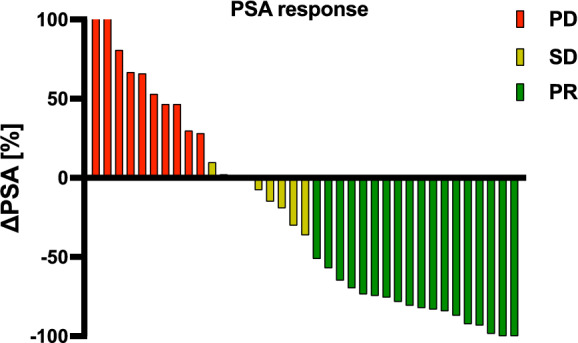 Figure 1
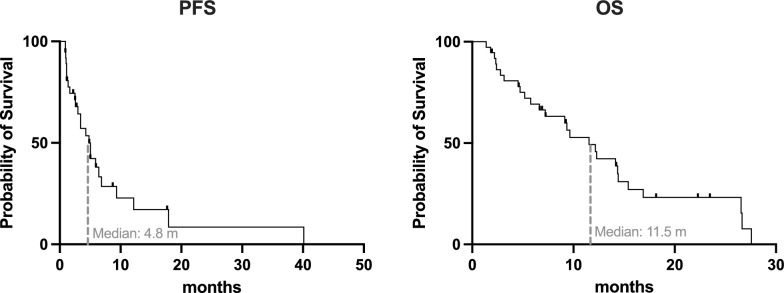 Figure 2
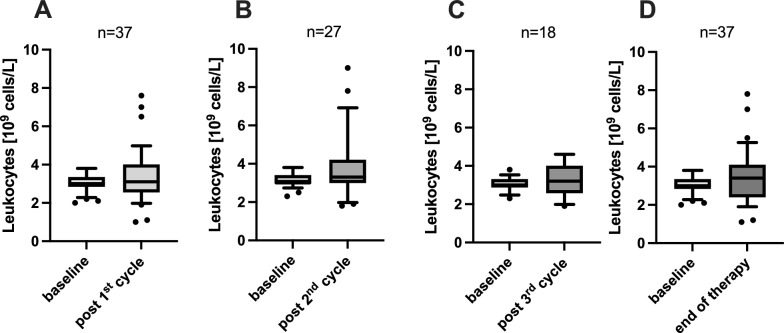 Figure 3
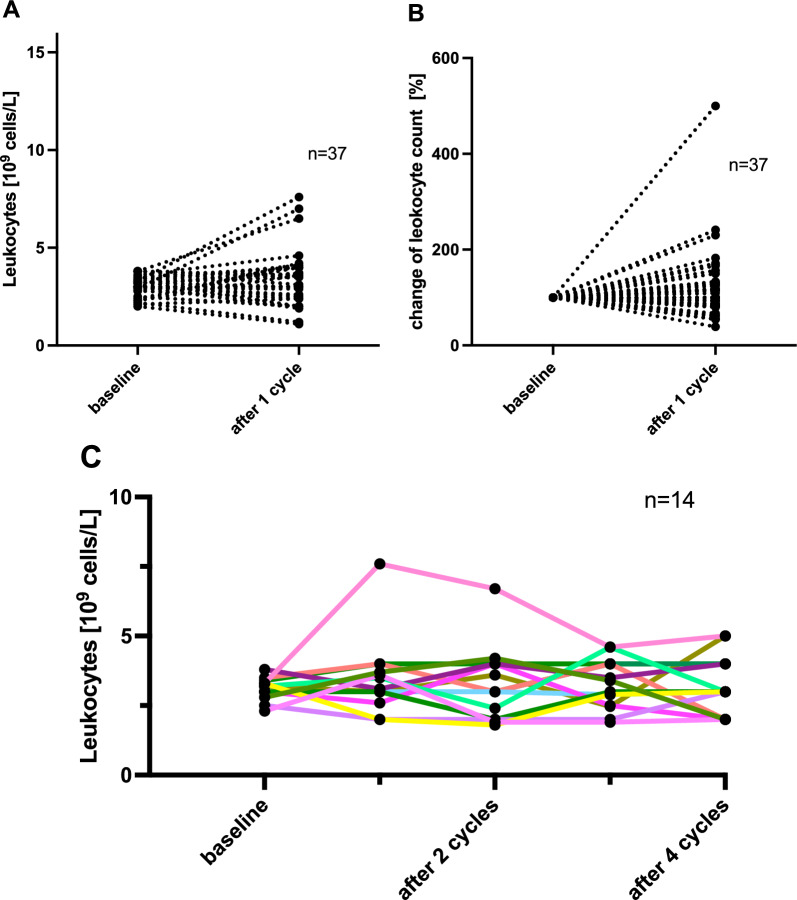 Figure 4
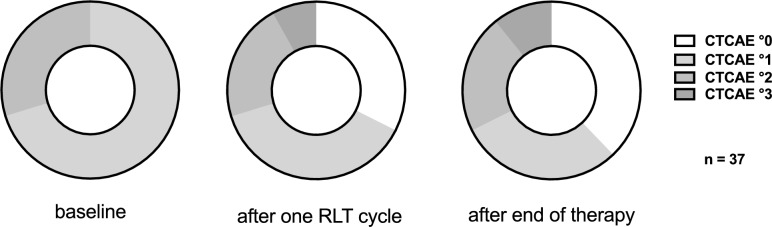 Figure 5
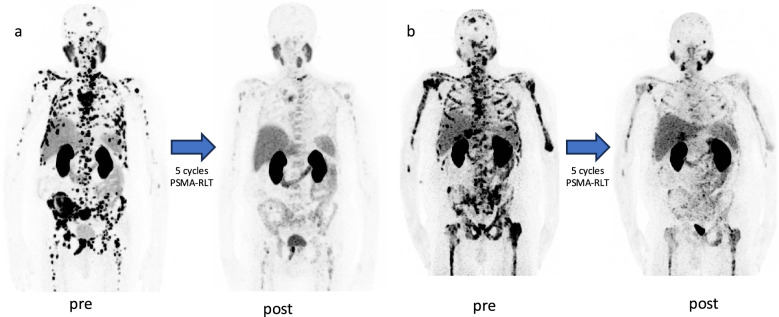 Figure 6
Peer Reviews
No public reviews on file for this paper yet. If you reviewed it on a platform where reviews are public (OpenReview, ICLR, NeurIPS, ICML), you can paste yours below so the community can read it here.
Videos
No videos yet. Explain this paper in a talk, walkthrough, or lecture? Add one.
Taxonomy
TopicsProstate Cancer Treatment and Research · Radiopharmaceutical Chemistry and Applications · PARP inhibition in cancer therapy