Prenatal carrier screening for spinal muscular atrophy among pregnant Thai women
Chayada Tangshewinsirikul, Panyu Panburana, Maneerat Prakobpanich, Takol Chareonsirisuthigul, Donniphat Dejsuphong, Thipwimol Tim-Aroon, Chaiyos Khongkhatithum, Thanyachai Sura, Atchara Tunteeratum, Duangrurdee Wattanasirichaigoon

TL;DR
Thai pregnant women showed high acceptance of spinal muscular atrophy carrier screening after counseling, with positive attitudes toward the process and support for government-funded testing.
Contribution
Demonstrates high acceptance and positive attitudes toward SMA carrier screening among Thai pregnant women, highlighting policy implications.
Findings
91.4% of participants accepted SMA carrier screening after counseling.
The SMA carrier rate was 2.2% (1 in 45), with 98.3% having ≤ 2 copies of SMN2.
All participants felt glad after receiving test results and supported government-funded screening.
Abstract
To investigate the acceptance rate for spinal muscular atrophy (SMA) carrier screening among Thai pregnant women, their attitudes toward the prenatal screening, carrier rate, and the frequencies of SMN2 copy numbers. Singleton pregnant women who aged ≥ 18 years, with a gestational age of ≤ 14 weeks at their first visit, were invited to participate the study. All participants completed the questionnaire: Section I—demographic data. Then, they received a pre-test group counseling, followed by an offer of SMA carrier testing at no cost and completion of the questionnaire: Section II—awareness and attitudes toward the screening and Section III—reasons for their choosing “to have” or “not to have” the screening done. Only those having the test done and undergoing post-test counseling were asked to complete the questionnaire: Section IV—attitudes toward the screening process. The…
Genes, proteins, chemicals, diseases, species, mutations and cell lines named across the full text — each resolved to its canonical identifier and authoritative record.
Click any figure to enlarge with its caption.
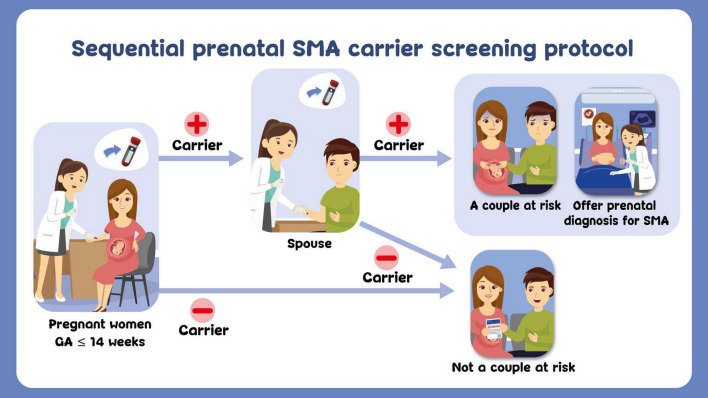 Figure 1
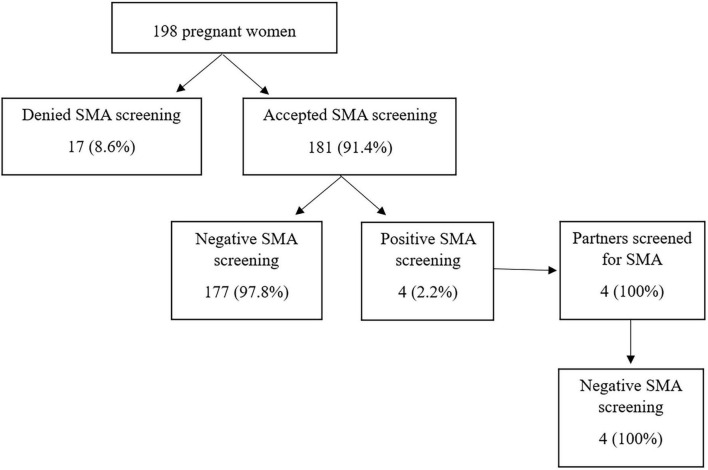 Figure 2
Peer Reviews
No public reviews on file for this paper yet. If you reviewed it on a platform where reviews are public (OpenReview, ICLR, NeurIPS, ICML), you can paste yours below so the community can read it here.
Videos
No videos yet. Explain this paper in a talk, walkthrough, or lecture? Add one.
Taxonomy
TopicsNeurogenetic and Muscular Disorders Research · Congenital Anomalies and Fetal Surgery · RNA modifications and cancer