Kidney transplant outcomes in HLA desensitized patients with pretransplant CDC and/or FCM positive crossmatches
Johan Noble, Céline Dard, Diane Giovannini, Hamza Naciri Bennani, Pierre Fournier, Béatrice Bardy, Anne Bourdin, Farida Imerzoukene, Lionel Motte, Florian Terrec, Paolo Malvezzi, Thomas Jouve, Lionel Rostaing

TL;DR
This study shows that desensitization therapy allows HLA-incompatible kidney transplants to have similar long-term success as compatible transplants, though rejection rates are higher.
Contribution
The study demonstrates that immunoadsorption-based desensitization enables successful kidney transplants in HLA-incompatible patients with high cPRA and positive crossmatches.
Findings
HLA-incompatible patients had similar graft survival rates as HLA-compatible patients at 1 year and last follow-up.
HLA-incompatible patients experienced significantly more biopsy-proven antibody-mediated rejections.
Infectious complication rates were similar between HLA-compatible and HLA-incompatible groups.
Abstract
Kidney transplant (KT) candidates with very high calculated panel reactive alloantibody (cPRA >95%) have limited chances to receive an HLA-matched transplant unless they undergo pretransplant desensitization. To assess the efficacy of immunoadsorption (IA) in desensitizing pretransplant KT candidates with high cPRA and positive crossmatch. This was a single-center retrospective cohort study involving highly HLA-sensitized patients (cPRA >85%). Forty-nine patients underwent HLA-incompatible (HLAi) KT, of whom 25 (51%) received kidneys from deceased donors. Of these 49 patients, 23 had either a positive complement-dependent cytotoxic cross-match (CDC) and/or a positive flow cytometry cross-match (FCM). The remaining 26 patients had donor-specific anti-HLA (DSAs) detectable only by Luminex (CDC and FCM cross-matches were negative). Only CDC-positive and FCM-positive patients were…
Genes, proteins, chemicals, diseases, species, mutations and cell lines named across the full text — each resolved to its canonical identifier and authoritative record.
Click any figure to enlarge with its caption.
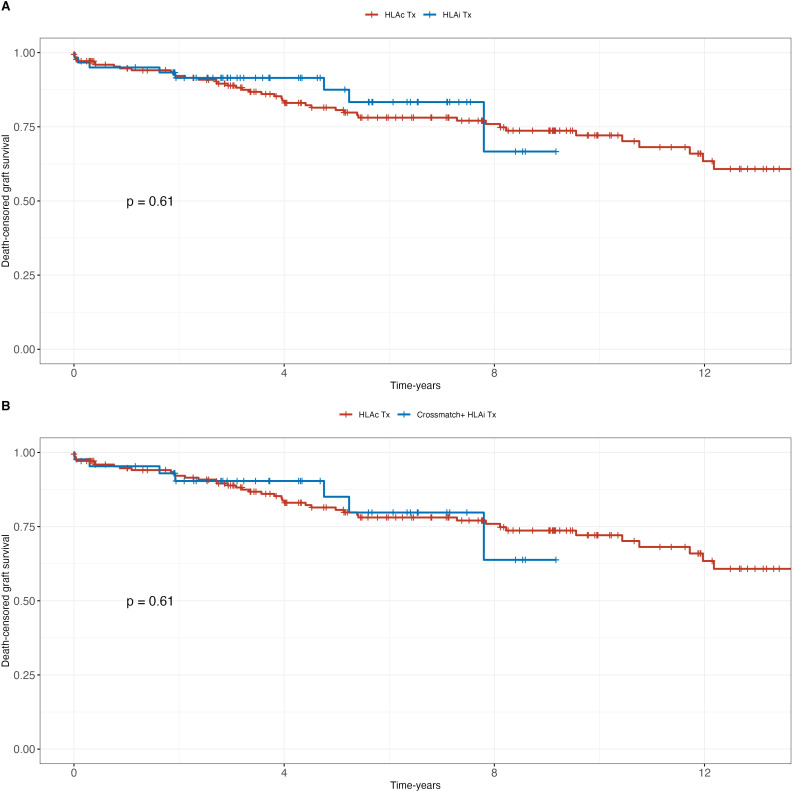 Figure 1
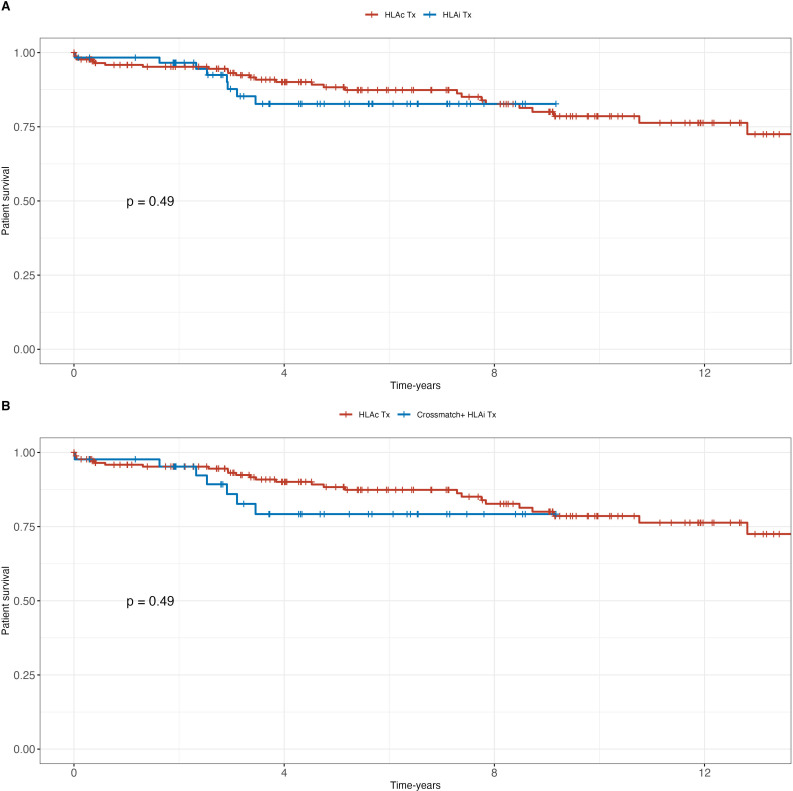 Figure 2
Peer Reviews
No public reviews on file for this paper yet. If you reviewed it on a platform where reviews are public (OpenReview, ICLR, NeurIPS, ICML), you can paste yours below so the community can read it here.
Videos
No videos yet. Explain this paper in a talk, walkthrough, or lecture? Add one.
Taxonomy
TopicsRenal Transplantation Outcomes and Treatments · Renal Diseases and Glomerulopathies · Neurological Complications and Syndromes