Determinants of Premature Rupture of Membranes: A Three-Year Retrospective Analysis of Age, Parity, Delivery Mode, and Seasonality
Qin Deng, Guizhen Yu, Lijian Lai, Jiayin Xu, Yuemei Zheng

TL;DR
This study finds that younger first-time mothers and those needing cesarean delivery are more likely to experience premature rupture of membranes, with no seasonal pattern observed.
Contribution
The study identifies maternal age, parity, and delivery mode as significant determinants of PROM in a temperate climate, while ruling out seasonal influence.
Findings
PROM incidence was highest in women aged 25-29 and lowest in those ≥35.
Primiparas had significantly higher PROM rates than multiparas each year.
PROM was more common in pregnancies requiring cesarean delivery than in vaginal births.
Abstract
Background: Premature rupture of membranes (PROM) precedes 8‑10% of births and remains a leading cause of neonatal morbidity. Although infection, prior obstetric history, and cervical pathology are recognized contributors, data on the relative influence of maternal age, parity, mode of delivery, and seasonality are inconsistent across regions. Clarifying these determinants could enhance antenatal risk stratification and guide preventive counselling. Methods: We retrospectively reviewed all singleton deliveries recorded in a tertiary care obstetric database from January 2018 through December 2020. Maternal age was grouped as <20, 20‑24, 25‑29, 30‑34, and ≥35 years; parity was dichotomized (primipara vs. multipart). The final mode of delivery (vaginal vs. cesarean) and calendar month of birth were extracted. Incidence of PROM was compared among age groups by the Kruskal-Wallis test,…
Genes, proteins, chemicals, diseases, species, mutations and cell lines named across the full text — each resolved to its canonical identifier and authoritative record.
Click any figure to enlarge with its caption.
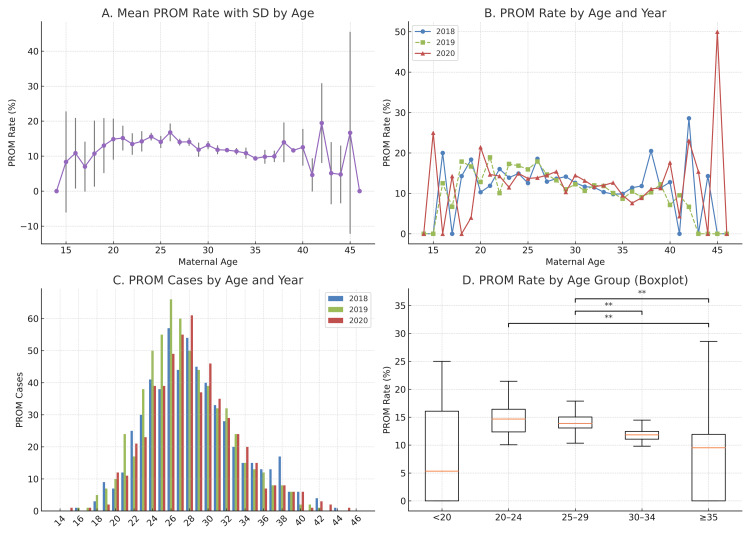 Figure 1
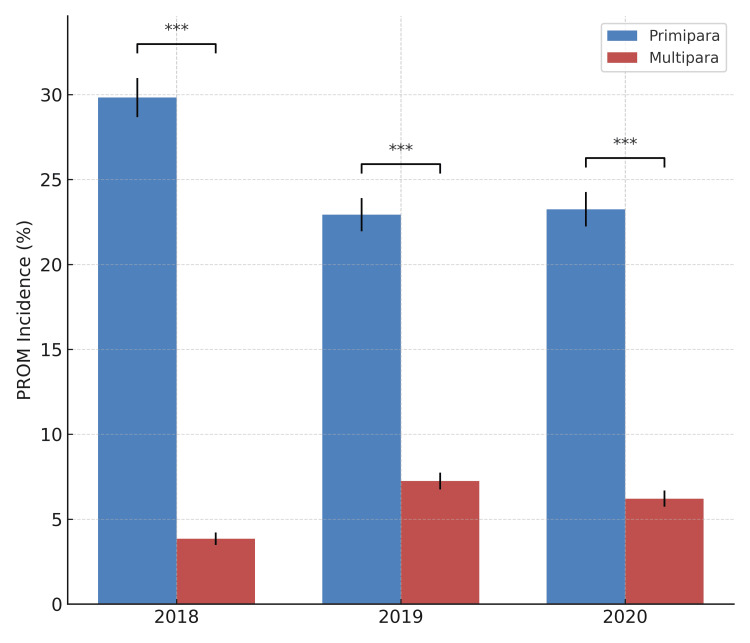 Figure 2
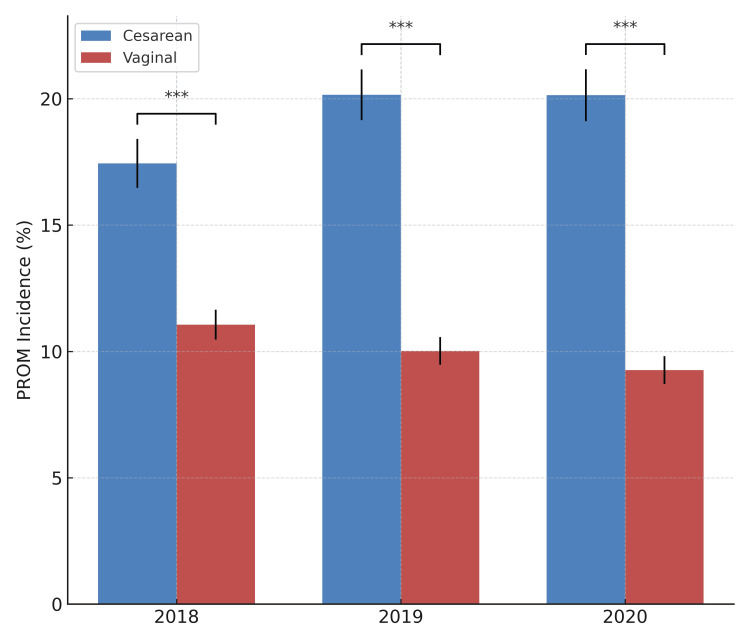 Figure 3
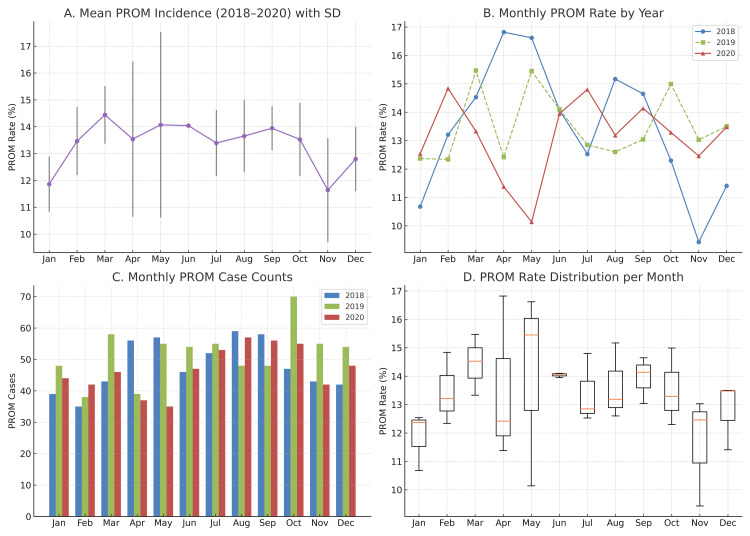 Figure 4
Peer Reviews
No public reviews on file for this paper yet. If you reviewed it on a platform where reviews are public (OpenReview, ICLR, NeurIPS, ICML), you can paste yours below so the community can read it here.
Videos
No videos yet. Explain this paper in a talk, walkthrough, or lecture? Add one.
Taxonomy
TopicsCongenital Anomalies and Fetal Surgery · Congenital Diaphragmatic Hernia Studies · Neonatal Respiratory Health Research