HSP104 and HSP20‐L Are Required by Aspergillus nidulans in Response to Attack by Fungivorous Springtail Sinella curviseta
Xiaomeng Wang, Juan Xi, Pengxu Chen, Yingying Chen, Keyu Chen, Weifa Zheng, Yanxia Zhao

TL;DR
This study shows that the fungi Aspergillus nidulans uses HSP104 and HSP20-L to respond to attacks by the fungivorous springtail Sinella curviseta, helping maintain cellular balance.
Contribution
The study reveals the specific roles of HSP104 and HSP20-L in fungal defense against biotic stress from a springtail.
Findings
HSP104 and HSP20-L are upregulated in response to Sinella curviseta stress in Aspergillus nidulans.
HSP104 and HSP20-L have opposing roles in conidia and ascospore formation under stress.
Both proteins help reduce cellular damage and support chitin synthesis and antioxidant activity during development.
Abstract
Heat shock proteins (HSPs) are conserved biomolecules that are consistently expressed and upregulated in response to stress. However, whether fungi activate HSPs in response to fungivorous arthropods' attack remains unclear. In this study, we investigated the function of HSP104 and HSP20‐L in Aspergillus nidulans upon Sinella curviseta stress. The results revealed that hsp104 and hsp20‐L were upregulated upon the stress. Knockout of hsp104 and/or hsp20‐L inhibited conidia and cleistothecia formation. Additionally, S. curviseta stress inhibited conidia and cleistothecia formation in the wild‐type strain. hsp104 positively regulated conidia formation in response to stress, while hsp20‐L negatively regulated it. Notably, hsp104 and hsp20‐L exhibited opposing functions on ascospore formation upon biotic stress. The absence of hsp104 and/or hsp20‐L and S. curviseta stress resulted in…
Genes, proteins, chemicals, diseases, species, mutations and cell lines named across the full text — each resolved to its canonical identifier and authoritative record.
Click any figure to enlarge with its caption.
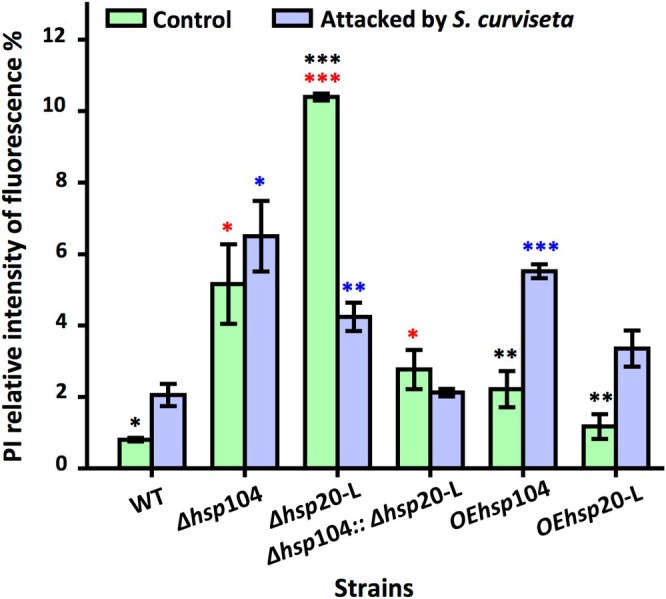 Figure 1
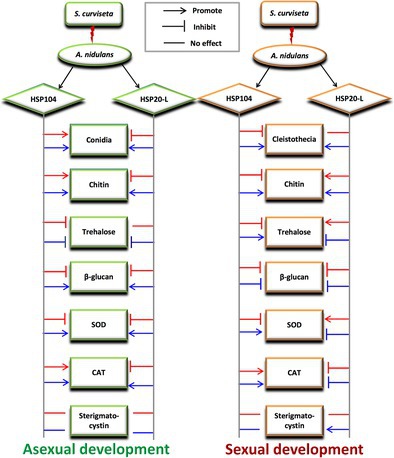 Figure 2
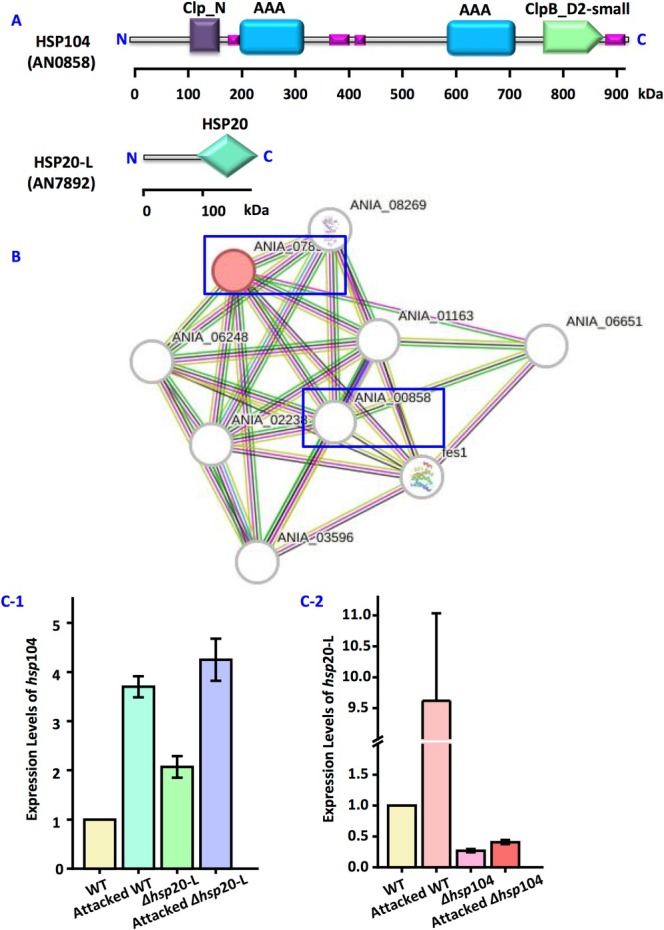 Figure 3
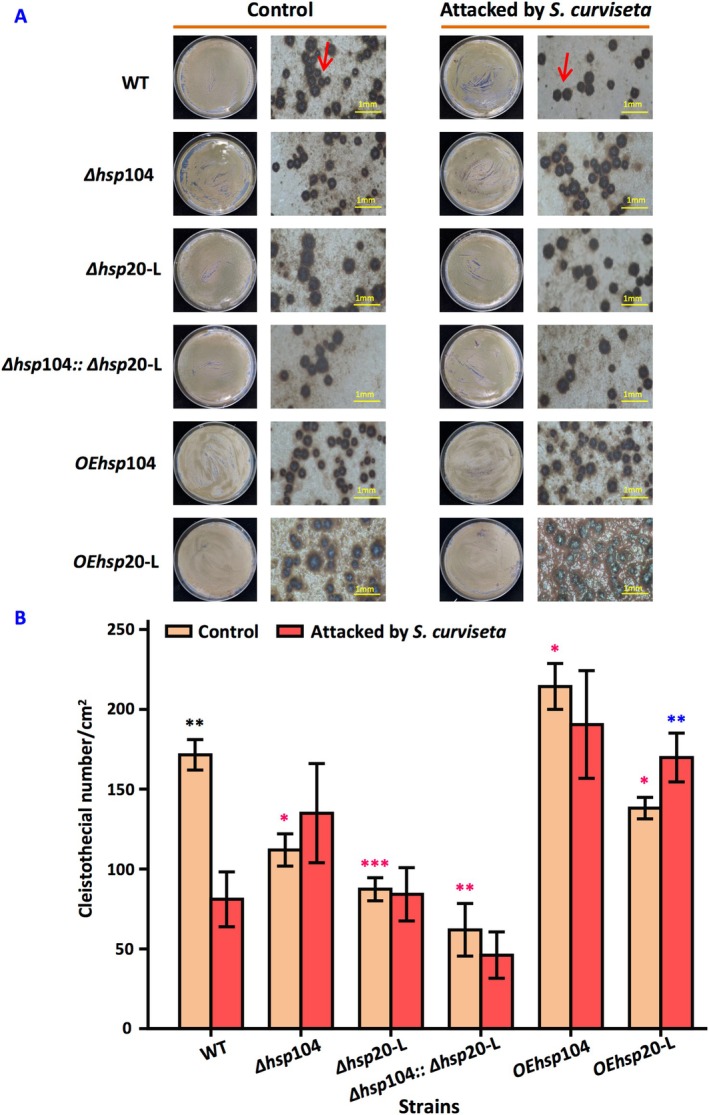 Figure 4
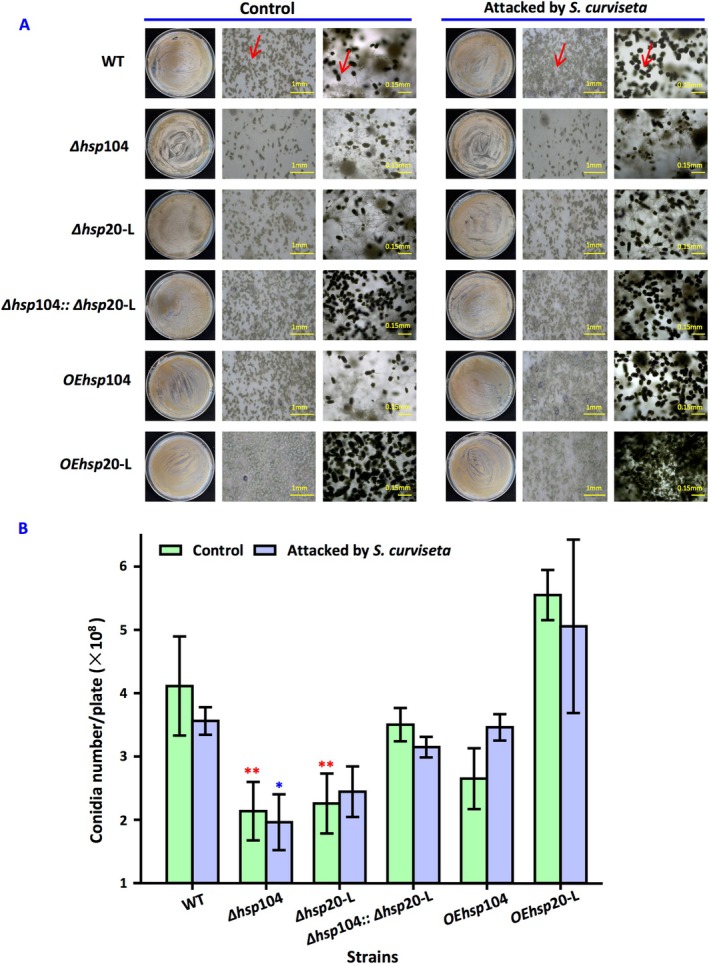 Figure 5
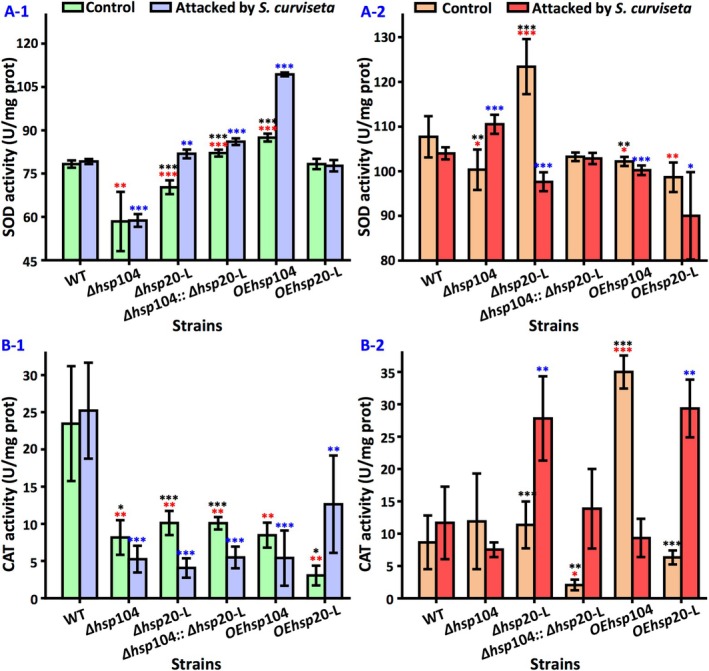 Figure 6
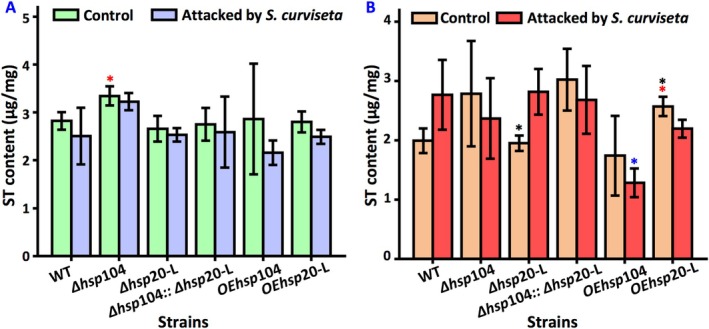 Figure 7
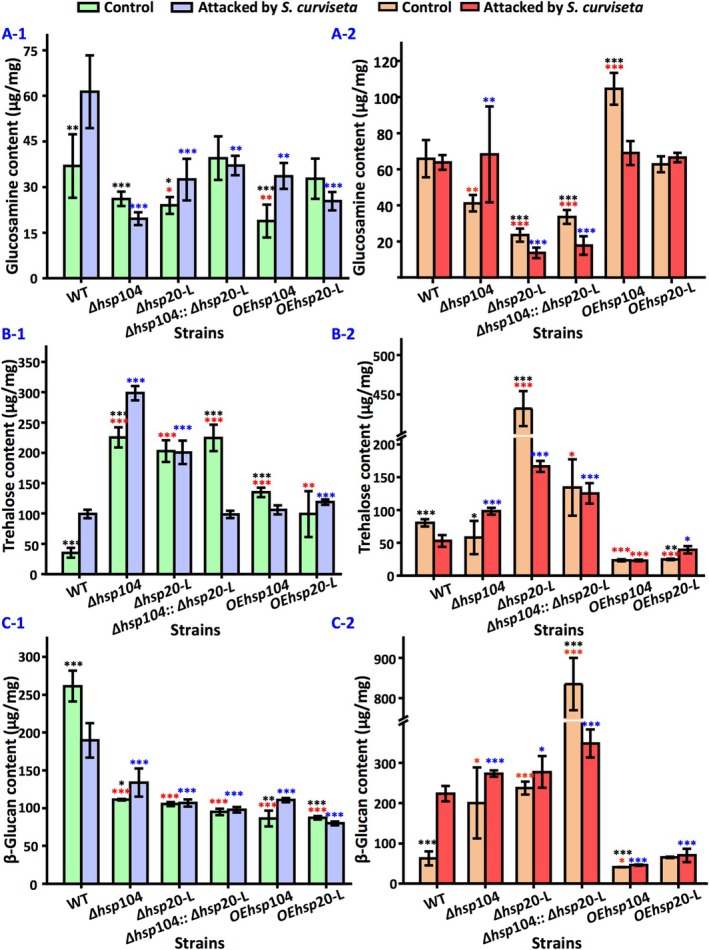 Figure 8
Peer Reviews
No public reviews on file for this paper yet. If you reviewed it on a platform where reviews are public (OpenReview, ICLR, NeurIPS, ICML), you can paste yours below so the community can read it here.
Videos
No videos yet. Explain this paper in a talk, walkthrough, or lecture? Add one.
Taxonomy
TopicsHeat shock proteins research · Fungal and yeast genetics research · Entomopathogenic Microorganisms in Pest Control