Interlaboratory assessment of candidate reference materials for lentiviral vector copy number and integration site measurements
Hua-Jun He, Zhiyong He, Steven P. Lund, Laure Turner, Yongjun Fan, Yu Qiu, David C. Corney, Boro Dropulic, Rimas Orentas, Oxana Slessareva, Priscilla Welch, Katie Dungca, Ellen Stelloo, Gabrielle Dijksteel, Harma Feitsma, Sana Ahmed-Seghir, Rostyslav Makarenko, Engin Altunlu

TL;DR
This paper assesses candidate reference materials for measuring lentiviral vector copy numbers and integration sites to improve consistency and accuracy in gene therapy safety evaluations.
Contribution
The study provides consensus values for vector copy numbers and integration sites in NIST candidate reference materials, enabling harmonization of measurement assays.
Findings
Twelve laboratories successfully measured vector copy numbers in five candidate reference materials using qPCR, dPCR, or NGS.
Consensus values for vector copy numbers and integration sites were achieved across all participants.
Molecular combing technology was evaluated using fixed clonal cells for potential integration site analysis.
Abstract
While lentiviral vectors have played a critical role in the emergence of gene-modified cell therapies, safety concerns remain regarding potential insertional mutagenesis. Regulatory authorities strongly recommend risk assessment and management of vector copy numbers (VCNs), integration profiles, and integration sites in the lentivirus-based cell and gene therapy products. However, accurately measuring these parameters remains a significant challenge due to the lack of standardized methodologies and VCN reference materials (RMs). Toward this challenge, we conducted an interlaboratory study on NIST candidate RMs for VCN measurements. The candidate RMs comprise five human genomic DNA samples or fixed cells from clonal Jurkat cell lines with defined VCNs ranging from 0 to 4. All 12 study participants were able to identify the VCN in the five blinded samples using quantitative PCR (qPCR),…
Genes, proteins, chemicals, diseases, species, mutations and cell lines named across the full text — each resolved to its canonical identifier and authoritative record.
Click any figure to enlarge with its caption.
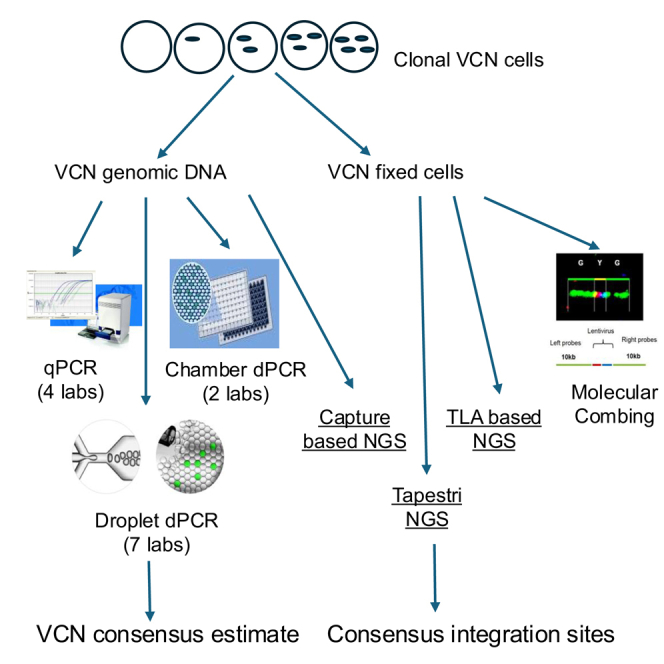 Figure 1
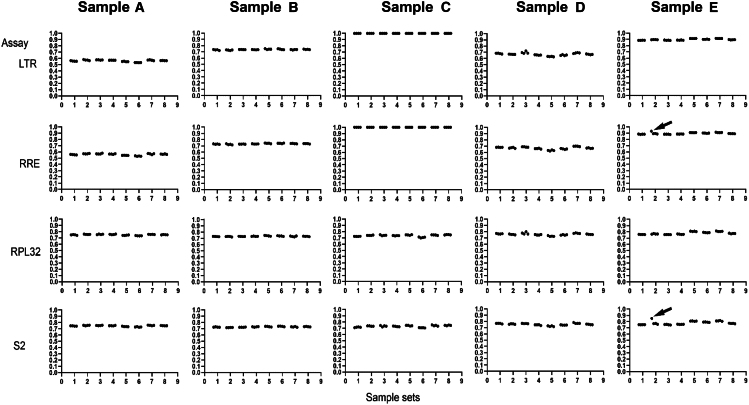 Figure 2
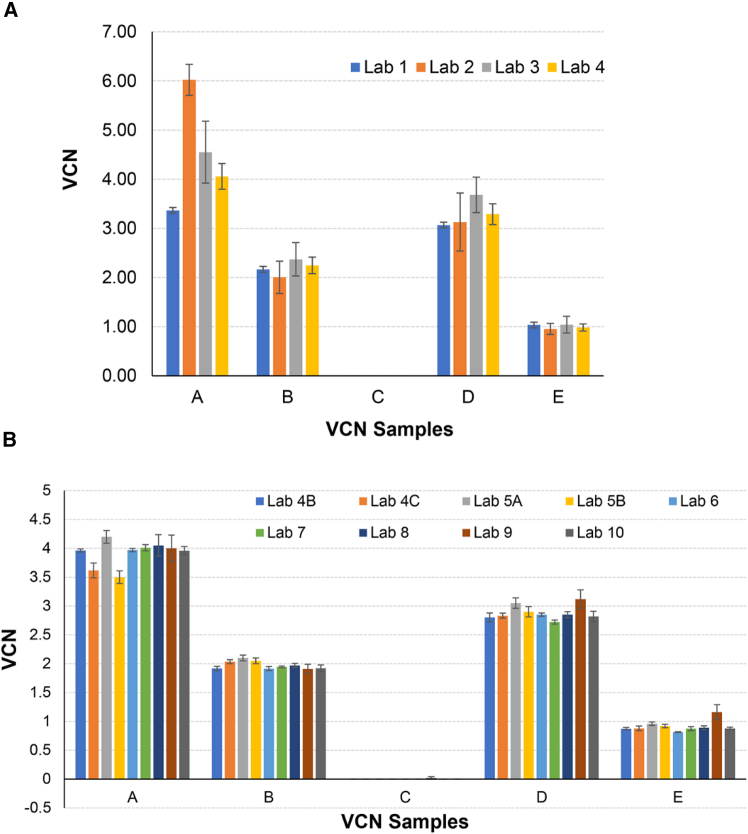 Figure 3
Peer Reviews
No public reviews on file for this paper yet. If you reviewed it on a platform where reviews are public (OpenReview, ICLR, NeurIPS, ICML), you can paste yours below so the community can read it here.
Videos
No videos yet. Explain this paper in a talk, walkthrough, or lecture? Add one.
Taxonomy
TopicsMathematics, Computing, and Information Processing · Open Education and E-Learning