Impact of age on the homing potential of 89Zr-radiolabelled CD8 + T cells
Jonas Bystrom, Melissa Pereira Da Costa, Amaia Carrascal-Miniño, Ahad Qureshi, George P. Keeling, Truc T. Pham, Kavitha Sunassee, Elizabeth C. Carroll, Conor Garrod-Ketchley, Johannes Schroth, Victoria S. K. Tsang, Rafael T. M. de Rosales, Samantha Y. A. Terry, Sian M. Henson

TL;DR
This study shows that CD8+ T cells from older individuals move more slowly in the body and may cause more tissue damage compared to those from younger individuals.
Contribution
A method for radiolabelling and tracking cryopreserved CD8+ T cells in vivo using ⁸⁹Zr and PET imaging is established.
Findings
CD8+ T cells from older individuals migrate more slowly and accumulate in tissues later than those from younger individuals.
Aged T cells show decreased cortactin expression and increased cholesterol levels, which may impair their motility.
The study provides a framework for assessing age-related functional deficits in T cells using PET imaging.
Abstract
The ability of CD8 + T cells to protect against infections and malignant transformations declines with age. Emerging technologies, such as total body positron emission tomography (PET) and radiotracers with long half-lives, offer new approaches to assess long-term cellular functional deficits in vivo. In this study, we radiolabelled human CD8 + T cells from both young and old individuals with zirconium-89 (⁸⁹Zr) and evaluated their distribution in vivo. ⁸⁹Zr-labelled CD8 + T cells were injected intravenously into NOD scid gamma mice, and their whole-body migration was tracked using PET imaging. Longitudinal PET imaging revealed that CD8 + T cells from older individuals accumulated in tissues at a slower rate compared to those from younger individuals and may have caused greater tissue damage. This impaired migration was associated with decreased cortactin expression and increased…
Genes, proteins, chemicals, diseases, species, mutations and cell lines named across the full text — each resolved to its canonical identifier and authoritative record.
Click any figure to enlarge with its caption.
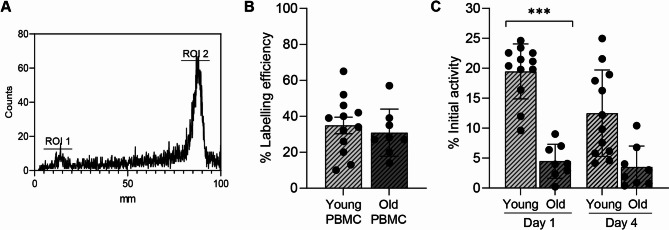 Figure 1
 Figure 2
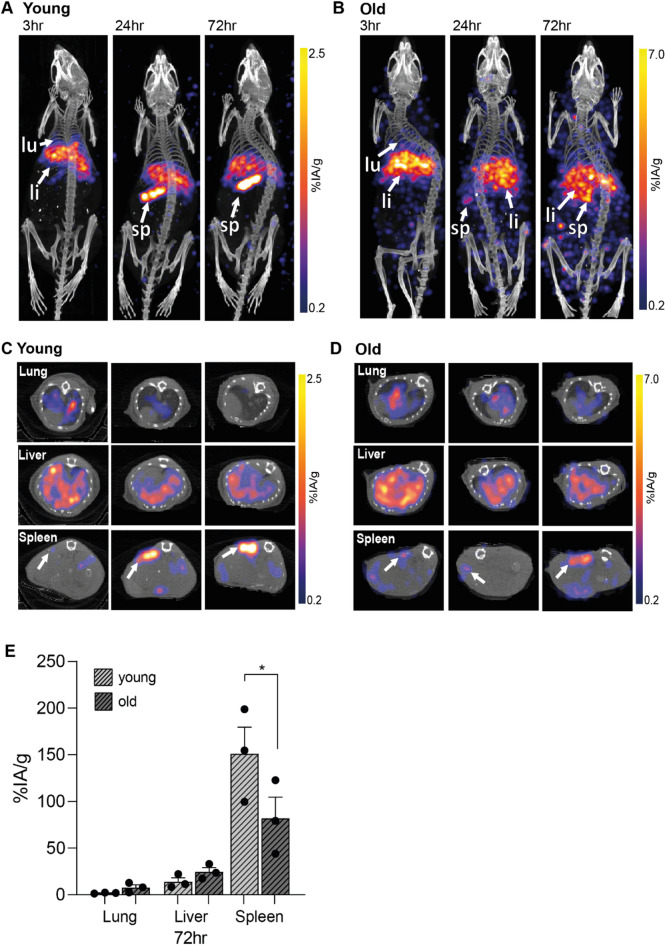 Figure 3
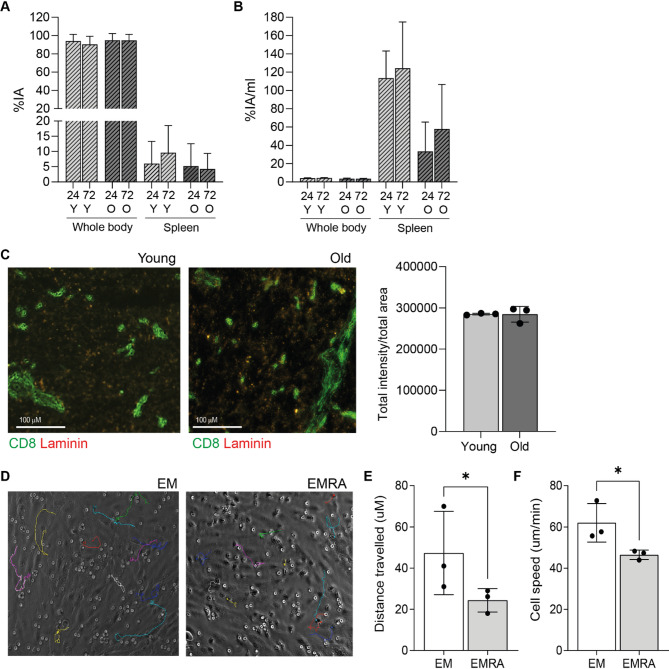 Figure 4
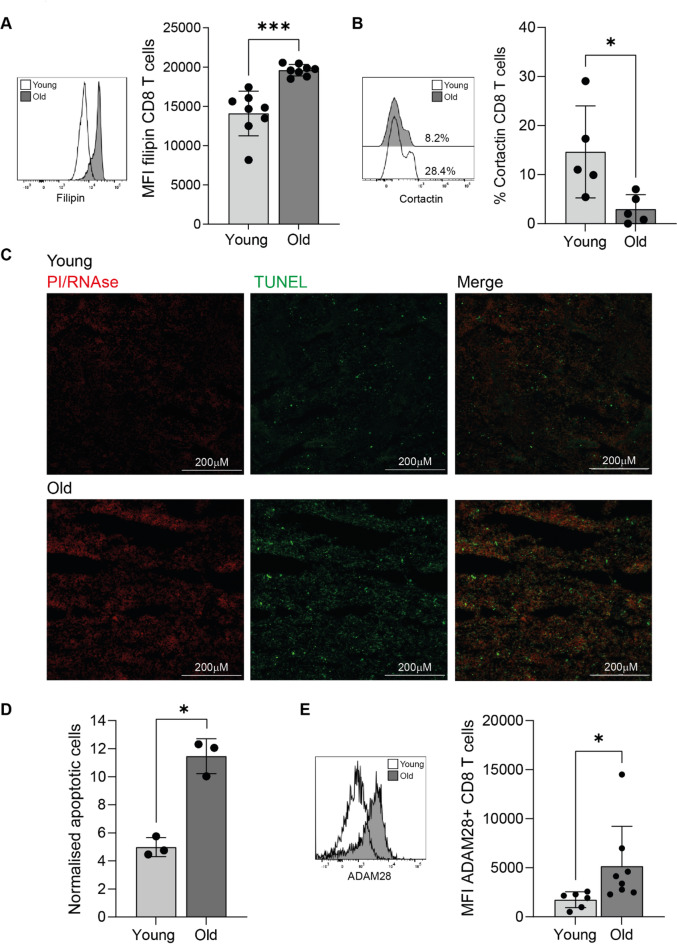 Figure 5
Peer Reviews
No public reviews on file for this paper yet. If you reviewed it on a platform where reviews are public (OpenReview, ICLR, NeurIPS, ICML), you can paste yours below so the community can read it here.
Videos
No videos yet. Explain this paper in a talk, walkthrough, or lecture? Add one.
Taxonomy
TopicsCAR-T cell therapy research · Immunotherapy and Immune Responses · T-cell and B-cell Immunology