Diagnostic performance of the clear cell likelihood score integrated with cystic degeneration or necrosis on MR imaging for identifying clear cell renal cell carcinoma in cT1 solid renal masses
Xueyi Ning, Mengqiu Cui, Huiping Guo, Honghao Xu, Yuanhao Ma, Xu Bai, Shaopeng Zhou, Xiaohui Ding, Xiaojing Zhang, Huiyi Ye, Haiyi Wang

TL;DR
This study shows that adding cystic degeneration or necrosis to a scoring system improves the accuracy of diagnosing clear cell kidney cancer in early-stage tumors.
Contribution
The study introduces a modified scoring system (cn-ccLS) that integrates cystic degeneration or necrosis with the clear cell likelihood score for better diagnostic accuracy.
Findings
cn-ccLS significantly increased sensitivity for diagnosing clear cell renal cell carcinoma compared to the original score.
The modified score maintained high specificity while improving detection rates for both cT1a and cT1b tumors.
cn-ccLS reduced the proportion of clear cell renal cell carcinoma cases in intermediate-risk lesions.
Abstract
To evaluate the diagnostic value of the clear cell likelihood score (ccLS) integrated with cystic degeneration or necrosis on renal MR imaging for diagnosing clear cell renal cell carcinoma (ccRCC) in cT1 solid renal masses (SRMs). This retrospective study consecutively enrolled patients with pathologically confirmed SRMs who underwent MRI at the First Medical Center of the Chinese PLA General Hospital between January 2022 and February 2024. Three radiologists independently scored all cT1 SRMs using ccLS and ccLS integrated with cystic degeneration or necrosis (cn-ccLS), with discrepancies reconciled by consensus. Sensitivity, specificity, and accuracy were used to assess the performance of ccLS and cn-ccLS. A total of 287 patients with 293 masses were included in this study. The sample comprised 229 ccRCCs (78%), 64 other tumors. The sensitivity of cn-ccLS was significantly higher…
Genes, proteins, chemicals, diseases, species, mutations and cell lines named across the full text — each resolved to its canonical identifier and authoritative record.
Click any figure to enlarge with its caption.
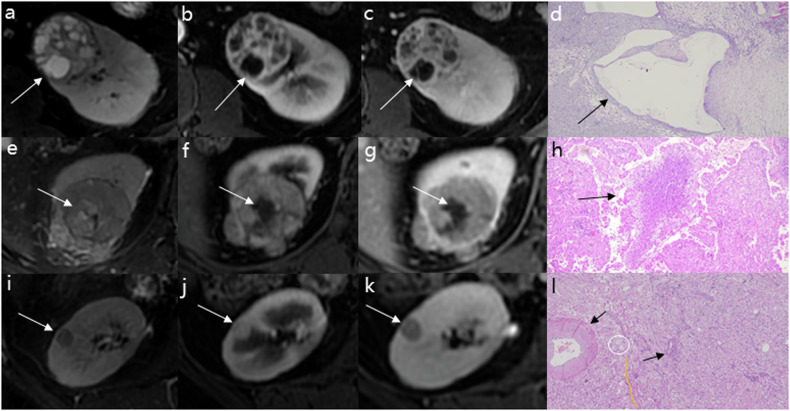 Figure 1
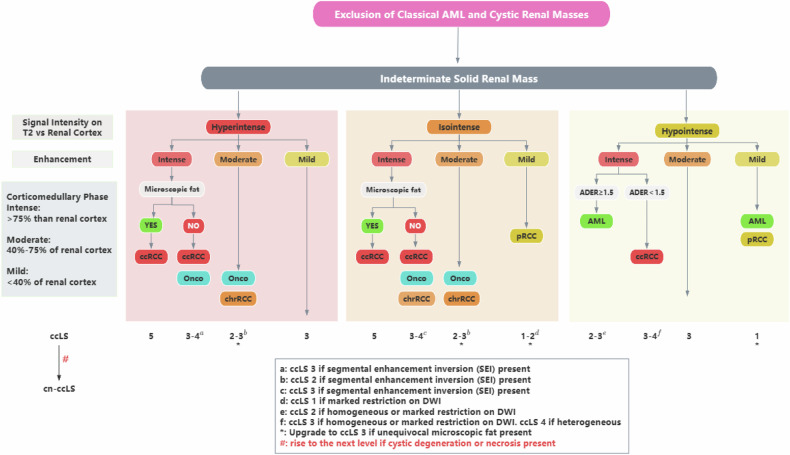 Figure 2
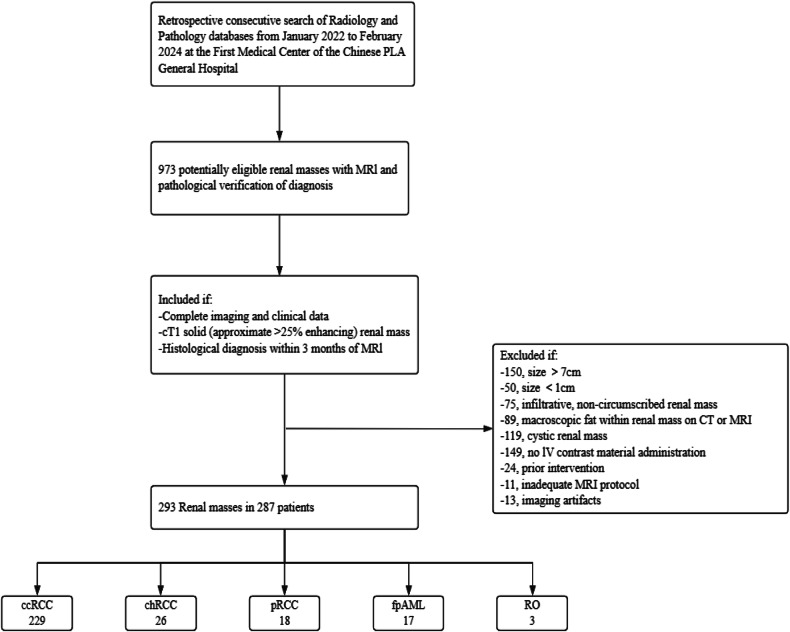 Figure 3
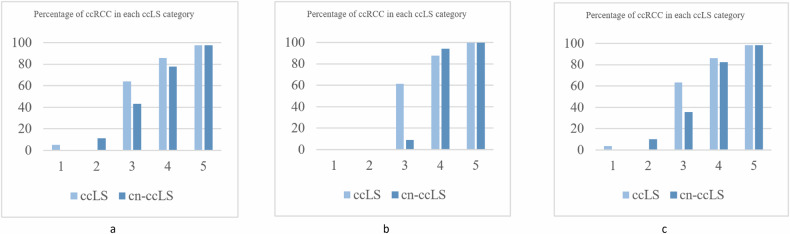 Figure 4
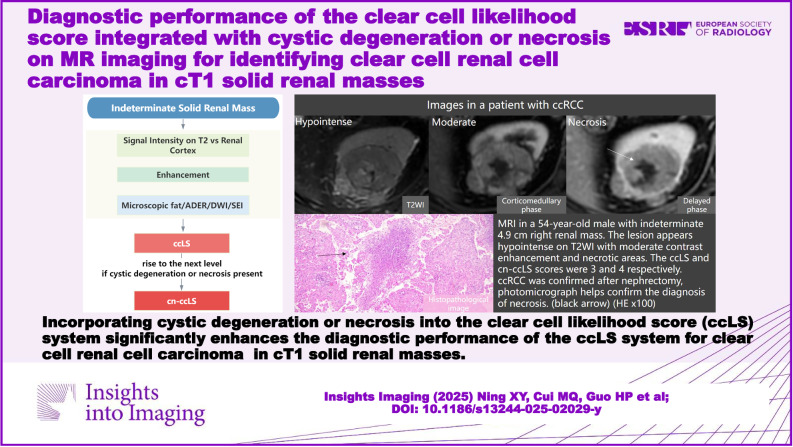 Figure 5
Peer Reviews
No public reviews on file for this paper yet. If you reviewed it on a platform where reviews are public (OpenReview, ICLR, NeurIPS, ICML), you can paste yours below so the community can read it here.
Videos
No videos yet. Explain this paper in a talk, walkthrough, or lecture? Add one.
Taxonomy
TopicsRenal cell carcinoma treatment · Renal and related cancers · MRI in cancer diagnosis