Practical pathological methods for reliable diagnosis of secretory carcinomas of the salivary gland
Ryo Kawaura, Tomohiko Ishikawa, Hirofumi Shibata, Masashi Kuroki, Kazuhiro Kobayashi, Yuki Hanamatsu, Tatsuhiko Miyazaki, Hiroyuki Tomita, Takuma Ishihara, Hajime Usubuchi, Yayoi Aoyama, Yukinori Asada, Takayuki Imai, Akira Ohkoshi, Akira Hara, Yukio Katori, Toru Furukawa

TL;DR
This study identifies a practical method using mammaglobin and S-100 to accurately diagnose secretory carcinomas of the salivary gland, reducing reliance on costly genetic tests.
Contribution
The study introduces a combination of mammaglobin and S-100 immunohistochemistry as a reliable diagnostic tool for secretory carcinomas.
Findings
Re-analysis of 31 cases revealed 21 secretory carcinomas and 10 acinic cell carcinomas.
Combining mammaglobin and S-100 immunohistochemistry improves diagnostic accuracy for secretory carcinomas.
Pan-Trk was not universally effective for diagnosing secretory carcinomas.
Abstract
Secretory carcinomas (SCs) of the salivary gland have recently been recognized as low-grade, malignant tumors. Before this designation, most SCs were diagnosed as variants of acinic cell carcinomas (AciCCs). SCs harbor the t(12;15)(p13;q25) translocation that generates an oncogenic fusion gene, ETS variant transcription factor 6/Neurotrophic tyrosine receptor kinase(ETV6::NTRK3). However, detecting fusion genes in a clinical setting is time-consuming and costly. In this study, we examined 31 cases previously diagnosed as AciCC and SC using pathological analyses with detection of fusion genes using ETV6 break-apart fluorescence in-situ hybridization and reverse transcription-polymerase chain reaction. After re-analysis, we found that these 31 cases actually comprised 21 SCs and 10 AciCCs. We examined the diagnostic utility of immunohistochemistry by comparing results with the fusion…
Genes, proteins, chemicals, diseases, species, mutations and cell lines named across the full text — each resolved to its canonical identifier and authoritative record.
Click any figure to enlarge with its caption.
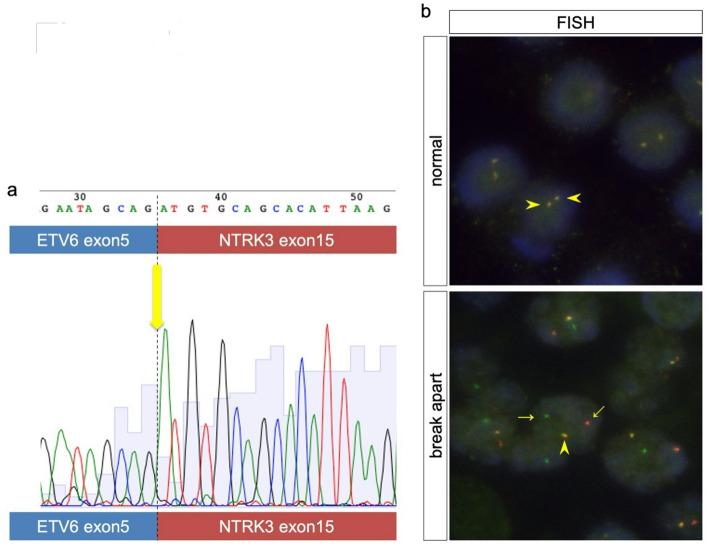 Figure 1
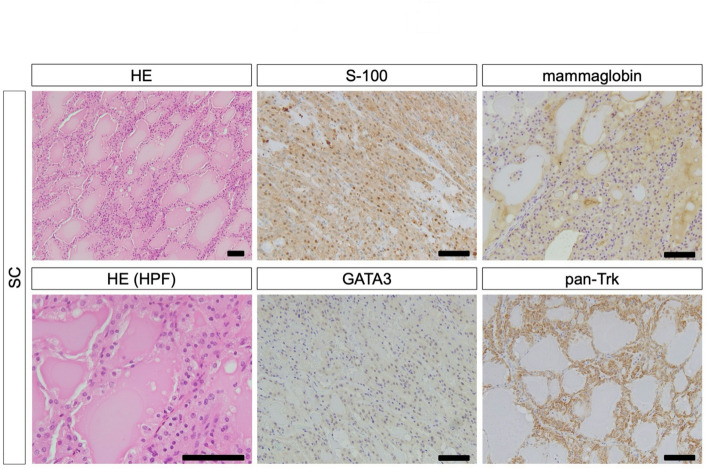 Figure 2
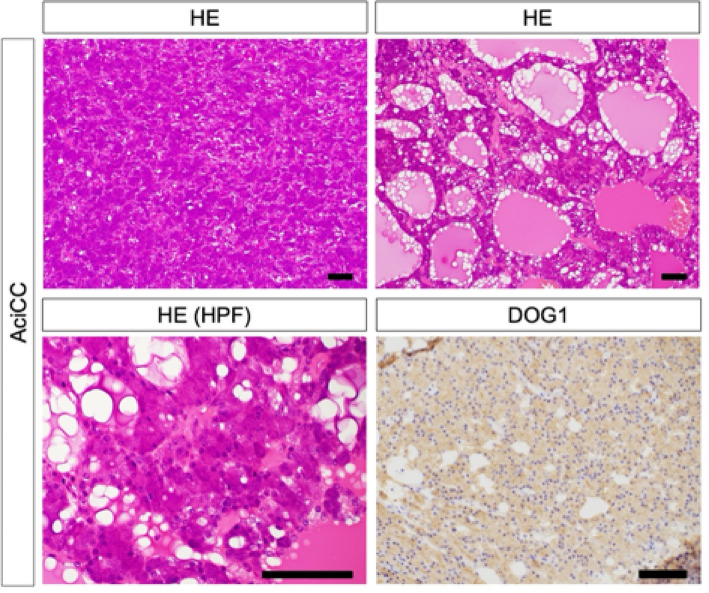 Figure 3
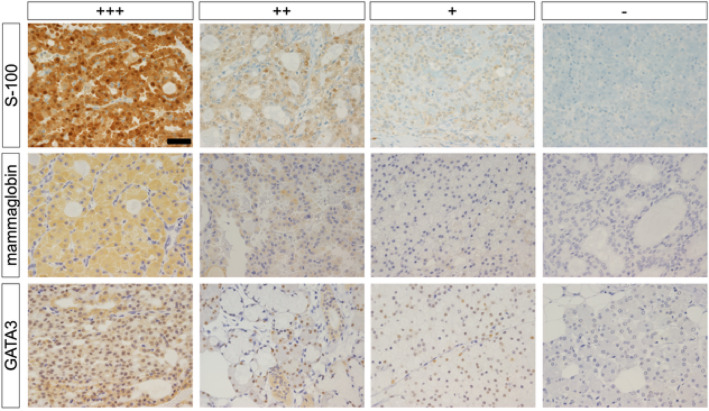 Figure 4
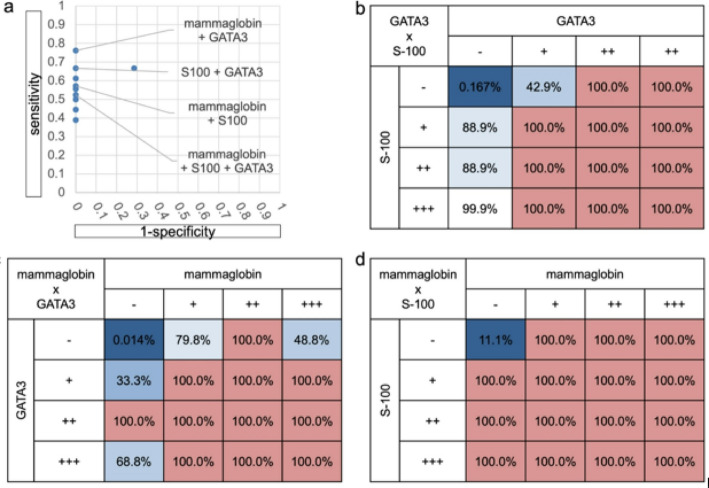 Figure 5
Peer Reviews
No public reviews on file for this paper yet. If you reviewed it on a platform where reviews are public (OpenReview, ICLR, NeurIPS, ICML), you can paste yours below so the community can read it here.
Videos
No videos yet. Explain this paper in a talk, walkthrough, or lecture? Add one.
Taxonomy
TopicsSalivary Gland Tumors Diagnosis and Treatment · Ear and Head Tumors · Oral and Maxillofacial Pathology